























Welcome to EmbroideryLearn the Basics
A complete beginner's guide to your first machine embroidery project
Welcome
Thinking about getting started with machine embroidery? You are in the right place.
Machine embroidery is a fun and creative way to personalize clothing, gifts, home décor, accessories, and so much more. Whether you are still deciding if embroidery is right for you or you have just brought home your first machine, getting started can feel a little overwhelming.
There are machines, hoops, stabilizers, threads, designs, fabrics, needles, software, and plenty of new terms to learn.
The good news is that you do not need to learn everything at once.
Remember, we were all new at embroidery once.
Every experienced embroiderer started with the same basic questions, and every project teaches you something new. Take your time, learn one step at a time, and remember that it's ok to make mistakes. Mistakes are part of learning and often help you understand your machine and materials better.
What Is Machine Embroidery?
Machine embroidery uses an embroidery machine and a digital embroidery design to create stitched designs on fabric and other embroiderable materials.
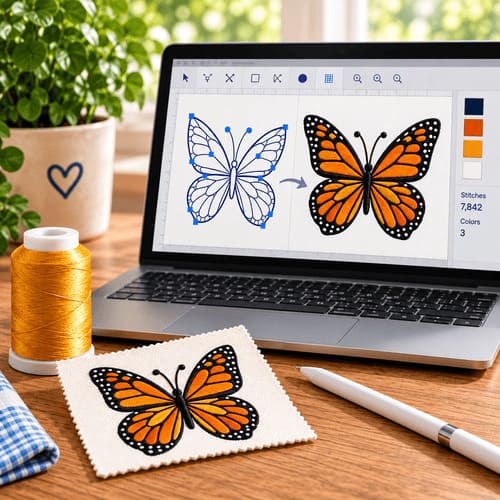
Instead of guiding the fabric through the machine by hand, the embroidery machine follows instructions contained in a digital embroidery file. Those instructions tell the machine where to place the stitches and when to change thread colors.
You prepare the project by choosing your design, fabric, stabilizer, thread, needle, and hoop. Once everything is set up correctly, the embroidery machine does the stitching.
Do You Need Experience to Start?
No.
You do not need sewing experience, design experience, or special artistic skills to enjoy machine embroidery.
Learning how to use your embroidery machine is usually the first step. Begin by becoming comfortable with simple tasks such as threading your machine, inserting the bobbin, attaching your hoop, loading a design, and starting and stopping the embroidery.
Your machine manual is an important resource, especially while you are learning. Every embroidery machine is a little different, so always follow the instructions for your specific machine.
What Do You Need to Get Started?
You do not need a room full of supplies to begin embroidery.
The basic items you will use include an embroidery machine, an embroidery hoop, stabilizer, embroidery thread, bobbins, embroidery needles, fabric or another item to embroider, and a digital embroidery design.
As you continue learning, you may decide to add different stabilizers, specialty threads, tools, software, and other supplies based on the types of projects you enjoy making.
See Beginner embroidery supply checklist — what to buy first — and what can wait; Understanding embroidery needles — start with a 75/11 embroidery needle; and Do you need embroidery software? — you can start without it.
Understanding Embroidery Designs
Embroidery designs are digital files created specifically for embroidery machines.
They are different from regular image files such as JPG or PNG files because an embroidery file contains the stitch information your machine needs to sew the design.
Different embroidery machines use different file formats, so one of the first things to learn is which embroidery format your machine can read.
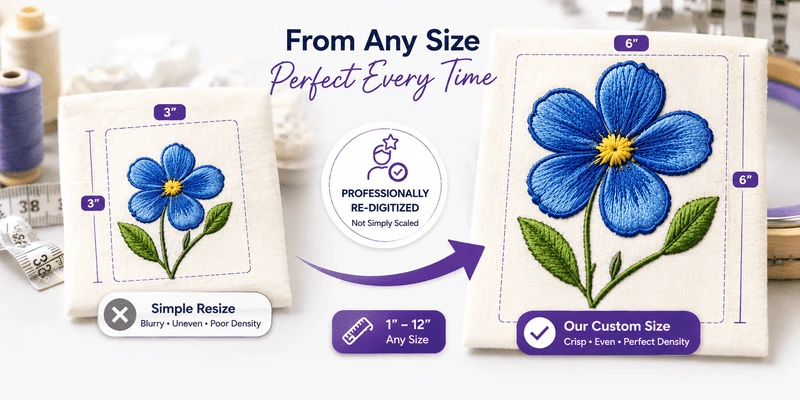
You will also need to make sure the design fits within the embroidery area supported by your machine and hoop. Be sure to check the sewing field or embroidery area listed in your machine's manual. This is important because the sewing field is different than the hoop size.

See Understanding embroidery file formats — common formats by brand and how ZIP downloads work — and How to read design size, stitch count, and density.
Why Is Stabilizer Important?
Stabilizer is placed with your fabric to help support it while the embroidery machine stitches.
It helps keep the material from shifting, stretching, or puckering and can make a big difference in how your finished embroidery looks.
There are several different types of stabilizer, and the best choice depends on the fabric and project you are working on.
You do not need to understand every type immediately. Start by following the stabilizer recommendations for your project and build your knowledge as you go.
See Understanding machine embroidery stabilizers — cut-away, tear-away, and wash-away explained — and Fabrics for machine embroidery — how fabric type changes your stabilizer choice.
Choosing Fabric, Thread, and Needles
Different fabrics behave differently during embroidery.
A stable woven fabric may be easier for a beginner than a very stretchy, thick, or delicate material. Starting with simpler fabrics can help you become comfortable with your machine before moving on to more challenging projects.
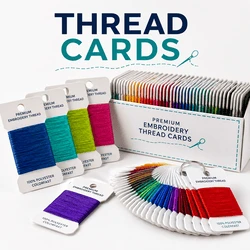
Embroidery thread is available in many colors and finishes, allowing you to customize your projects and make them your own.
The needle you use is also important. Different fabrics and projects may require different needle types or sizes, and embroidery needles should be replaced regularly.
See Different fabrics for machine embroidery — cotton, denim, knits, towels, and more; Embroidery thread for beginners — 40 wt, rayon vs polyester, and bobbin thread; and Understanding embroidery needles — what 75/11 means and when to change needles.
Your Embroidery Hoop
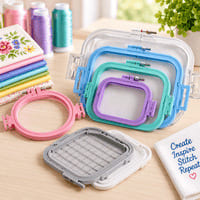
The hoop holds your fabric and stabilizer in position while your machine stitches the design.
Good hooping helps keep everything secure and can help prevent shifting and puckering.
Your machine may have several hoop sizes available. Always make sure the design you choose fits the hoop and embroidery area supported by your machine.
See Understanding machine embroidery hoops — standard vs magnetic, floating, and sizing rules — and Hoop size when buying a machine.
Start With Something Simple
Your first embroidery project does not need to be complicated.
Choose a simple design and an easy-to-embroider fabric while you learn how your machine works.
Focus on practicing these core steps:
- Threading your machine
- Preparing your fabric and stabilizer
- Hooping
- Loading an embroidery design
- Positioning your design
- Changing thread colors
- Watching the embroidery stitch
- Finishing and cleaning up your project
Once you are comfortable with the basics, you can begin exploring more embroidery techniques and project types.
There Is More to Explore
As you learn more about machine embroidery, you may come across different types of designs and techniques, including:
- In The Hoop — Projects that are created mostly or completely inside the embroidery hoop.
- Free Standing Lace — Embroidery designed to stand on its own after the water-soluble stabilizer is removed.
- Appliqué — A technique that combines pieces of fabric with embroidery stitches.
- Keyfobs — Small embroidered projects that can be attached to keys, bags, backpacks, and other items.
- Quilting — Embroidery designs and techniques that can be used to add quilting stitches and decorative details to quilted projects.
- Redwork — A simple outline-style embroidery technique traditionally stitched with red thread, although any color can be used.
You may also want to learn more about your machine, hoops, stabilizers, thread, embroidery designs, fabric, software, and supplies.
Click on any topic in our Welcome to Embroidery section to learn more.
Each topic will walk you through the basics in more detail so you can learn at your own pace.


You Do Not Have to Know Everything Today
One of the easiest ways to become overwhelmed with embroidery is to feel like you need to understand everything before starting your first project.
You do not.
Learn your machine first. Choose a simple project. Follow the instructions. Ask questions when you need help.
If a project does not turn out perfectly, that is okay.
Thread breaks happen. Needles need replacing. Designs sometimes get positioned incorrectly. The wrong stabilizer may get used. Even experienced embroiderers have projects that do not go as planned.
It's ok to make mistakes.
Every project gives you a little more experience and confidence.
Welcome to the Embroidery Community
Embroidery gives you the opportunity to create something personal with every project.
You can make gifts, personalize everyday items, decorate your home, create keepsakes, experiment with colors, and turn simple items into something special.
Start with the basics and build from there.
Take your time, enjoy the process, and most importantly, have fun creating.
Welcome to our embroidery family!
Read this Welcome guide for the big picture, then practice on scrap fabric with a simple design that fits your hoop. Use the linked articles for machine, stabilizer, hoop, thread, and file format details as you need them.
No. You can download a design in your machine's format, transfer it, and stitch. Software becomes useful later for lettering, combining designs, or resizing.
Look for a design that fits your sewing field, is not extremely dense, has a manageable number of color changes, and works on a stable fabric. Starter bundles and free practice designs are ideal.
No. Hoop size describes the hoop; the sewing field is the area your machine can actually embroider and is often slightly smaller. Always check design dimensions against your machine manual.