





















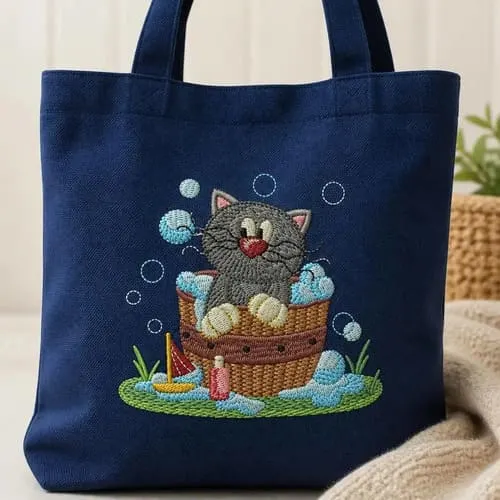

Embroidery Thread for BeginnersThread
Types, weights, and how to choose thread for your first projects
Welcome
Embroidery Thread for Beginners: Types, Weights, and How to Choose If you’re new to machine embroidery, choosing thread can feel almost as confusing as choosing the embroidery machine itself. You’ll see spools labeled 40 wt, 60 wt, rayon, polyester, bobbin thread, specialty thread, and more. Then you have to figure out which thread actually belongs in your machine and which one is best for the design you want to stitch. The good news is that you don’t need a huge collection of thread to get started. Once you understand a few basic differences, choosing embroidery thread becomes much easier. Let’s walk through the basics together.
What Makes Embroidery Thread Different From Sewing Thread?
Embroidery thread is designed to move smoothly through your embroidery machine while creating stitches that look clean and consistent. Regular sewing thread is usually made for constructing seams and handling the stress of joining pieces of fabric. Embroidery thread, on the other hand, is designed with the appearance of the finished stitching in mind. That’s why embroidery thread is available in different weights, fibers, finishes, and colors. For most beginners, 40-weight embroidery thread is the best place to start. It works well for a wide variety of embroidery designs and is a common weight for machine embroidery.
Understanding Embroidery Thread Weight
The number on an embroidery thread spool refers to its weight. This can seem backwards at first, because with many thread-weight systems, a higher number means a finer thread. Here are three weights you’re most likely to encounter: 40-Weight Thread 40 wt is the standard starting point for machine embroidery. It provides a good balance between coverage, detail, and stitch definition. Many embroidery designs are digitized with 40 wt thread in mind. If you're just building your thread collection, this is the weight I would recommend buying first.
- Most everyday embroidery designs
- Names and monograms
- Designs with moderate detail
- Clothing and accessories
- Home décor projects
You can use 40 wt thread for a surprisingly large number of projects without needing to think too much about thread weight. 60-Weight Thread 60 wt thread is thinner than 40 wt thread. Because it is finer, it can be useful when you need smaller, more delicate stitches. It is particularly helpful for tiny lettering and fine details where a heavier thread could make the design look crowded. It can also be used as bobbin thread in many embroidery setups, depending on your machine and the manufacturer's recommendations. If you're just starting out, you probably don't need a large collection of 60 wt embroidery thread. A spool or two can be useful once you begin experimenting with small lettering and detailed designs. 30-Weight Thread 30 wt thread is thicker than 40 wt thread. A thicker thread can provide more coverage and create a bolder appearance. It can be useful when you want the thread itself to become a more noticeable part of the design. However, don't assume that thicker thread is automatically better. Your embroidery design was digitized with particular stitch settings in mind, so changing thread weight can affect how the design stitches. For your first projects, stick with 40 wt unless you have a specific reason to experiment with another weight.
Rayon or Polyester: Which Is Better?
This is one of the most common questions beginners ask. Both rayon and polyester embroidery threads are widely used, and neither is automatically the “right” choice for every project. Rayon Embroidery Thread Rayon is popular because of its beautiful sheen. It gives embroidery a smooth, slightly glossy appearance that can make lettering, florals, and decorative designs look especially polished. Rayon is a great choice when appearance is your main priority. One thing to keep in mind is that rayon can be less durable than polyester, so you'll want to consider how the finished project will be used and cared for. Polyester Embroidery Thread Polyester is known for being strong and colorfast. That makes it a practical choice for projects that will receive regular wear or frequent washing.
For beginners, polyester is an especially convenient option because it can handle the demands of many everyday embroidery projects. So which should you buy? If you love a little extra sheen, rayon can be a beautiful choice. If you're looking for a durable, versatile thread for everyday projects, polyester is an excellent choice. Many embroiderers eventually keep both in their thread collections.
Specialty Embroidery Thread
Once you become comfortable with regular embroidery thread, you may want to experiment with specialty threads. Specialty threads can change the look and texture of an embroidery design without requiring you to completely change the design itself. You might come across threads designed to create unusual textures, effects, or finishes. Some are intended to add visual interest to particular areas of a design, while others are used to create a different overall appearance. These threads can be fun, but I wouldn't make them the first threads you buy. When you're learning, it's much easier to troubleshoot an embroidery design when you're using a familiar 40 wt thread. Once you know how your machine handles ordinary embroidery thread, experimenting with specialty threads becomes much less intimidating. There is also an important reason to test stitch specialty threads before using them on a finished project. Different thread constructions can behave differently as they move through the machine, so you may need to adjust your needle, machine speed, or other settings depending on the particular thread. Think of specialty thread as something to explore after you've learned the basics—not something you need to master on your first embroidery project.
Don't Forget Bobbin Thread
Your embroidery machine uses two threads during embroidery: the top thread that creates the visible design and a bobbin thread underneath. Bobbin thread is usually lighter and finer than the thread used on top. A common choice is lightweight 60 wt polyester bobbin thread, although you should always check your machine's manual for its recommendations.
Does Bobbin Thread Have to Match the Top Thread?
Not usually. For most everyday embroidery, the bobbin thread can be a different color from the top thread because the bobbin thread is primarily there to support the stitching.
However, there are situations where you may want the bobbin and top thread to match. For example, if both sides of your embroidery will be visible, matching the threads can help create a cleaner appearance on the reverse side. The important thing is to use the bobbin thread recommended for your particular embroidery machine and to make sure your tension is properly balanced.
How Much Embroidery Thread Do You Need?
When you first start embroidering, it's tempting to buy every color you see. Try not to. You can build your collection gradually. Start with a small selection of colors that you'll actually use. Black, white, and several basic colors are a good starting point. Then add colors as you work through different projects. If a design calls for a color you don't own yet, that's a good reason to add another spool to your collection. Over time, you'll naturally build a thread library that matches the projects you enjoy making.
Thread Quality Matters
Not all embroidery thread performs the same way. A low-quality thread may break more often, produce inconsistent stitches, or create unnecessary frustration while you're learning. Good-quality embroidery thread should run smoothly through your machine and produce consistent, even stitches. If you're having repeated thread breaks, don't automatically assume the machine is the problem.
- Is the thread properly threaded?
- Is the needle appropriate for the thread and fabric?
- Is the thread catching on the spool?
- Is the machine clean?
- Is your thread tension balanced?
- Are you using the correct bobbin thread?
Sometimes a small problem with threading or tension is all it takes to cause repeated breaks.
Store Your Thread Properly
Once you start collecting thread, you'll want to protect it. Keep embroidery thread away from direct sunlight, excessive dust, and extreme environmental conditions. Sunlight can affect thread colors over time, especially if your collection sits out in the open.
A simple storage system can make your embroidery area easier to use, too. You might organize thread by color, brand, or number so you can quickly find what you need when starting a new design.
Keep thread out of direct sunlight and away from dust, ideally in a closed thread box or drawer. Sunlight can weaken and fade thread over time, and dust can work its way into your machine's tension discs.
A Simple Beginner Thread Collection
You don't need dozens of spools to begin machine embroidery. A practical starter collection might include:
- 40 wt polyester embroidery thread
- Several basic colors
- Black and white
- 60 wt bobbin thread
- A few additional colors that match the projects you plan to make
As you gain experience, you can experiment with different thread weights, fibers, and specialty threads. The goal isn't to own every type of thread. It's to have the right thread for the projects you actually enjoy stitching.
Quick Guide to Embroidery Thread
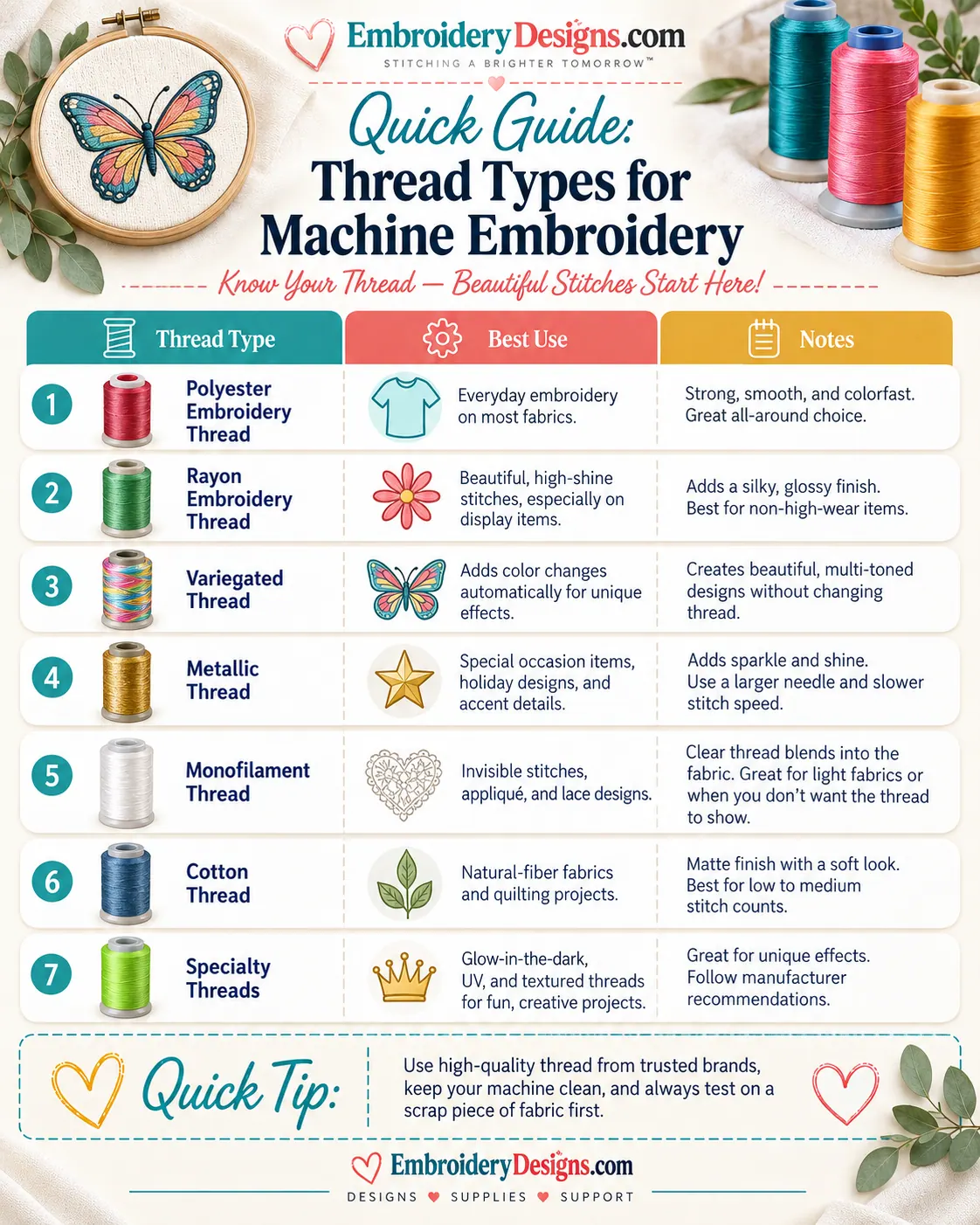
| Thread | What It's Good For |
|---|---|
| 40 wt | Everyday machine embroidery and most designs |
| 60 wt | Fine details and small lettering |
| 30 wt | Bolder coverage and heavier-looking embroidery |
| Rayon | Smooth, shiny decorative embroidery |
| Polyester | Durable, colorfast everyday embroidery |
| Specialty thread | Adding unusual effects, textures, or finishes |
| Bobbin thread | Supporting the embroidery stitches underneath |
The Bottom Line
If you're brand new to machine embroidery, don't let thread choices overwhelm you. Start with good-quality 40 wt embroidery thread, choose either rayon or polyester based on the type of projects you plan to make, and keep a supply of the appropriate bobbin thread for your machine. As you stitch more designs, you'll learn what you like. You may discover that you prefer the shine of rayon, the durability of polyester, or the finer detail you can achieve with 60 wt thread. Eventually, you may want to experiment with specialty threads, too.
That's part of the fun of machine embroidery. You don't have to learn everything before you start. Pick a thread, load your machine, stitch a design, and pay attention to what happens. Each project will teach you a little more about how thread, fabric, stabilizer, needle, and machine settings work together. And before long, choosing your thread will feel much less like a technical decision and much more like choosing the right tool for the project sitting in front of you.
Ready to build your thread collection? Browse our full range of embroidery threads, and use our thread conversion chart to match colors across brands. For more on pairing thread with the rest of your supply kit, see The Best Machine Embroidery Supplies for Beginners.
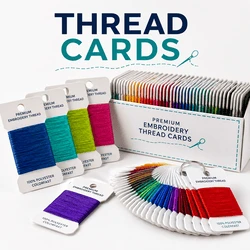
40-weight embroidery thread is the standard starting point for most everyday machine embroidery designs.
Rayon offers more sheen; polyester is strong and colorfast for everyday wear and washing. Many embroiderers keep both.
Not usually. Lightweight bobbin thread often differs in color unless both sides of the embroidery will be visible.