





























Troubleshooting Design Problems: Improper Hooping Embroidery Project
There are several key factors to understand: choosing the proper hoop, applying equal hoop pressure for the garment, selecting the proper backing, and use of topping.
Materials
Project Preview Video

Cut Away Stabilizer - 2.5 Oz wt.

Cut Away Stabilizer - 2 oz wt.
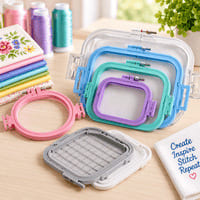
The first step with hooping is to choose the correct hoop. In general, choose the smallest hoop possible for the design, but don’t go too small. Be sure that there is ample room within the confines of the hoop to sew the design. And don’t forget that includes room for the pressor foot! The larger the hoop, the less support it offers for the fabric being sewn. With less support, you will encounter more flagging (bouncing up and down of the material while sewing) and more shifting of the fabric.
You must also ensure that the chosen hoop is firm enough to adequately support the garment. Thin, flimsy plastic hoops may not be the best choice for thick heavy materials, as they can bend and twist quite easily. With such garments, and for larger designs, double-height wooden hoops are usually a better choice.
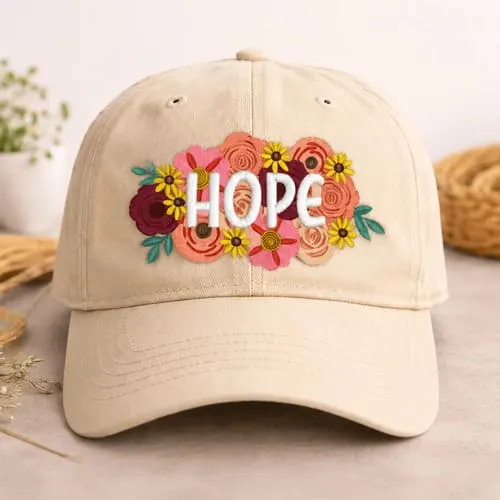
On the subject of cap frames, if the cap doesn’t match the frame properly, you will definitely have quality issues to deal with. Ideally, the horizontal curvature of the front of the cap crown will match the curvature of the frame. Also, the width of the cap should be the same as the diameter/width of the cap frame. If you have to fight the cap to hoop it, then it probably does not match the frame. (Good luck sewing on that!)
The next area of focus for the hooping process is to ensure proper tension of the hoop and the fabric. First of all, you must ensure that the fabric is taut but not stretched. If it’s stretched beyond its normal settings while sewing, then it will snap back to its original setting when released from the hoop. This will cause distortion of the embroidery. On the other hand, if the fabric is too loose in the hoop, it will pucker or gather very easily while sewing, once again yielding poor quality sewing.
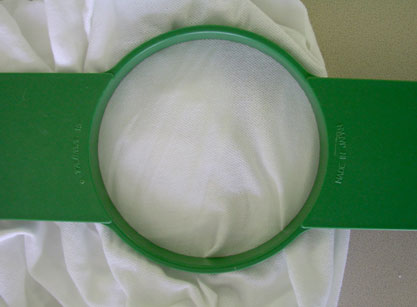 This concept applies to all directions, not just left and right. When hooping the garment, it’s important to ensure equal tension on all sides of the hoop. If not, then the garment may be too tight or too loose in one direction. Backing can play a big factor in creating balanced hoop tensions. It’s important that you use backing that is cut larger than the hoop to be used. Then ensure that it is contained within the hoop all the way around. If so, then you will probably have equal tension applied to the garment all the way around. If not, you may have the fabric taut in some areas, but loose in others.
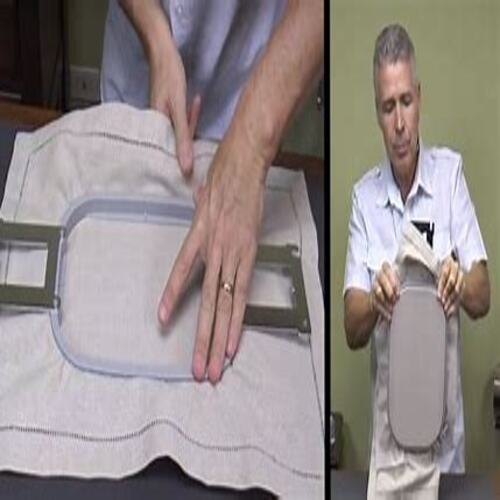
Along these same lines, when you go through the physical hooping process, press down with equal pressure all the way around. If not, you may have unbalanced hoop tension. Also, you should NOT tighten or loosen the hoop after hooping. If the hoop tension is wrong, unhoop, adjust the tension screw, then rehoop. The reason for this is that adjusting the tension screw while the garment is hooped leads to a different tension only in the area of the screw, not an equal distribution all the way around.
Choosing the correct backing is also part of the hooping process. It’s rare that you won’t use backing, though there are some applications. The purpose of backing is to provide a stable surface that the garment can be attached to via sewing. If this doesn’t happen, then the fabric will be manipulated by the sewing with the result being poor registration. If for example, you used one layer of tear-away backing with a typical sweatshirt, chances are it would not provide the necessary stability for the embroidery and the finished design would be of inferior quality. Typically, you want to use cutaway backing for stretchy, unstable materials, not tear-away. It should be noted, however, that multiple layers of tear-away backing can be used to achieve stability, without the bulk of cutaway backing. Just be sure that each layer is completely hooped.
Textured fabrics may need a topping to ensure proper registration of the design. If the sewing surface is not smooth, then the stitches will not lay down flat and even. In cases such as corduroy, pique mesh, terry-cloth, etc, it’s imperative that you use a topping, preferably water soluble, to prevent misalignment of stitches.
