













































Organizing an Efficient Workspace within your Embroidery Shop Embroidery Project
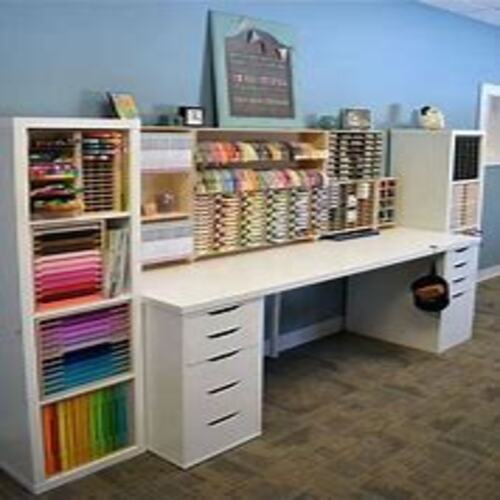
Organizing your embroidery workspace is extremely important whether you are a one person single head embroidery shop or a large multi-head embroidery shop with several operators.
Materials
Project Preview Video

Cut Away Stabilizer - 2.5 Oz wt.

Cut Away Stabilizer - 2 oz wt.
 Organizing your embroidery workspace is extremely important whether you are a one person single head embroidery shop or a large multi-head embroidery shop with several operators. Efficient organization will be cost effective and increase your embroidery production dramatically. The layout of your workspace depends on the actual space that you have to work with and the physical layout of the room or available space. A clean tidy and well organized workspace goes along way in creating the first positive impression to new clients or customers.
To create an efficient workflow within your embroidery workspace, each job process should have its own location. This workflow should start with Receiving. Receiving should be located as close to the incoming door as possible. From Receiving; the jobs go to a Staging area, waiting for the prep work. From Staging they go to Prep or the Hooping area where they are hooped and placed into baskets or bins ready to be transported to the embroidery machine. The next stop is the Embroidery machine, then to Finishing where the order is trimmed and packed. The packed garments are then ready for Shipping or to be picked up. Shipping can be located in the same area as the Receiving if this is necessary, but on the other side of the area. There must be a clear definition between these two areas. You do not want to have your Received Orders and your Orders ready for Shipping in the same location. This can become very confusing, especially if you are trying to train a new person.
In a small in home embroidery shop all of these different work areas are not always possible, but the more you can separate each work area the more efficient you will become. If you have too many different stages of operation being done in one area, it tends to become too crowded and you begin to loose things as well as your workflow.
Each area or workstation has certain tools that are applicable only to the jobs or procedures that are done in that work area. Keep all of the tools considered necessary for that area close at hand so that there is no time spent searching for the proper tools.
If you have employees, each employee should be assigned his or her own set of tools. There should be enough for everyone with no borrowing between each other. When employees have to borrow tools from each other, they do not always get returned or get returned to the correct location. If each employee is assigned certain tools, make sure that they keep track of them. A good method is to have them wear an apron with their name on it and have all of their tools in the apron pockets. This is a very efficient way of keeping track of the tools and having them at their finger tips at all times; saving a lot of wasted steps in looking for that necessary tool.
All of the supplies that are applicable to that work area and the function of that position should be stored in that work area. If extra supplies are kept on hand and interfere with the production, they should be stored in a designated Supply Storage area. This is especially true for a larger shop. You will store only the supplies that are needed for a short period of time in the actual work area. If you have a large shop, all of the embroidery machines should have their own thread storage area behind the machine for easy retrieval or at least one central location that is close to all of the machines if it is not feasible for separate storage. The extra thread should be stored in the Supply Storage area.
At the end of each work day the area should be swept clean and all of the tools, paperwork and unfinished items returned to the proper location ready for resuming the work the next day or for the person on the next shift. If the employee is in the middle of an unfinished job, all of the paperwork and notes pertaining to that job should be returned to the proper job folder or to a clipboard that will travel with the job. If this is not done, it creates confusion and lost paperwork.
Having an efficient well organized workspace makes everyone feel more productive, it raises employee moral and it also raises the bottom line!