



























Stabilizers: A Simple Guide Embroidery Project
Guidelines to choosing the right stabilizer for your next embroidery project.
Materials
Project Preview Video

Water Soluble Stabilizer - 12" x 25 Yds
{{ item.name }}

Guidelines to choosing the right stabilizer for your next embroidery project.
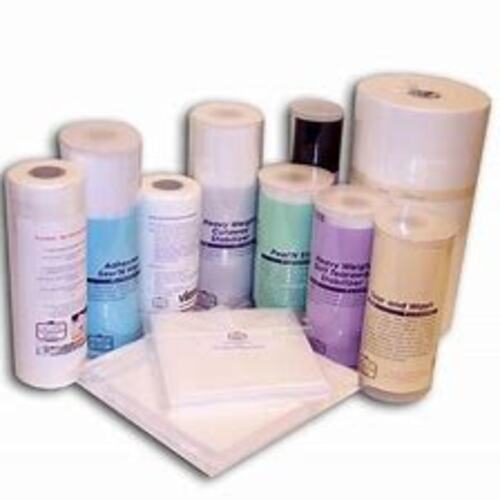
When I bought my first embroidery machine, I was unaware of the role that stabilizers play in embroidery. There were many varieties of stabilizers from which to choose; the choice was both overwhelming and unclear. My dealer had a large shelf displaying a variety of stabilizers: tear away, cutaway, iron on, wash away types, and sticky ones, and others that get sticky when moistened. Stabilizers were also thick, thin, and nearly invisible, some looked like plastic wrap, others were heavy and stiff and yet others were sheer and elegant like silk. If that weren’t sufficiently confusing, stabilizers also came in rolls of varying widths and lengths, were packaged in convenient pre-cut sheets and little plastic pouches.
Step One: Evaluate What fabric are you going to embroider on? Is the fabric tightly woven, loosely woven, knit, fleece or delicate as silk? Is the design dense or does the design have few stitches? Does the fabric stretch when gently pulled lengthwise or on the bias? Does the fabric have a deep nap? Are you going to embroider towels? Does the design have precise outlines?
Tear away: This is a temporary stabilizer that is carefully torn off after the embroidery is completed. It’s best for woven cotton fabric and redwork. It’s not the best choice for dense designs because the needle may shred the stabilizer to bits. You’ll end up with a design that will pucker, distort and outlines that will misalign and wander all over the embroidery. Sticky back stabilizer: A good choice for those hard to hoop items such as socks, collar tips, and shirt cuffs. To provide additional stability with the tear away sticky stabilizer, I place a piece of cutaway stabilizer beneath the hoop. |


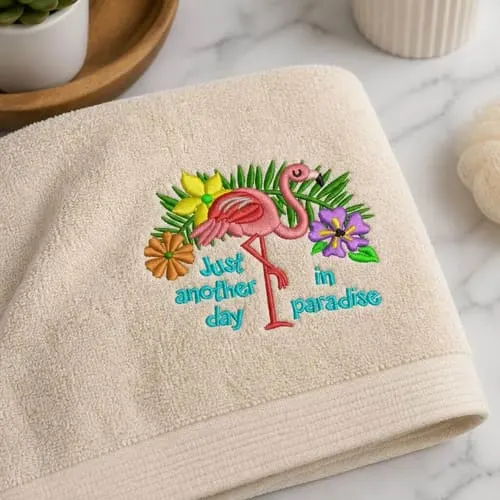
Stabilizer (topping): This wonderful product is used to keep the embroidery from sinking into the pile of the fabric and is also used to make embroidered lace and completely disappears when rinsed. Use of a topping is very important when embroidering on towels, fleece or any fabric with a pile. The topping is water soluble and resembles a thin clear sheet of plastic. After the fabric is stabilized and hooped, apply a piece of topping to the top of the fabric; you can secure the topping with temporary spray adhesive if you’d like. After the embroidery is completed, clip the jump stitches and then gently tear away the topping or wash the embroidered item to completely remove the topping.
|

