

























Choosing A Digitizer Embroidery Project
Learn how to pick the right source for your shop’s digitizing needs.
Materials
Project Preview Video

Cut Away Stabilizer - 2.5 Oz wt.

Cut Away Stabilizer - 2 oz wt.
Learn how to pick the right source for your shop’s digitizing needs.
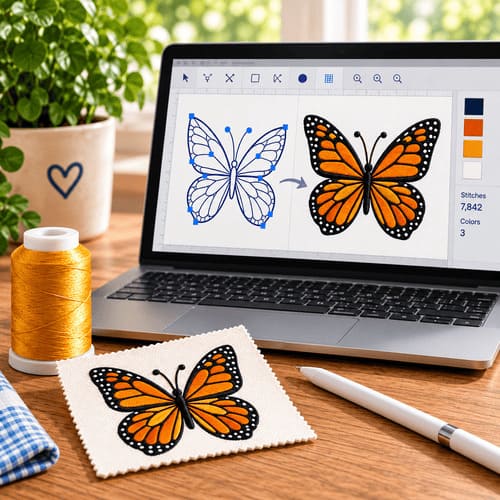
Good digitizing plays a critical difference role in how well your embroidery machine does its job — which means it affects your profits too. That’s why it’s so important to find the right digitizer for your business. If you’re shopping for a new digitizing source, or perhaps looking for one to augment the ones you’re currently using, you might be tempted to choose whoever can do a design at the lowest price. However, there are many more considerations. Ideally, you want a reasonably priced design that looks great, of course, but you also want one that allows your machine to run at higher speeds without thread breaks and other time-wasting, potentially costly headaches. A good design is not just about keeping a low stitch count. The digitizer might use stitch-saving techniques that cause thread breaks, and then you’ve got a problem. You don’t want to have to baby sit the machine. Another time-waster that can result from poor digitizing is thread looping, due to improper stitch length. I don’t want to have to trim stitches or edit the design. And I don’t want to cut a lot of loose threads at the end of the run. The Intangibles Of course, finding a digitizer who turns out good designs is still only half the battle, as numerous other issues must be considered: Communication skills. You’ll want to choose a digitizer with whom you can communicate easily and readily. Imagine the frustration of getting a design on your machine for production, finding a problem with the digitizing, and then having to wait hours, or even days, to get in touch with the digitizer. Payment options. Does the digitizer take credit cards? Does he take payment on a per-job basis, or require it in bulk payments for groups of jobs? Available tools. Ask what software the digitizer uses and his output format. You want it in the right format so that you can manipulate the design. Turnaround time. While it’s worth asking how quickly the digitizer can deliver the job, many can do it within 24 hours. However, you may have to pay a premium price for super-fast turnaround time. Proof format. Find out whether the digitizer will provide a physical sewout or a digital file, such as a screen shot.
The Right Information A good digitizer should have in-depth knowledge about the entire embroidery process, from thread to fabric, and he should stay abreast of the latest product offerings. For instance, the newest generation of polyester threads allows for higher stitch speeds, something the digitizer should take into account. Ideally, questions about the job’s details will be raised by the digitizer, not you or your staff. Such questions indicate that the digitizer knows enough to gather the information required to do a good job for you. Without prompting, a good digitizer will ask questions like how many pieces you’re doing, how big the design is, what kind of garment the design is going on, whether it will go on a hat in the future, and so on. Quantity matters because the digitizer may adjust stitch count accordingly. For instance, if you’re doing only 72 pieces, it might make sense to put in a few extra stitches for better integrity. However, if you’re doing 10,000 pieces, he’ll likely digitize a bit differently, or at least present that different stitch count as an option to you. | |||||

Pricing Issues Many digitizers charge by stitch count, while others charge by the time they spend doing the job, and still others simply charge a flat fee. Regardless of their fee structure, practically every digitizer will provide a free quote for a job. If a digitizer charges for a quote, stay away, because he’s trying to squeeze every little penny out of you. While rates vary widely, a rough range for the going rate is about $2.99 to $6.99 per thousand stitches from offshore embroiderers, and about $6 to $12 per thousand stitches from domestic embroiderersl. Offshore digitizers offer a way to get lower-priced digitizing, although working directly with such sources can present challenges, including time differences and language barriers. Still, some domestic digitizers actually subcontract part, or even all, of their jobs to be done offshore, where labor costs are significantly cheaper. In such scenarios, you get the benefits of a local contact and lower costs. While offshore digitizers have a reputation in some circles for questionable quality, it’s certainly possible to get good work from them. In fact, I have seen very good results from some. There are so many offshore digitizers now that offer the first design free, so that’s a great way to test their work. You may not want to go offshore most of the time, but there are times when it’s just more cost-effective. Passing on the Costs No matter what you pay for the digitizing, you’ll need to decide whether to pass on the cost to your customer. While some may debate the pros and cons of giving it away, I feel that the cost should always be passed on. Whether it’s in digitizing or hidden in shipping, or you bump up the cost of garments a nickel each, you need to pass on the cost one way or another. You also need to determine if you want to make a profit on the digitizing. Even though you didn’t do it, you still spent time with it, so you should make a profit on it. It might not be a huge profit margin, but you should mark it up. Such a markup helps absorb the cost of the time you might spend editing a design or tracking it down from the digitizer, for instance. |
Your Part of the Bargain
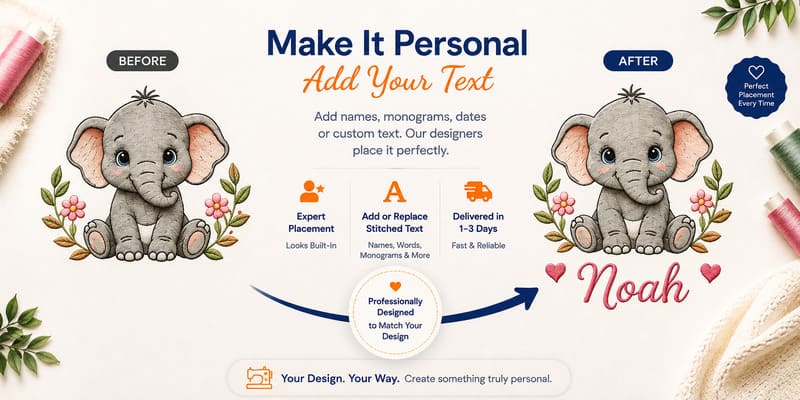
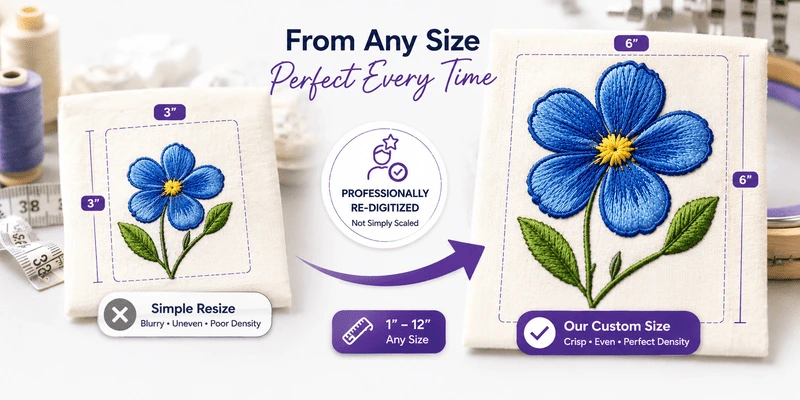
Digitizers generally prefer vector art, although they’ll usually accept jpegs. and other file types. The old maxim “Garbage in, garbage out,” applies here; in other words, if you send subpar artwork, don’t expect to get top-notch digitizing. When you place an order with a digitizer, he will want to know what type of garments you want to sew it on and also in what sizes. For example, if you want the same design digitized to be jacket back size and also as a left chest design, it will need modifications and the digitizer needs to know that upfront. Also, expect a minimal editing fee if the design must be edited after it’s digitized. Don’t expect the digitizer to do a spell check for you. If you spell “imprinted” wrong, they’re going to digitize it wrong. After all, just like you, they’re only human. |