Border OptionsHugging border, circle, square, or rectangle — with a 3mm satin stitch.
Backing OptionsAvailable with iron-on, sew-on, or velcro backing.
Fast ShippingShipped quickly from the USA.
Free Online Tools
Powerful embroidery utilities that save time and prevent costly mistakes.
Stitch AssistantRECOMMENDED
Get the exact stabilizer, machine settings, needle, and thread color sequence for every embroidery design you purchase — based on that design's stitch density, dimensions, and color count.
Sublimation is a process that is similar to transfers. With this method a graphic image is printed onto a special paper using a sublimation printer. The design is then applied to the garment using a heat press. The sublimation dyes turn into a gas which penetrates the threads of the garment, leaving the image permanently affixed to the garment. The results are impressive, as the method effectively captures intricate details and vibrant colors.
There are two methods for combining embroidery with sublimation. The first is to add text or designs over or adjacent to the sublimation, much like with transfers. However, there is one drawback. Sublimation only works on polyester. It won’t work for cotton fabrics, so this is a major limitation of the process.
The second method works on most fabric. Plus it’s much more exciting with astounding results. It begins with the artwork. The image is generated and printed out on sublimation paper. The same image is then digitized as a one color design using light densities. It is then sewn onto a garment using white polyester thread. The next step is to carefully place the sublimated image over the stitched image, so that it lines up properly. Then heat is applied. The sublimated image will transfer into the polyester threads, leaving a detailed image, colorful image that appears to have been embroidered.
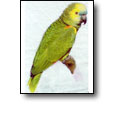
To learn more about sublimation combined with embroidery, I spoke with Lorian Maddox, owner of Black Tie Designs Embroidery & Digitizing, Sumner, WA. Says Maddox, “I had a very detailed design of a parrot which contained a variety of color blends. From an embroidery perspective, I knew it would hard to recreate the colors the way I wanted them. I had heard about this method from Walt Floriani and decided to give it a shot, since I already had a sublimation printer. The results were fantastic! It takes some careful coordination, and of course the artwork has to be very sharp and clean, but the results are worth the effort. It certainly provides me with additional embellishment methods that I can offer my customer.”
Another plus of the sublimation method is that having a sublimation printer onsite opens up additional embellishment opportunities for embroiderers, as designs can be applied to mugs, plaques, emblems, etc.
Award-winning author and international speaker Jimmy Lamb has over 15 years of embroidery experience as well as 10 years of professional digitizing experience (as a business owner). Currently, he is the Director of Training and Education for Hirsch International Corp., where he has been instrumental in developing their educational seminars.