Border OptionsHugging border, circle, square, or rectangle — with a 3mm satin stitch.
Backing OptionsAvailable with iron-on, sew-on, or velcro backing.
Fast ShippingShipped quickly from the USA.
Free Online Tools
Powerful embroidery utilities that save time and prevent costly mistakes.
Stitch AssistantRECOMMENDED
Get the exact stabilizer, machine settings, needle, and thread color sequence for every embroidery design you purchase — based on that design's stitch density, dimensions, and color count.
There are several problems when it comes to creating small lettering. Here are some tips for dealing with them.
The problem with small letters is that the width of the stitch is so short, it becomes impossible to have two needle penetrations side-by-side. In fact, you may encounter a situation where the width of the stitch is shorter than the diameter of the needle. The result will be that you are sewing holes instead of stitches.
Here are some tips for dealing with small lettering:
Anything below 1/4” or 6mm will need special attention.
Small letters have a tendency to push and pull more than larger ones. Compensation will be important.
Avoid “busy” complex fonts.
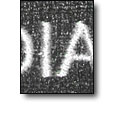
Letters with closed-in areas such as O, P, D, etc. have a tendency to close up. These areas will need exaggeration.
All letters should be connected.
Stick with capital letters where possible.
Underlay should be manually created.
Letters should be of medium thickness.
Lower density to 50spi or 5.5pts.
Where possible, digitize small letters on top of a “filled” area.
It may be necessary to digitize the stitches at an angle in order to increase the stitch length to a usable value.
Use a 65/9 needle when sewing small letters. For even better results, use this needle in conjunction with 60 weight thread.
In addition, when creating small lettering, exaggerate them. Closed curved areas of letters tend to pull inward when sewing, so it’s necessary to digitize the letter in an exaggerated fashion towards the outside of the curve. This can happen with larger letters as well, but is more predominant with small ones, since underlay is very limited due to the size of the letter.
Award-winning author and international speaker Jimmy Lamb has over 15 years of embroidery experience as well as 10 years of professional digitizing experience (as a business owner). Currently, he is the Director of Training and Education for Hirsch International Corp., where he has been instrumental in developing their educational seminars.