














































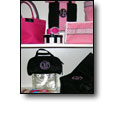


Retail Techniques & Management: Part III Embroidery Project
Time Is Money
Materials
Project Preview Video

Cut Away Stabilizer - 2.5 Oz wt.

Cut Away Stabilizer - 2 oz wt.
Time Is Money
Time is money! In the world of retail embroidery the key is to make the process, quick, simple, painless and fun. It begins by placing limits on what you offer. If you have 50 fonts, pick out the top 10 and only show them. (I’ve been known to reduce that to 4.) If none of those 10 will suffice, then and only then will you show them the rest. Second and this is the most important of all, lead the customer through the process rather than asking questions. If you ask open-ended questions, you are handing over control of the process to the customer, which can be a very dangerous thing. |

Consider these examples:
Example #1 – Choosing Stock Designs WRONG: “Look through our stock design catalog and see if there is anything that catches your eye.” RIGHT: “What type of design are you looking for?” (Wait for answer.) “A football, great, let me show you what we have.” (Turn to the correct section and point out the best designs.) “Either of these two football designs will fit on your shirt and they all sew great.” Example #2 – Choosing Fonts WRONG: “We have 50 great fonts to choose from, which one do you like the best?” : “Here are our 10 standard fonts. I suggest that you go with Brush Script in this situation as it will really complement your stock design nicely.” Example #3 – Choosing Text Size WRONG: “What size would you like your lettering and/or monogram? RIGHT: “I suggest that you make the lettering “X” height.” – or – “5 inches is our standard height for single letter monograms on bath towels.” |

This same process applies to the rest of the order-taking process. Keep it short and simple, lead the customer as much as possible and avoid too many choices. I once had a customer take 30 minutes to decide between three shades of yellow. (A mistake on my part since I asked her which shade she preferred.) I learned to say “I suggest yellow thread for that design.” If they asked which shade, I replied that we would choose the best match. Most agreed to this remedy. |
