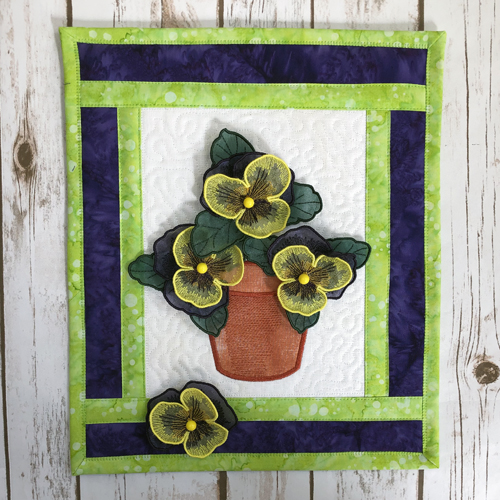
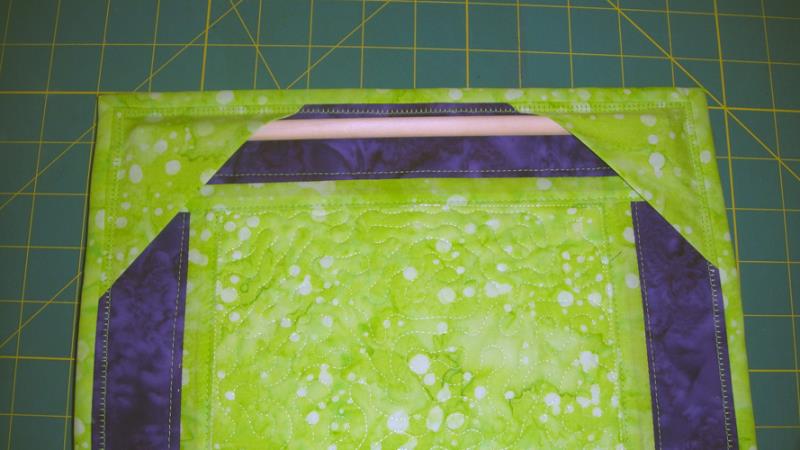
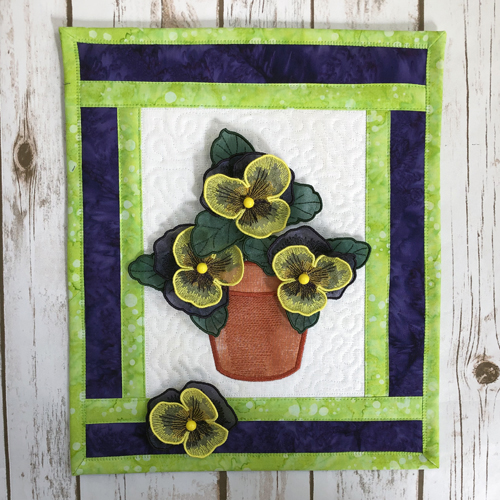
The 3D pansies are created first, then make the wall hanging. The pansies are attached to the wall hanging with Velcro® oval peel and stick that is made with a special sticky back for fabrics. By using the Velcro® you can remove the flowers from the wall hanging when you want to wash it or take them off to store the wall hanging for next year. This wall hanging will also fit in your Ackfeld® Mini Quilt holder if you add a quilt sleeve to the back of the wall hanging instead of the triangles of fabric that hold a dowel.
Step 1:
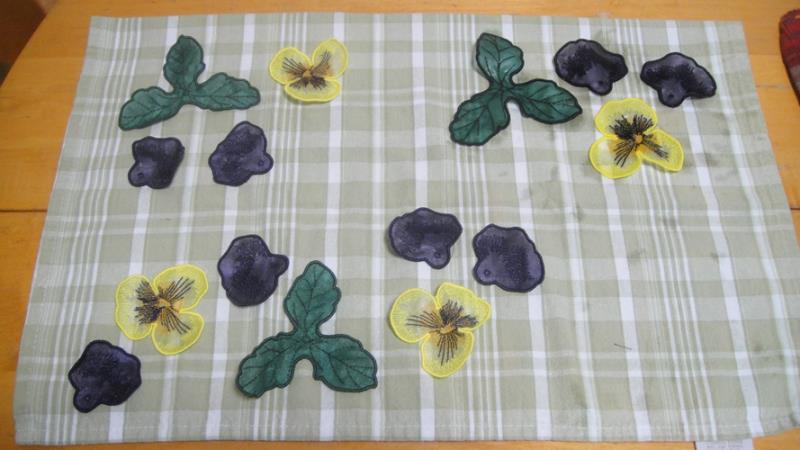
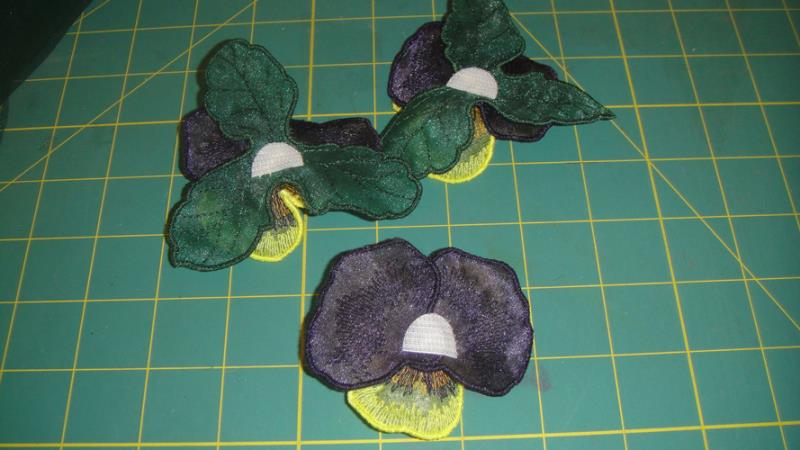
Make 2 small and one large organza pansy using the instructions in the ITH 3D Organza Pansy project. Make a 4th small pansy omitting the leaves.
(Click Image to Enlarge)
Step 2:
(Click Image to Enlarge)
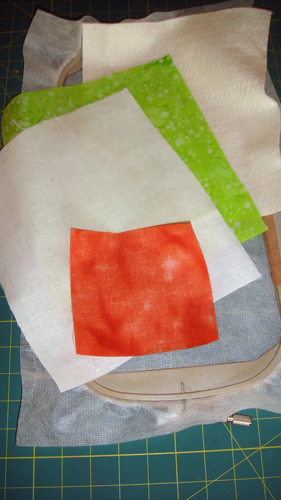
For the wall hanging cut a 9” x 10” rectangle of white linen, lime green fabric, and low loft batting. Cut a 5” x 5 ½” of the pot applique fabric and Heat N Bond Lite® as well as a sheet of no show stabilizer to fit your hoop. Following the manufacturer’s instructions apply the Heat N Bond Lite® to the back of the applique fabric.
Step 3:
(Click Image to Enlarge)
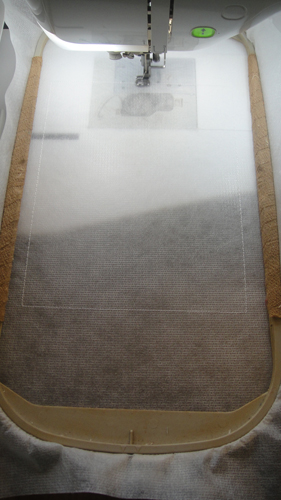
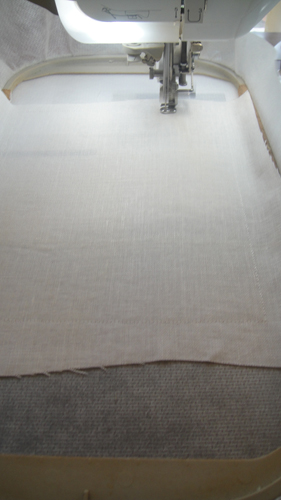
Tautly hoop the no show stabilizer and run color stop (CS) 1 in white thread as a placement line for your fabric.
Step 4:
(Click Image to Enlarge)
Spray adhesive on the wrong side of the white linen and place right side up over the placement lines having the fabric exceed the placement line by ½” on all sides. Run CS 2 to tack down the fabric with water soluble thread.
Step 5:
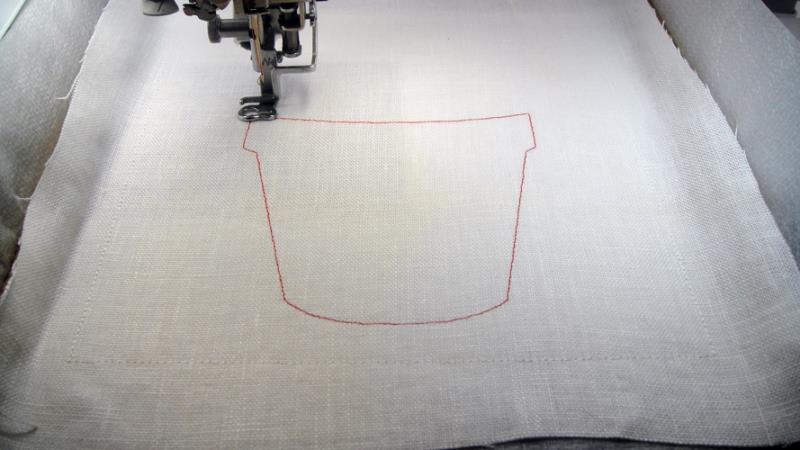
Run CS 3 with terra cotta thread as a placement line for the applique.
(Click Image to Enlarge)
Step 6:
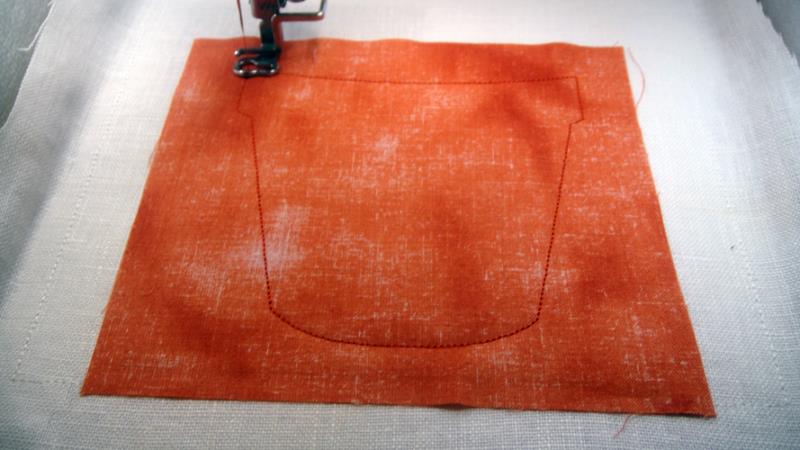
Remove the paper backing from the Heat N Bond Lite®, spray the applique fabric with adhesive and position over the placement line. Run CS 4 in terra cotta thread to tack down the applique.
(Click Image to Enlarge)
Step 7:
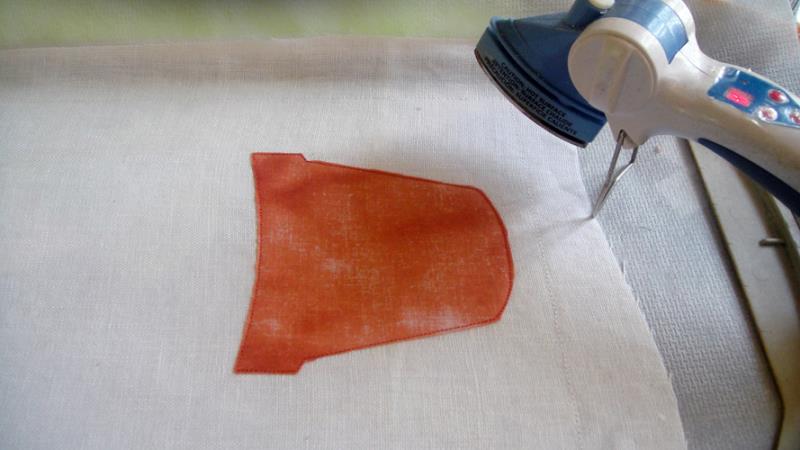
Remove the hoop from the machine, do not unhoop, and trim the applique right up next to the tack down lines. Press the applique with an applique iron.
(Click Image to Enlarge)
Step 8:
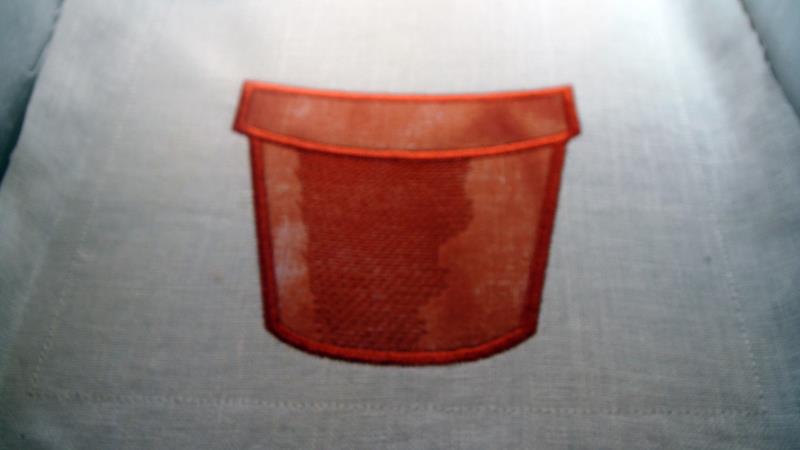
Return the hoop to the machine and run CS 5 in terra cotta to embroider the detail and the borders of the flowerpot.
(Click Image to Enlarge)
Step 9:
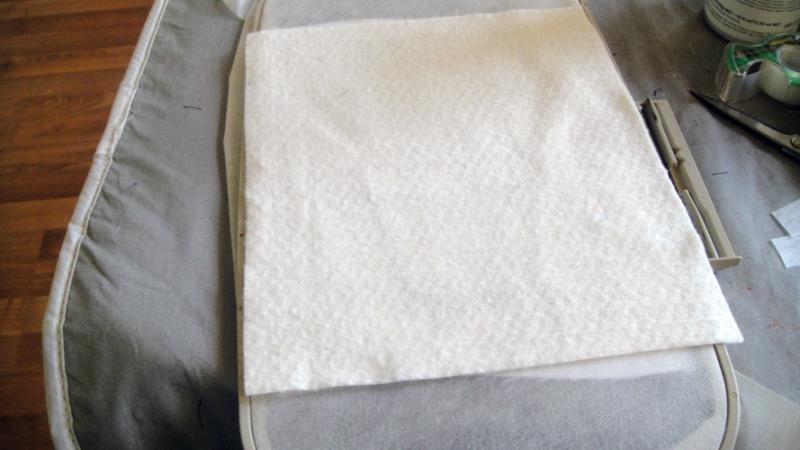
Remove the hoop from the machine, do not unhoop, and lay it face down on a work surface. Spray adhesive on the Battilizer® and position over the original placement lines so that the Battilizer® exceeds the placement lines by ½” on all sides.
(Click Image to Enlarge)
Step 10:
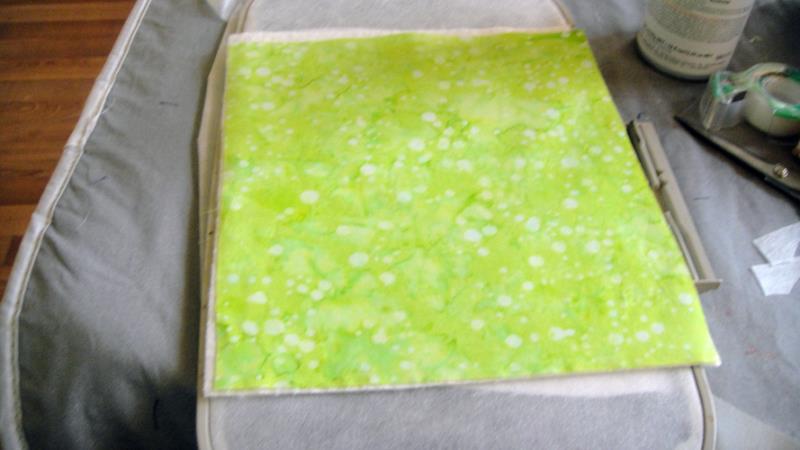
Spray adhesive on the wrong side of your back fabric and align over the Battilizer® right side up.
(Click Image to Enlarge)
Step 11:
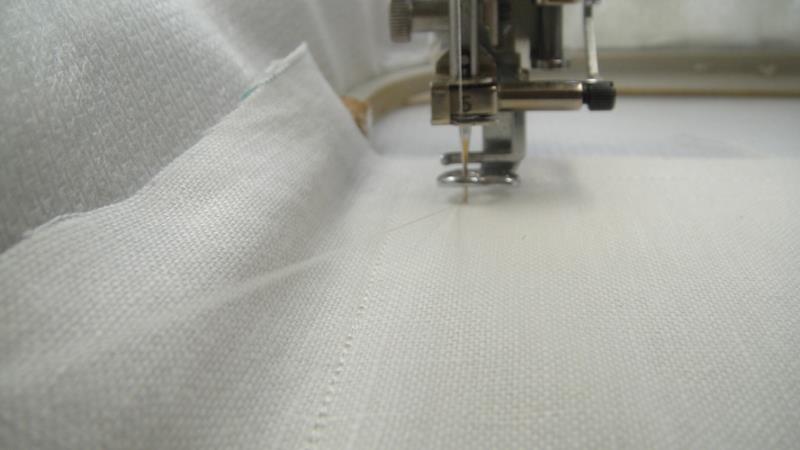
Return the hoop to the machine. Run CS 6 in water soluble thread to tack down the back fabric and batting. Switch to regular white thread and run CS 7 to quilt the block. Bring the bobbin thread to the top of the fabric and hold unto both the top and bottom threads when you start to stitch the quilting to avoid making a lump of thread with the tie down stitches on the back of the block.
(Click Image to Enlarge)
Step 12:
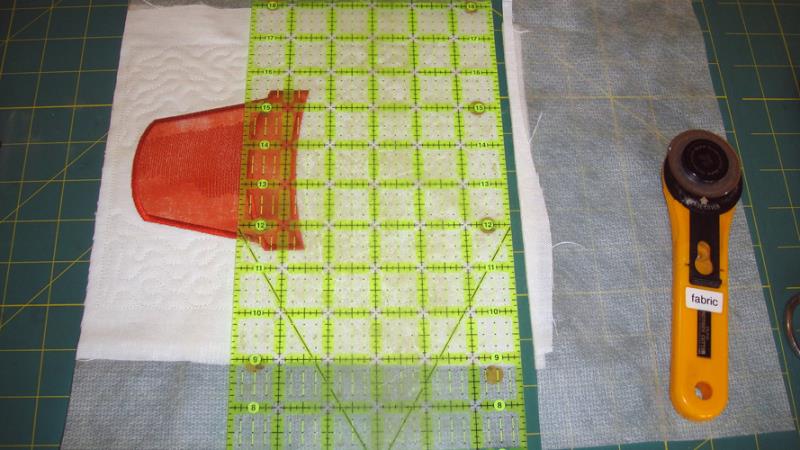
Remove the block from the hoop. Lay the ¼” lines of a see through ruler on the water soluble placement lines and trim all sides of the block to ¼” seam allowances.
(Click Image to Enlarge)
Step 13:
(Click Image to Enlarge)
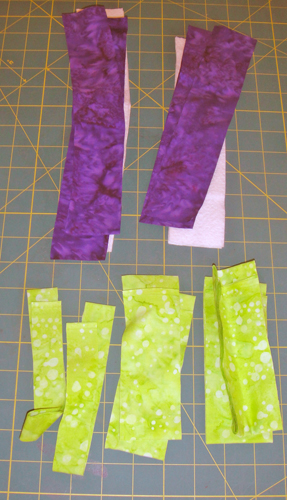
To complete the wall hanging cut: a. 4 2” x 10” strips of purple border fabric b. 4 2” x 12” strips of purple border fabric c. 2 2” x 10” strips of Battilizer® or low loft batting d. 2 2” x 12” strips of Battilizer® or low loft batting e. 2 1” strips of lime green across the width of the fabric f. 2 2” strips of lime green across the width of the fabric g. 2 2 ¼” strips of lime across the width of the fabric for binding h. 2 4” squares of lime green fabric
Step 14:
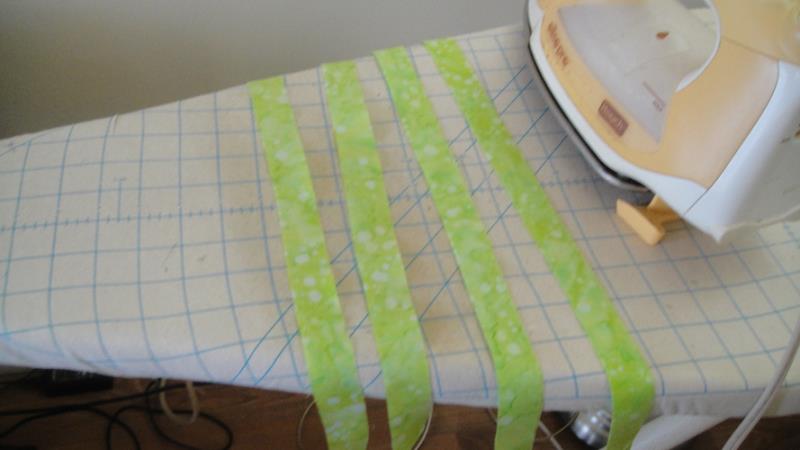
Spray the 1” sashing strips with Magic Sizing® and iron. Spray the 2” sashing strips with Magic Sizing® fold in half lengthwise and iron. Make quilt sandwiches from the border pieces by Spraying adhesive on one side of the Battilizer® border strip and smoothing a corresponding border strip on one side of the Battilizer®. Spray the other side of the Battilizer® with adhesive and place another corresponding border fabric on this side of the Battilizer®. You should have two 10” and 2 12” borders (not pictured).
(Click Image to Enlarge)
Step 15:
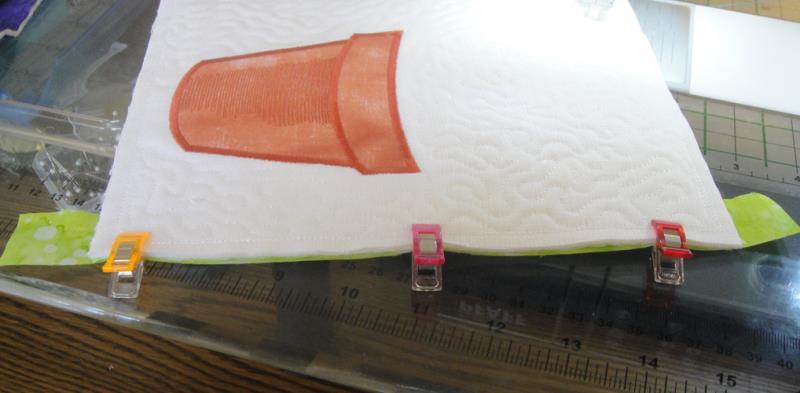
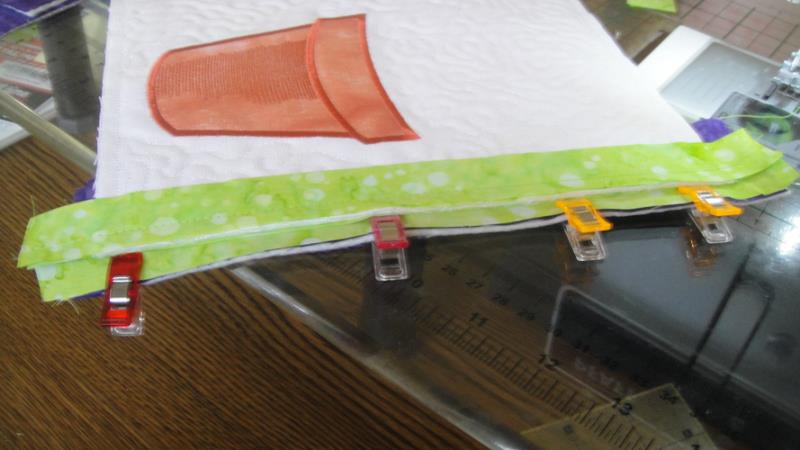
Pin or clip a 1” strip of sashing to the back of the quilt block having the ends of the strip extend beyond the top and bottom of the block by ½”. If your fabric has a right and wrong side have the right side of the fabric touch the wrong side of the block.
(Click Image to Enlarge)
Step 16:
Simultaneously clip the folded sashing strip to the top of the block. Have the raw edges of the top strip even with the raw edges of the quilt block and the bottom sashing strip.
(Click Image to Enlarge)
Step 17:
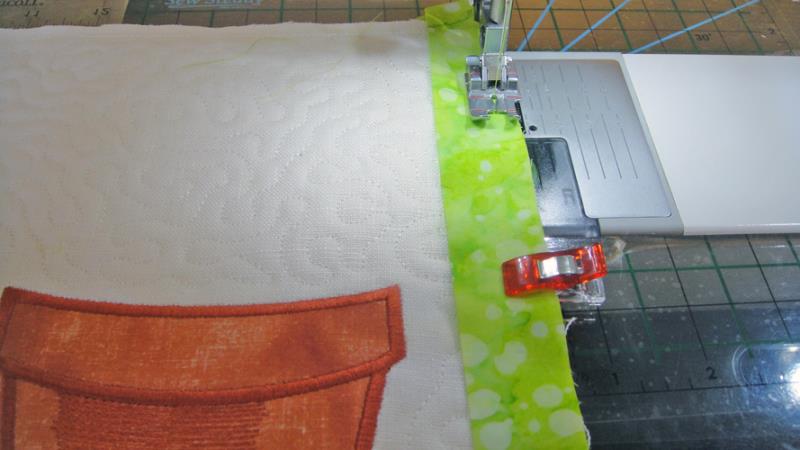
Stitch through all layers with an accurate ¼” seam allowance with a 3mm stitch. Then repeat steps 15 through 17 on the other side of the quilt block.
(Click Image to Enlarge)
Step 18:
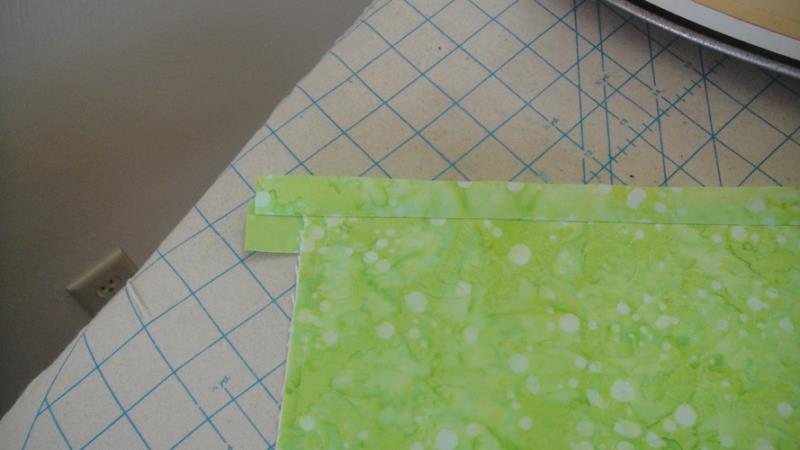
Press out the 1” strip on both sides out away from the quilt block.
(Click Image to Enlarge)
Step 19:
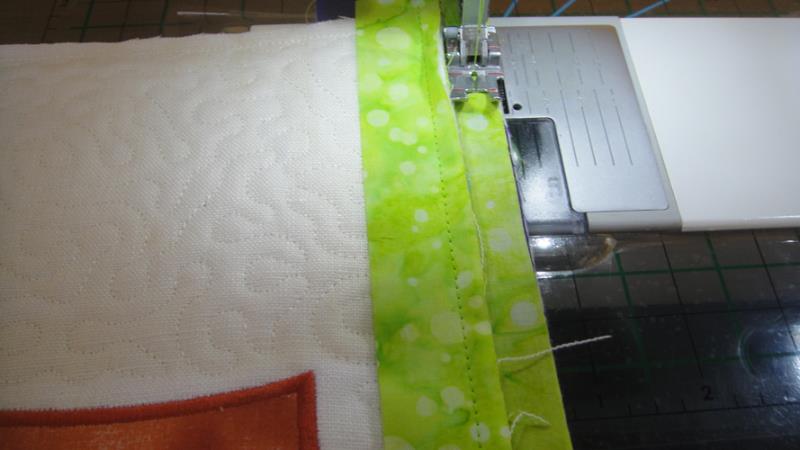
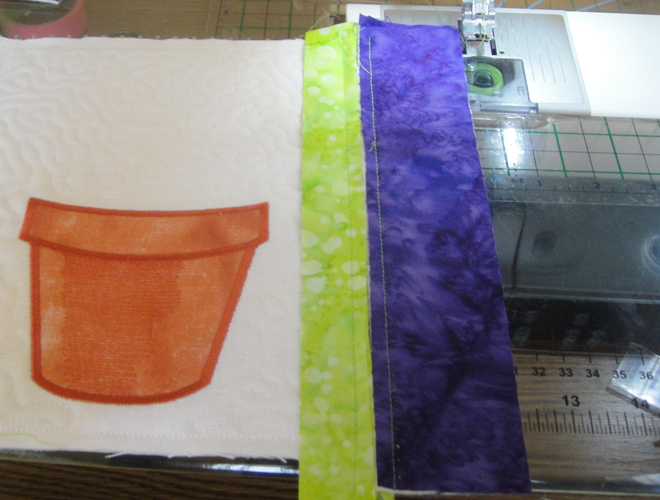
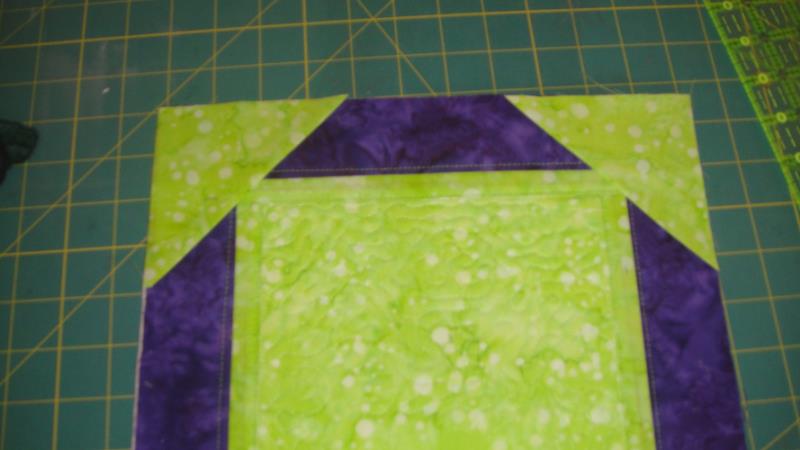
Align a 10” border sandwich behind the 1” sashing strip, having the border sandwich exceed the top and the bottom of the block by approximately ½” on each end. Stitch to the 1” strip only with an accurate ¼” seam allowance. Repeat on the other side of the quilt block.
(Click Image to Enlarge)
Step 20:
When you fold out the border to the right side of the block the two seams should butt up to each other with no gaps or overlaps.
(Click Image to Enlarge)
Step 21:
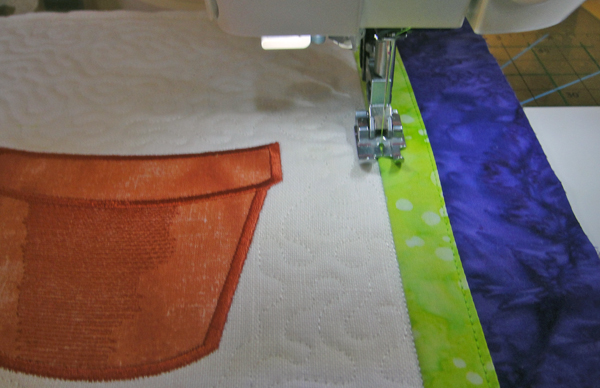
Press the seams flat and then press the top sashing over the seams. Edge stitch the top sashing on both sides. Repeat Steps 19 through 21 on the other side of the quilt block.
(Click Image to Enlarge)
Step 22:
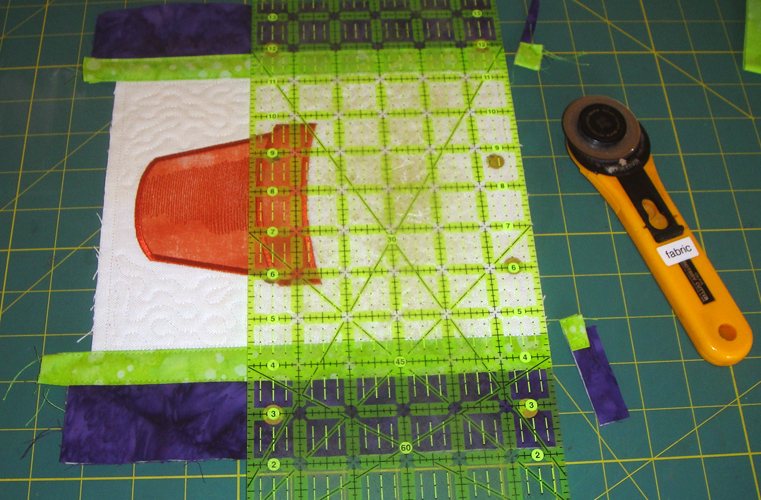
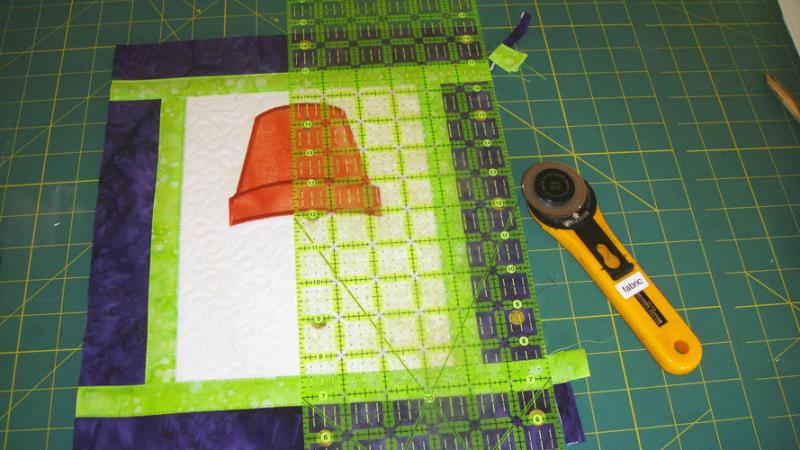
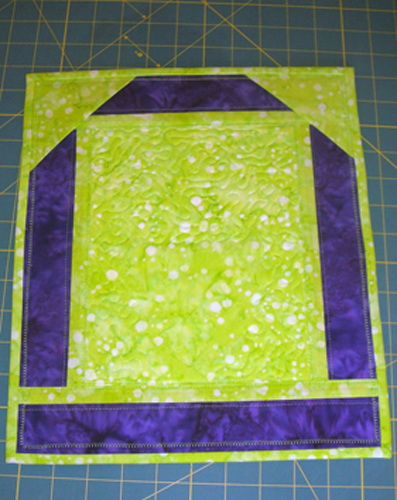
Align a ruler across the top and bottom of the quilt block and trim the excess sashing and borders.
(Click Image to Enlarge)
Step 23:
Attach the sashing and top and bottom borders all the way across the quilt block and side borders following the techniques in Steps 19 through 22.
Cut the Velco® Sticky Back for Fabrics Ovals in half. Apply the loopy side to the backs of the flowers.
(Click Image to Enlarge)
Step 27:
(Click Image to Enlarge)
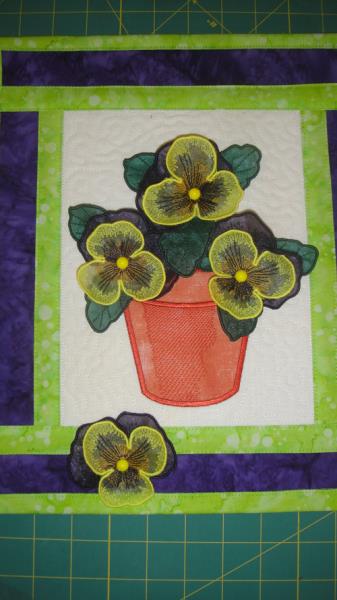
Play with the arrangement of how you would like the pansies to be on your quilt. When you get them where you would like them to be lift the edges of the flowers and make a mark with a fabric pen. Remove the flowers and attach ½ of the smooth side of the Velcro® ovals to the quilt. According to the directions you should let the Velcro® sit on the fabrics for 24 hours before attaching the flowers to the quilt block. I could not wait and attached them right away to see the project completed without any problems, but may want to follow the instructions.
Step 28:
Slide the 9 ¾” dowel under the pockets to make a hanging rod for your wall hanging.
(Click Image to Enlarge)
Step 29:
Congratulations your Flowerpot Mini Quilt is complete!
Award winning Digitizer, Embroidery Educator, Author and a Consultant to the Industry, Pat Williams has 30 years of experience in the embroidery industry. Pat has won multiple awards for her digitizing expertise including the 2007 Impressions Awards Grand Championship, Best of Show as well as the 1st and 2nd Place Awards. Pat’s love of digitizing has afforded her the opportunity to write numerous articles for Impressions magazine in the United States and Images Magazine in Europe. In 2001 Pat was named “Embroidery Educator of the Year.” For many years Pat taught digitizing seminars at the ISS Shows in Long Beach, CA and for Compucon software. She now resides in Tucson, AZ.