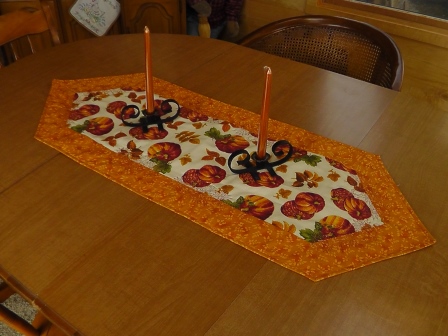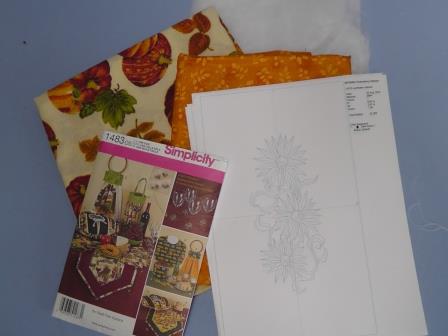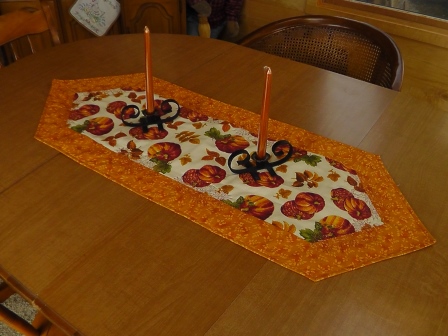


Table runner pattern (Simplicty 1483 was used for the project)
Fall themed fabrics (yardage and notions requirements are on the back of the pattern)
Note: additional yardage needs to be purchased if bias binding is going to be used to bind the outside edges.
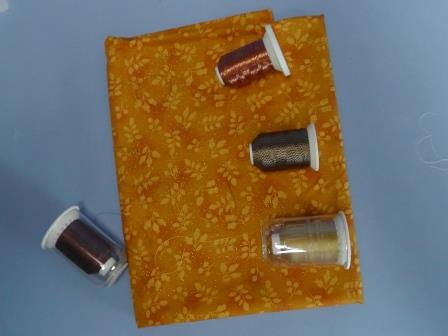
Embroidery thread to stitch quilting design
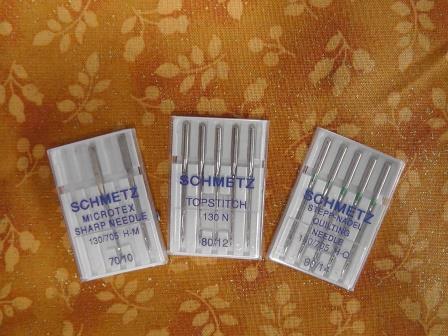
Needles: Test the design with the fabrics, batting and thread. You may need to change to a topstitch, sharp or quilting needle for embroidering the design to quilt the project.
The pattern instructions may be followed or an option is to do it like it is done in these project instructions. For this project, the backing and batting was cut larger than the table runner top, the backing and batting was hooped with the top for quilting the table runner with the embroidery design.
Step 1:
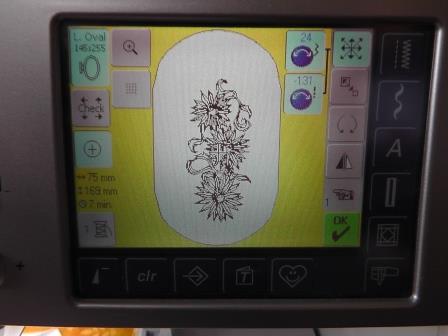
Gather the supplies needed and print out several sheets of the embroidery design which will be used for the table runner.
Step 2:
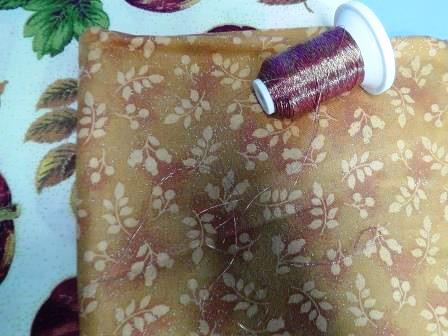
Audition several threads on the fabric to see which you would like to use for the quilting; do this by puddling the thread on the fabric.
Step 3:
For this project, a thread was chosen that has some metallic in it.
Step 4:
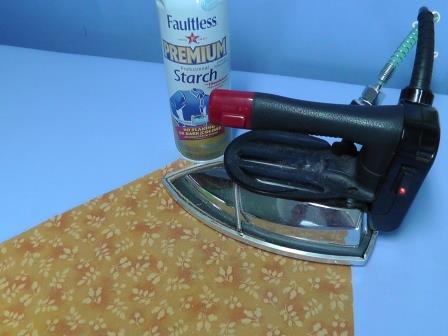
Prewash and starch the fabrics well.
Step 5:
Test the design with the fabrics (and batting) being used in the project. You may find you need to use a needle other than a regular embroidery needle to create the quilting stitch since so many layers are being stitched. If you do, try a quilting needle, topstitch or sharp needle.
Step 6:
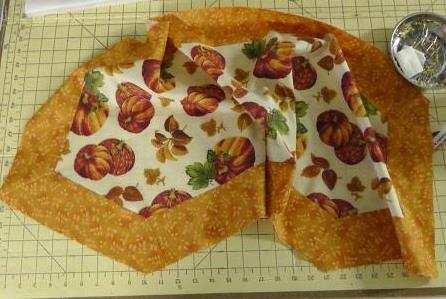
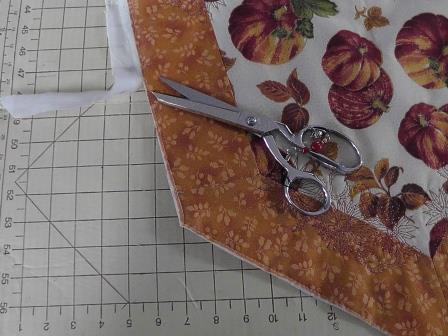
Cut out the pattern pieces for the top and assemble the top according to the pattern instructions.
(Note: The border fabric used for this project had to be pieced because I used what was in my stash for this project; that is why there are seam lines at the points.)
Step 7:
(Click Image to Enlarge)
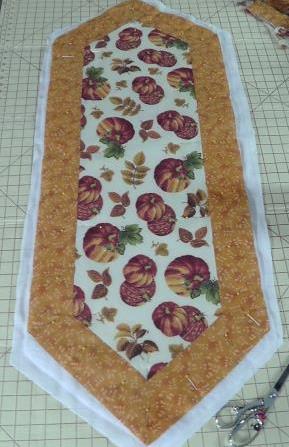
For this project, the batting and backing fabric were cut several inches larger all the way around to allow for hooping. Layer the backing, batting and table runner top and pin together.
Step 8:
Baste the outer edges together.
Step 9:
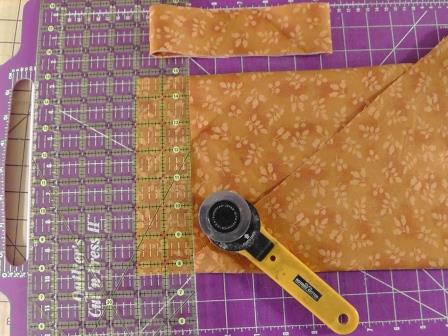
If cutting bias binding, do that out of the remaining fabric. For this project, 2” bias strips were cut and pieced together.
Step 10:
(Click Image to Enlarge)
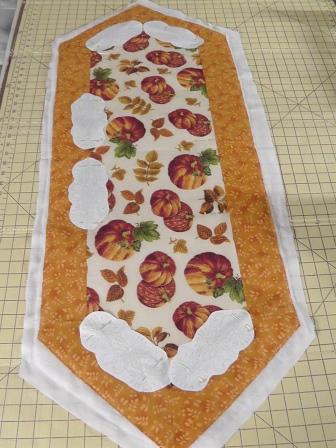
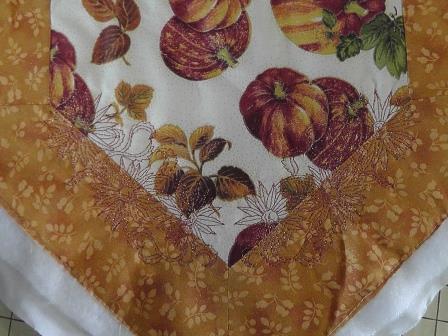
Cut out the printed templates and place them as you’d like for quilting. In this project, the center of the designs were aligned along the seamline of the two fabrics. One design fit along each edge of the point, and two designs were mirrored along each edge, spaced 1” apart from the center. The designs were rotated and mirrored as needed.
Step 11:
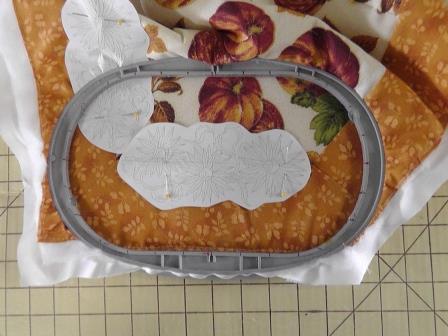
Hoop the fabrics for embroidery. Because there is backing and batting along with the table runner top, no additional stabilizer is needed.
Step 12:
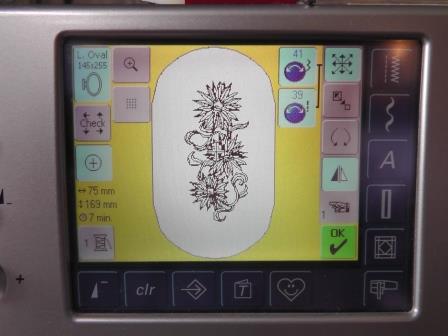
Load the design in the machine.
Step 13:
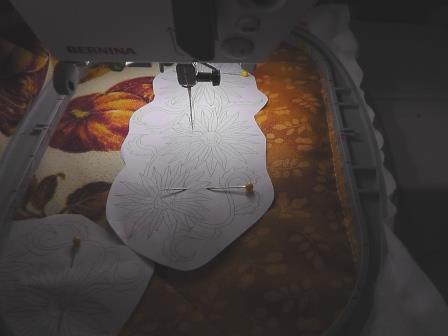
Center the needle over the center of the paper template.
Step 14:
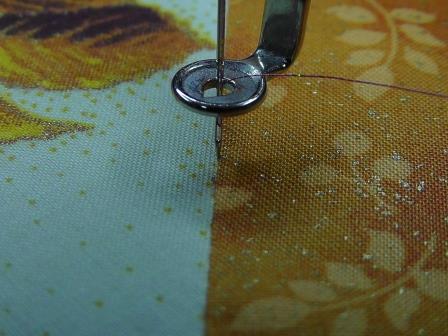
The center point should be aligned between the fabrics as shown. Remove the paper template and stitch the design.
Step 15:
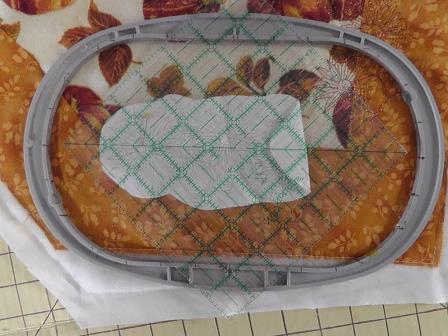
Hoop the next area to be stitched. Use the hoop template to aid in aligning the design to the table runner top if it helps you in aligning the design to the seamline of the table runner top.
Step 16:
Rotate, mirror, and stitch the design as planned.
Step 17:
Repeat for the remaining areas to be quilted.
Step 18:
After all the designs are stitched, trim the excess batting and backing fabric even with the table runner top.
Step 19:
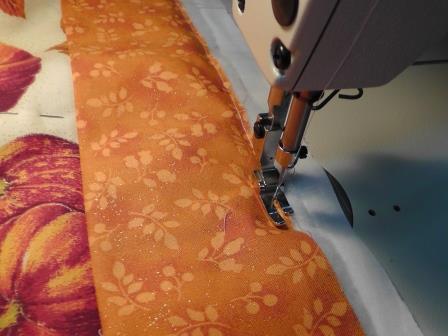
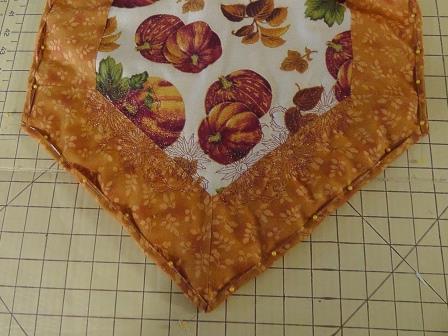
Fold and press the binding in half lengthwise and sew it to the back of the table runner meeting cut edges and mitering the corners. Turn the binding to the right side and pin in place.
Step 20:
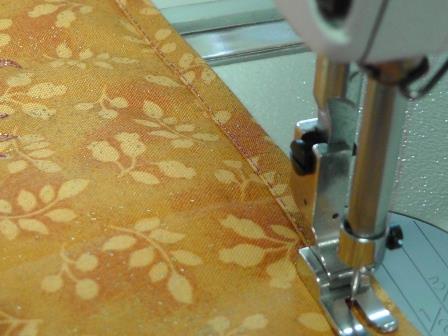
Stitch the binding in place using the same thread that was used to stitch the embroidery designs.
Step 21:
Give the table runner a final pressing and place it on your table to enjoy.
Ramona Baird has been in the embroidery industry for over 23 years. She and her husband owned a commercial and retail embroidery store in Arizona for many years. She is an experienced digitizer having been mentored by award-winners Pat Williams and Lindee Goodall. Ramona is a contributor to “Creative Machine Embroidery” magazine having 5 covers to her credit. Ramona has worked for Wilcom America and served many years as Education Director for the American Sewing Guild. With a degree in fashion design, she is able to design and execute patterns which Pat Williams says are “out of the box” in creativity and application. Ramona likes to challenge the boundaries of embroidery and bring new and exciting designs, ideas, and projects to EmbroideryDesigns.com. She wants embroiderers of all levels to increase their skills and enjoyment in using their embroidery machine for gift-making and personal pleasure.