Border OptionsHugging border, circle, square, or rectangle — with a 3mm satin stitch.
Backing OptionsAvailable with iron-on, sew-on, or velcro backing.
Fast ShippingShipped quickly from the USA.
Free Online Tools
Powerful embroidery utilities that save time and prevent costly mistakes.
Stitch AssistantRECOMMENDED
Get the exact stabilizer, machine settings, needle, and thread color sequence for every embroidery design you purchase — based on that design's stitch density, dimensions, and color count.
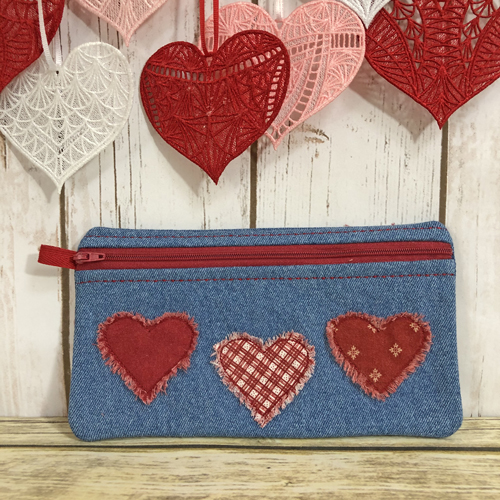
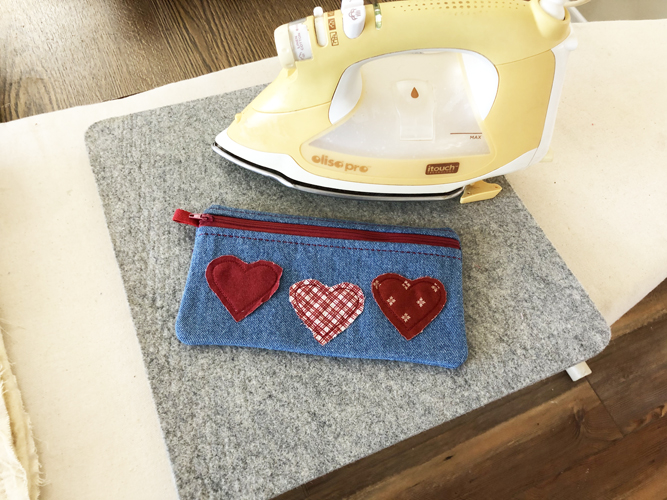
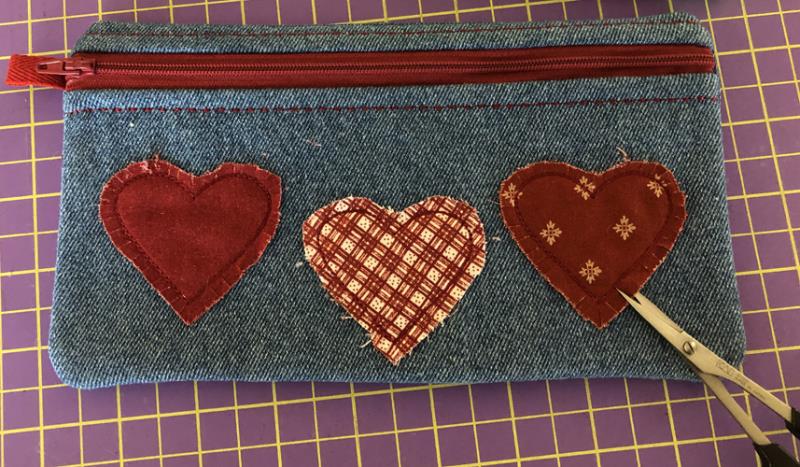
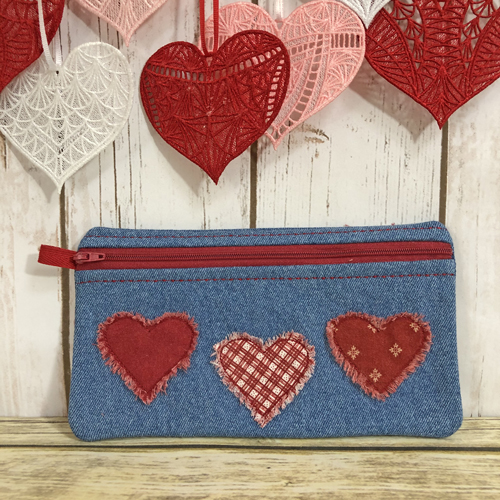
Raw edged appliqued hearts make this generously sized fully lined pouch the perfect gift for the sweethearts in your life. The pouch, zipper and lining are all stitched in a single hooping.
Your nylon zipper can be of any length longer than 12” as both ends of the zipper will be removed in the final trimming of the project. A 16” zipper was used in the sample as it was the right color. All color stops in this design can be stitched with the same color thread that coordinates with your fabrics.
Step 1:
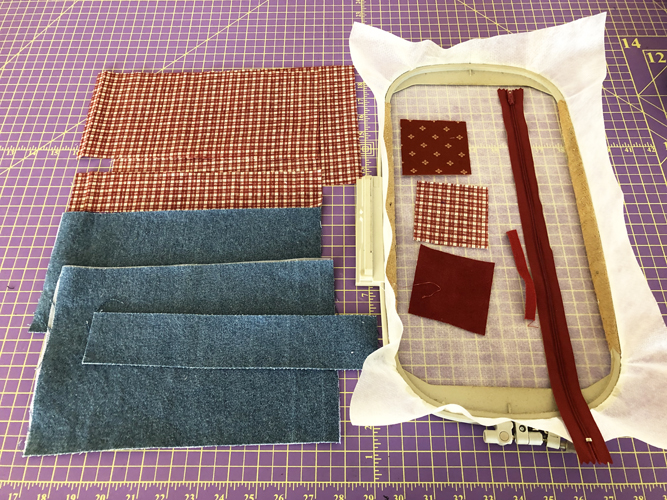
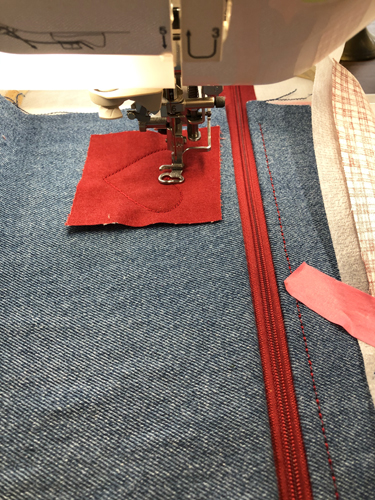
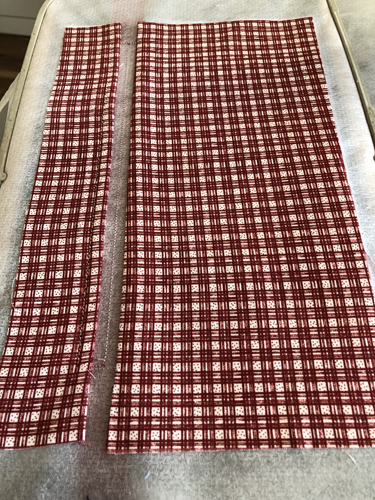
Cut the denim, lining, and knit interfacing into 3 pieces:
a. 11” x 7” for the back of the pouch b. 11” x 5 ½” for the lower front of the pouch c. 11” x 2” for the upper front of the pouch
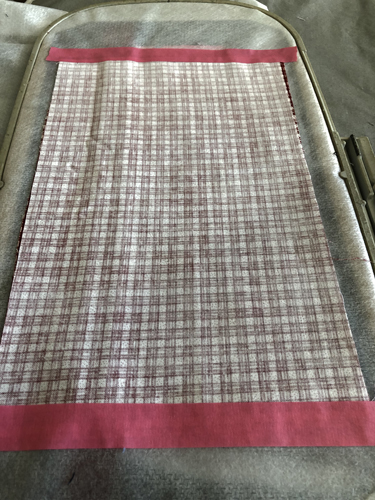
Fuse the knit interfacing to the back of the denim pieces following the manufacturer’s instructions. Also cut 3 3” x 2.5” scraps of quilting cotton for the heart appliques and a 3” to 4” length of twill tape for the tab on the side of the pouch. Tautly hoop the no show stabilizer in your embroidery hoop.
(Click Image to Enlarge)
Step 2:
(Click Image to Enlarge)
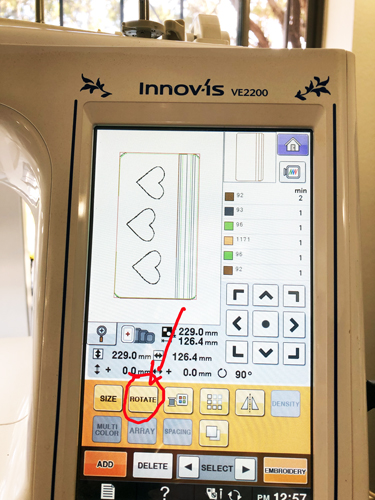
Load the design file into your machine. If you are using a multi-needle machine you will not need to rotate the design. If you are you using a single-needle machine rotate the design to the right to have it fit within your 6” x 10” hoop or larger.
Step 3:
(Click Image to Enlarge)
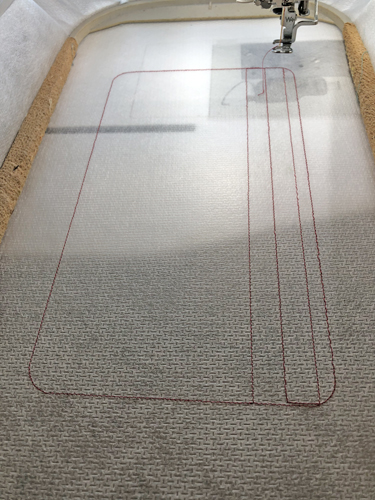
Run the first color stop (CS) 1 as a placement line for the zipper and fabrics.
Step 4:
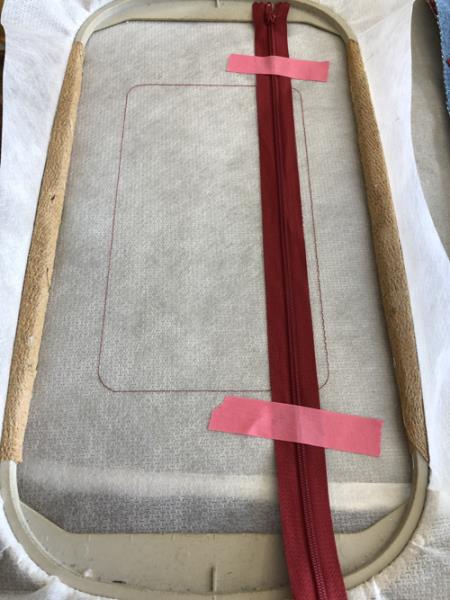
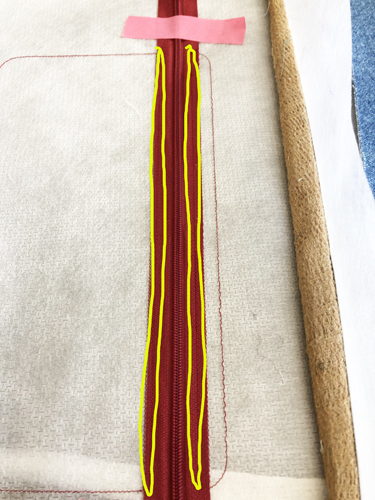
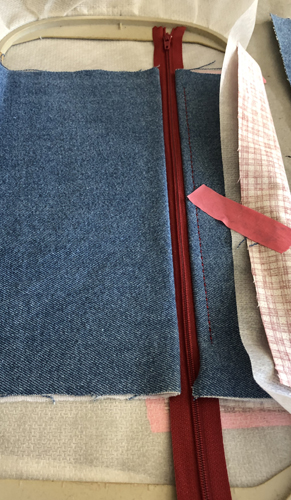
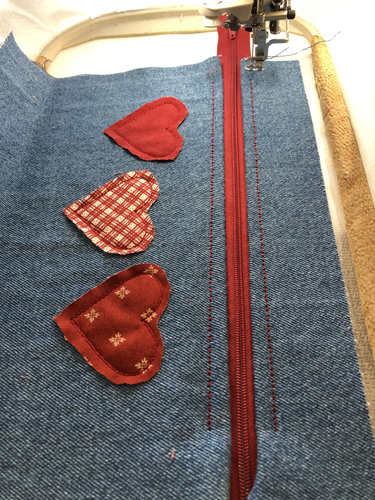
Place your zipper face up over the zipper placement lines, have the pull tab at the top and the metal stop at the end of the zipper extend well beyond the outside placement lines. Note not all zippers are the same width so even if your zipper is not exactly as wide as the placement lines be sure the zipper teeth follow the center placement line.
(Click Image to Enlarge)
Step 5:
(Click Image to Enlarge)
Run CS 2 to tack down both sides of the zipper. This is a long zipper so you may want to use a chop stick or other implement to hold the middle of the zipper into place while the tack down stitches are running to keep the presser foot from moving the zipper while stitching. You can also tape down the center of the zipper with one or more pieces of cellophane tape to hold it into place. Do use cellophane tape rather than embroidery tape for holding the zipper down in areas where it will be stitched through as it is easier to remove after stitching.
Step 6:
(Click Image to Enlarge)
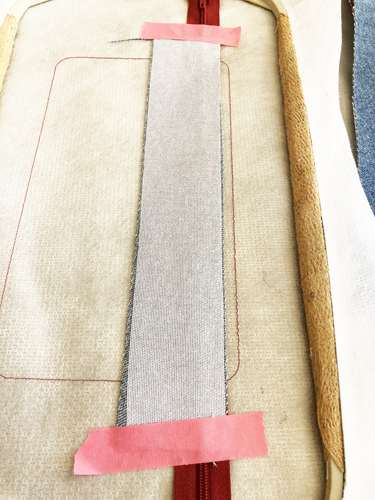
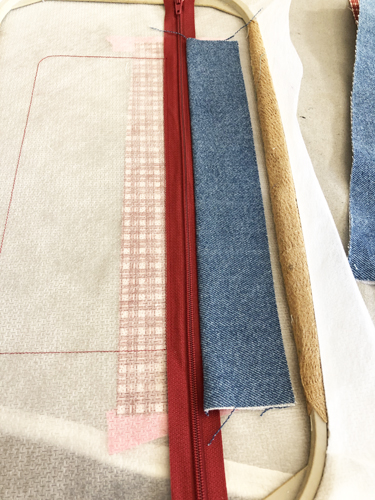
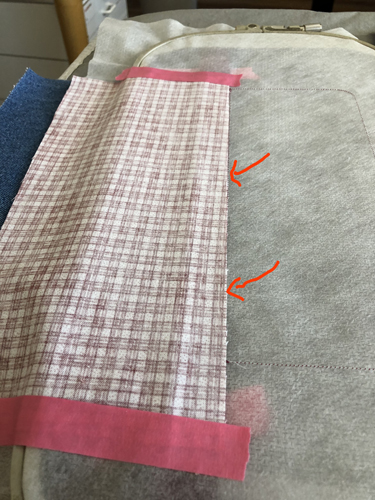
Remove the hoop from the machine, do not unhoop. Align the 2” x 11” interfaced denim fabric strip face down along the top (right hand side) of the zipper placement line. Tape in place with embroidery tape outside the placement lines.
Step 7:
(Click Image to Enlarge)
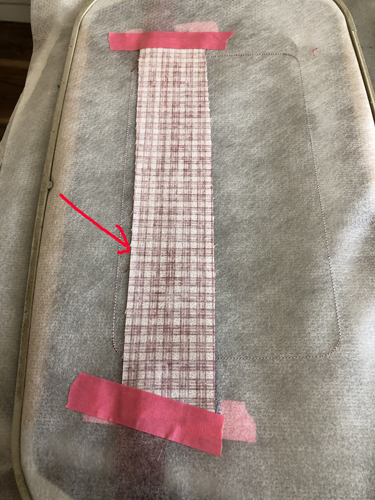
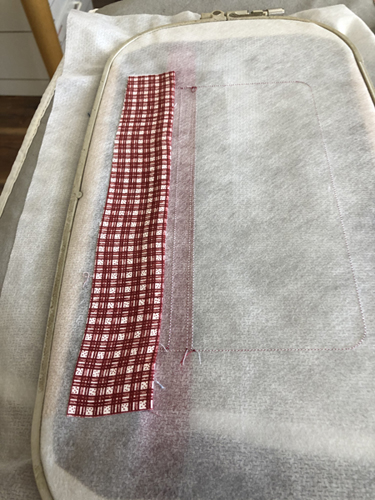
Turn the hoop over. Align the 2” strip of lining fabric face down along the top zipper placement line. Tape in place along the side edges outside of the placement lines.
Step 8:
(Click Image to Enlarge)
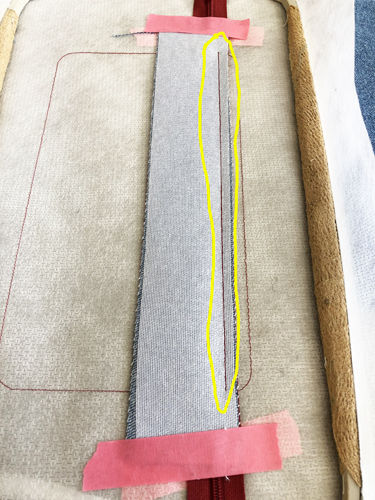
Return the hoop to the machine and run CS 3 to seam the fabrics together.
Step 9:
(Click Image to Enlarge)
Remove the hoop from the machine, do not unhoop. Remove the tape from the denim ends. Spray adhesive on the back of the denim and while pushing the fabric away from the zipper smooth it up over the bag placement line.
Step 10:
(Click Image to Enlarge)
Turn the hoop over and remove the tape from the ends of the lining. Spray adhesive on the back of the lining and smooth it up away from the zipper and towards the top of the pouch.
Step 11:
(Click Image to Enlarge)
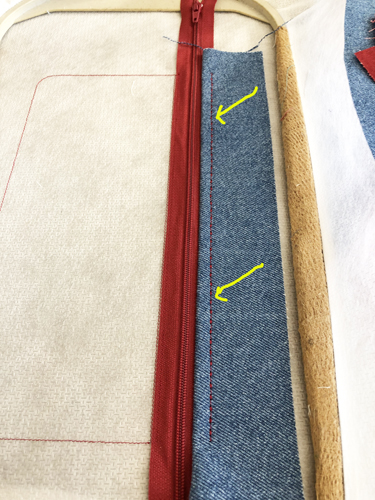
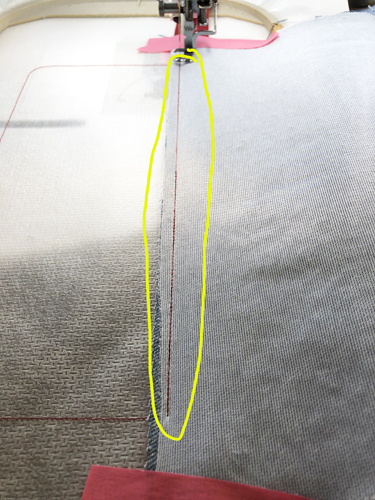
Return the hoop to the machine and run CS 4 to topstitch the upper fabrics.
Step 12:
(Click Image to Enlarge)
Remove the hoop from the machine, do not unhoop. Align the edge of the 5 ½” x 11” piece of denim, face down, with the lower zipper placement line and tape into place outside the bag placement line stitches.
Step 13:
(Click Image to Enlarge)
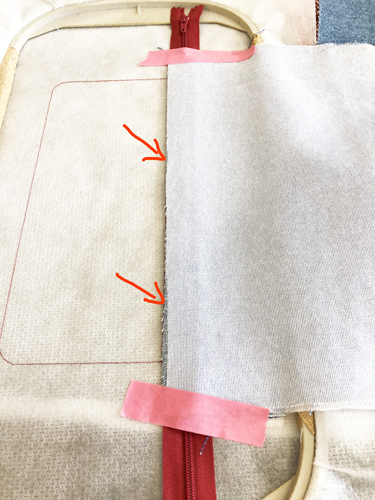
Turn the hoop over and align the corresponding lining piece face down with the lower zipper placement line. Tape into place.
Step 14:
(Click Image to Enlarge)
Return the hoop to the machine and run CS 5 to seam the fabrics.
Step 15:
(Click Image to Enlarge)
Remove the hoop from the machine. Spray adhesive on the back of the lower front denim fabric smooth away from the zipper and over the placement lines. Do not spray adhesive on the lining and smooth it down yet. It is a good idea to roll it to the front of the hoop over the top of the bag and tape it so that it does not get in the way while you applique the hearts to the front of the bag.
Step 16:
(Click Image to Enlarge)
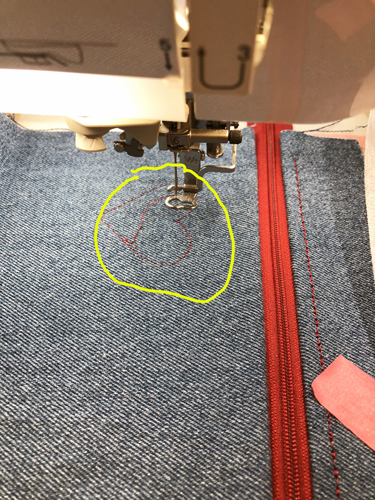
Run CS 6 as a placement line for the 1st heart applique.
Step 17:
(Click Image to Enlarge)
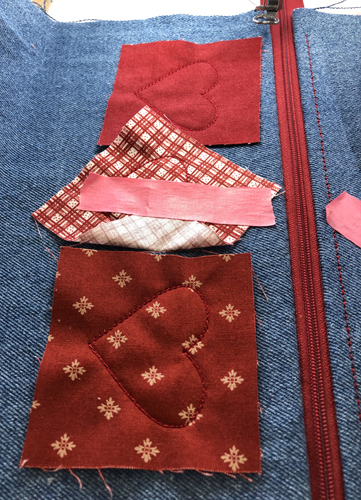
Lay the applique fabric over the placement line so that the fabric exceeds the placement lines by ½” on all sides. Do not use spray adhesive. Run CS 7 to tack it down.
Step 18:
(Click Image to Enlarge)
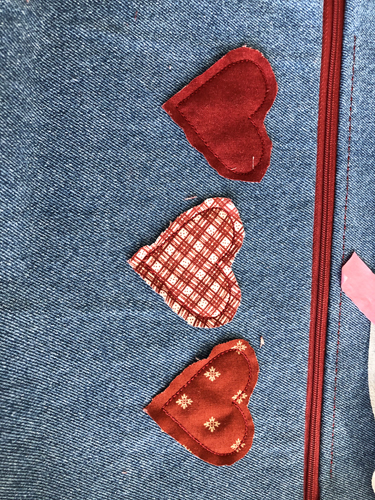
Use CS 8, 9, 10 and 11 to applique the other two hearts to the pouch. Use a little tape if necessary to keep the separate fabrics from catching in the stitching of a successive heart.
Step 19:
(Click Image to Enlarge)
Remove the hoop from the machine, do not unhoop. Trim each heart approximately ¼” from the tack down lines.
Step 20:
(Click Image to Enlarge)
Turn the hoop over. Spray adhesive on the back of the lining and smooth down away from the zipper and over the placement lines of the pouch.
Step 21:
(Click Image to Enlarge)
Return the hoop to the machine and run CS 12 to top stitch the lower front of the pouch.
Step 22:
(Click Image to Enlarge)
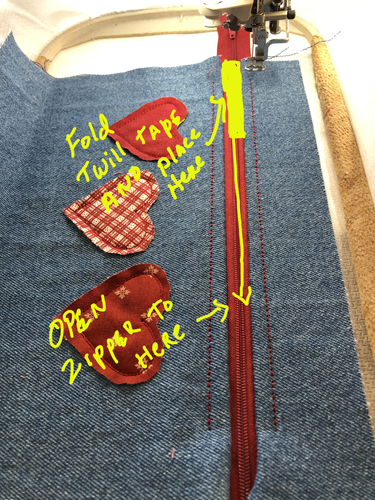
IMPORTANT: Remove the hoop from the machine, do not unhoop. Unzip the zipper about half to three-quarters of the way across the bag. Fold the twill tape in half. Tape the twill tape over the zipper with the raw edges extending about ½” beyond the topstitching stitches. The folded edge of the twill tape will point towards the inside of the bag.
Step 23:
(Click Image to Enlarge)
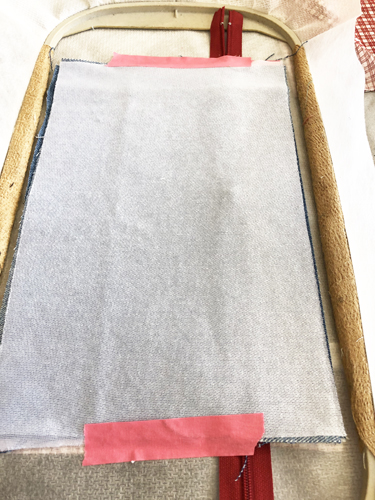
Place the denim pouch back, face down, over the front of the bag and tape down on the sides.
Step 24:
(Click Image to Enlarge)
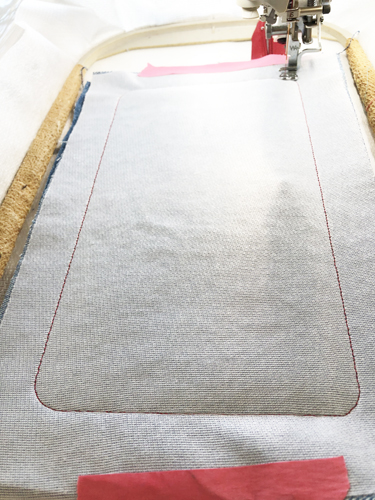
Run CS 13 to stitch the pouch back to the front.
Step 25:
(Click Image to Enlarge)
Remove the hoop from the machine, do not unhoop. Place the back lining, face down, over the lining on the back of the hoop and tape down on the sides of the pouch. Return the hoop to the machine and run the final CS.
Step 26:
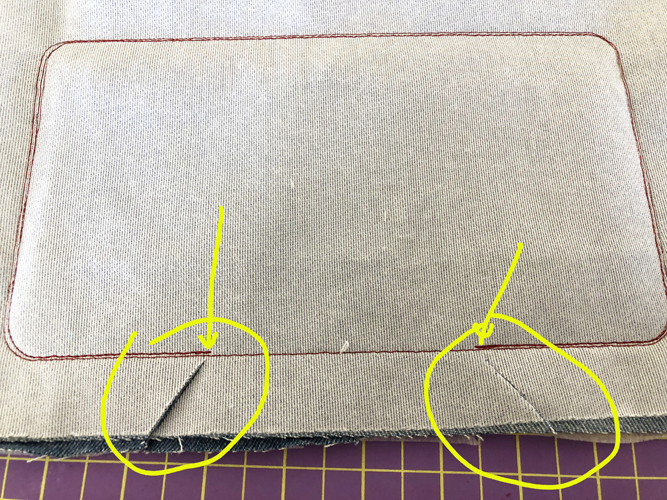
Remove the project from the hoop. Cut away the excess stabilizer from around your fabrics. Note the area at the bottom of the pouch where the final stitching leaves a gap at the bottom of the bag. Clip through all fabrics at an angle to where the final stitching started and stopped.
(Click Image to Enlarge)
Step 27:
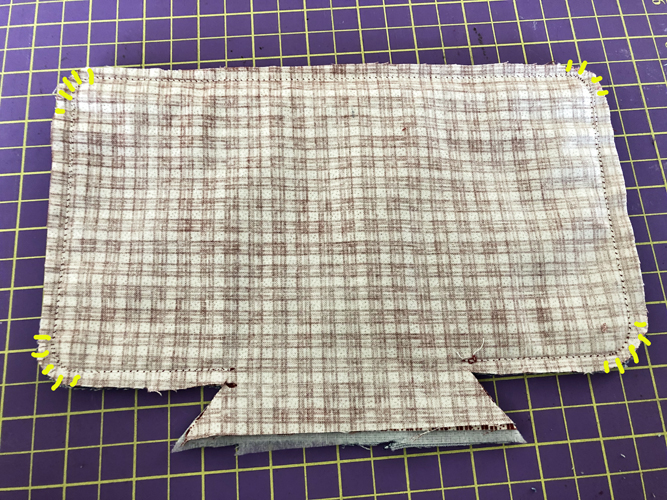
Trim the fabrics to a ¼” seam allowance except for the area across the opening at the bottom of the pouch. Clip the seam allowances at the corners of the pouch.
(Click Image to Enlarge)
Step 28:
(Click Image to Enlarge)
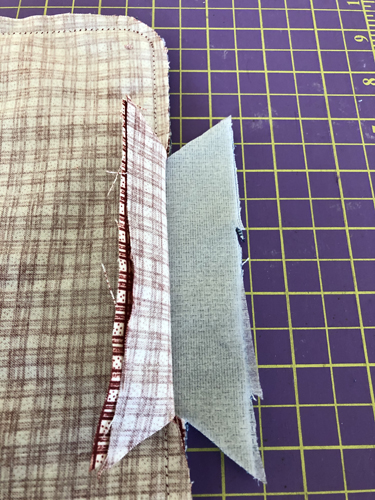
Lift the two lining pieces back and trim the outer fabrics and stabilizer to ¼” across the opening. Trim the two lining fabrics to a ½” seam allowance.
Step 29:
(Click Image to Enlarge)
Turn the pouch lining side out through the opening. Use a turning stick or other implement to round out the corners.
Step 30:
(Click Image to Enlarge)
With a seam ripper or small sharp scissors remove the stabilizer from behind the zipper. Be careful not to cut the zipper.
Step 31:
(Click Image to Enlarge)
Turn in the lining opening seam allowances and stitch closed.
Step 32:
Open the zipper and turn right side out through the zipper using your implement to round out the corners. Steam-press the outside seams to have the pouch lie flat.
(Click Image to Enlarge)
Step 33:
Clip the seam allowances around each heart making your clips about ¼” apart.
(Click Image to Enlarge)
Step 34:
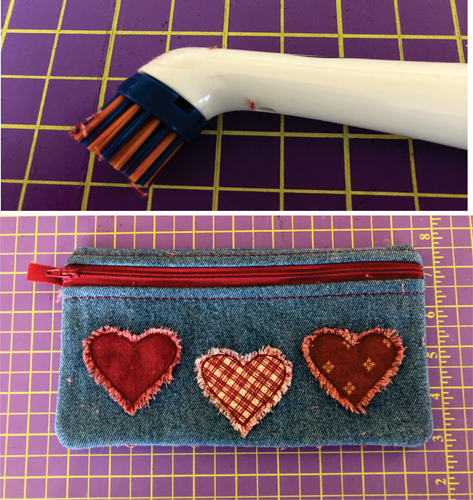
Use a brush with stiff plastic bristles to rub vigorously around the edges if the hearts to fray them. The brush used for the samples is a battery operated power cleaning tool, but you can use a vegetable brush or other implement you have around the house.
Step 35:
Congratulations you ITH Sweetheart Zip Pouch is complete!
Award winning Digitizer, Embroidery Educator, Author and a Consultant to the Industry, Pat Williams has 30 years of experience in the embroidery industry. Pat has won multiple awards for her digitizing expertise including the 2007 Impressions Awards Grand Championship, Best of Show as well as the 1st and 2nd Place Awards. Pat’s love of digitizing has afforded her the opportunity to write numerous articles for Impressions magazine in the United States and Images Magazine in Europe. In 2001 Pat was named “Embroidery Educator of the Year.” For many years Pat taught digitizing seminars at the ISS Shows in Long Beach, CA and for Compucon software. She now resides in Tucson, AZ.