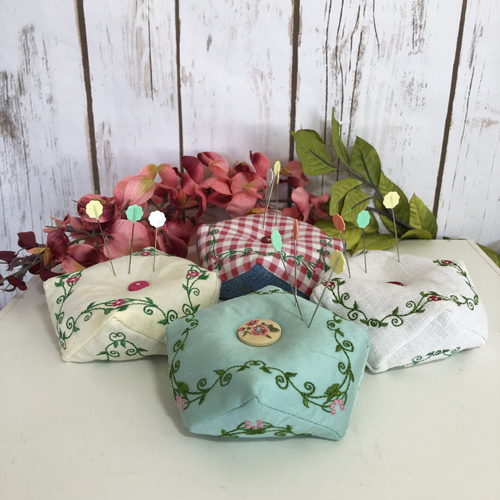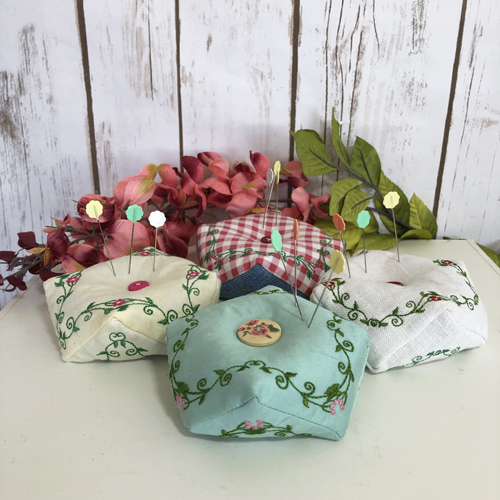


Can you ever have too many pincushions? Embroider two squares of fabric and join them together with this unusual construction technique to create this fun pincushions. Fill them with crushed walnut shells so they will sharpen your pins too!
The unusual construction method – which is explained below – is made simple by the tack down lines and markings included in these embroidery files. You can use fiber fill to stuff the pincushions if desired, however the crushed walnuts give these cushions a nice weight and will sharpen you needles as well. The fused knit backing on all of the fabrics will help keep the crushed walnuts from migrating through the outer fabric.
Step 1:
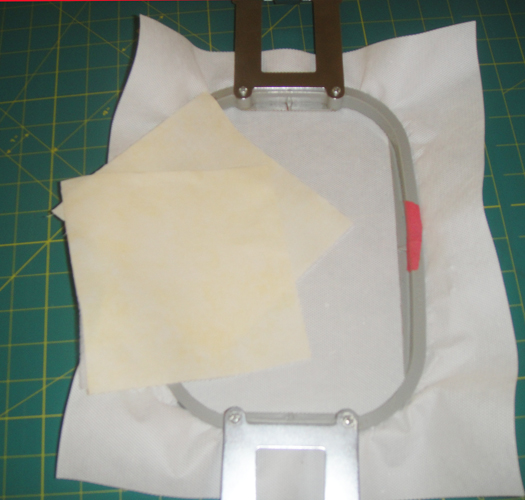
Tautly hoop tear away stabilizer in your 5” x 7” hoop. Fuse knit interfacing to two 6” squares of your chosen fabric.
(Click Image to Enlarge)
Step 2:
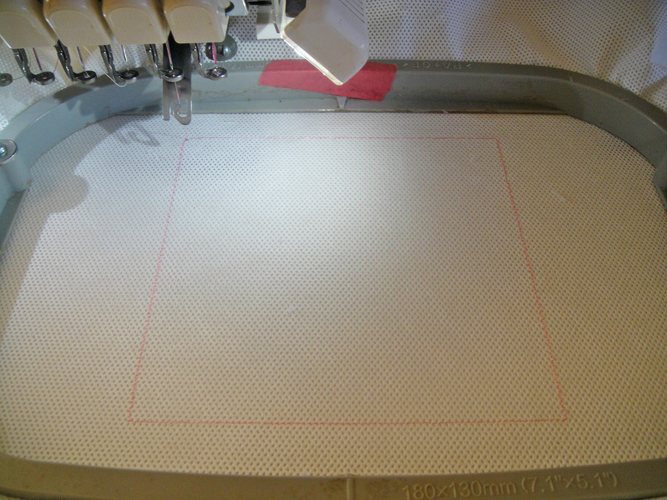
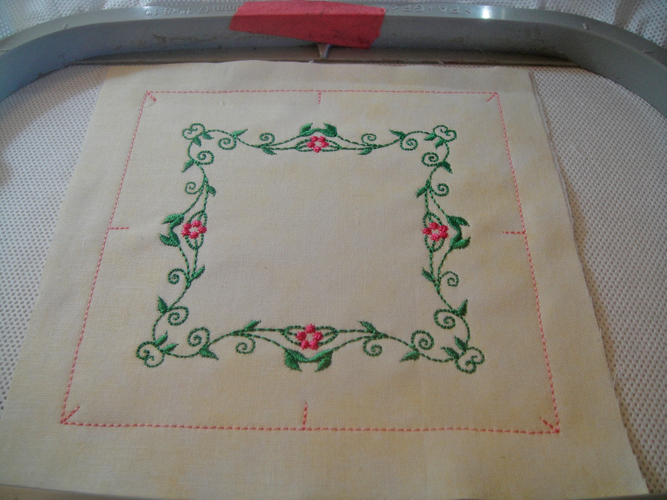
Run the first color stop (CS) as a placement line for your fabric. This is usually stitched in a color to match the fabric, but this was stitched in pink so that you can see it in the photo. Don’t match your fabric too closely as you will want to be able to see these stitches further along in the project.
(Click Image to Enlarge)
Step 3:
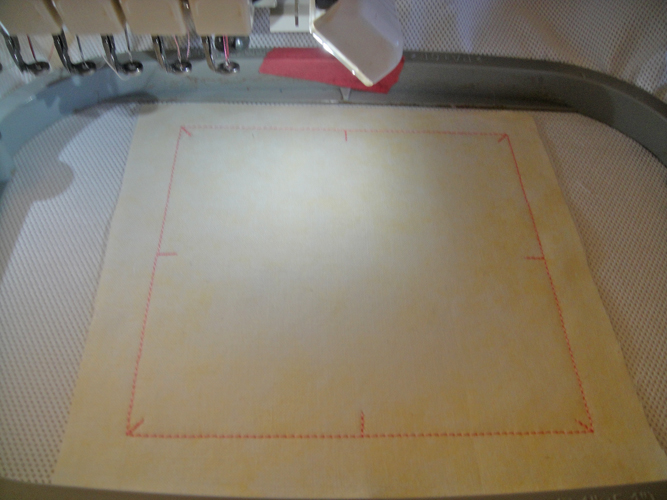
Spray adhesive on the back of one of your 6” fabric squares and position over the placement lines so that the fabric exceeds the placement lines by ½” on all sides. Run CS 2 in the same color thread used for the 1st CS.
(Click Image to Enlarge)
Step 4:
Stitch the design.
(Click Image to Enlarge)
Step 5:
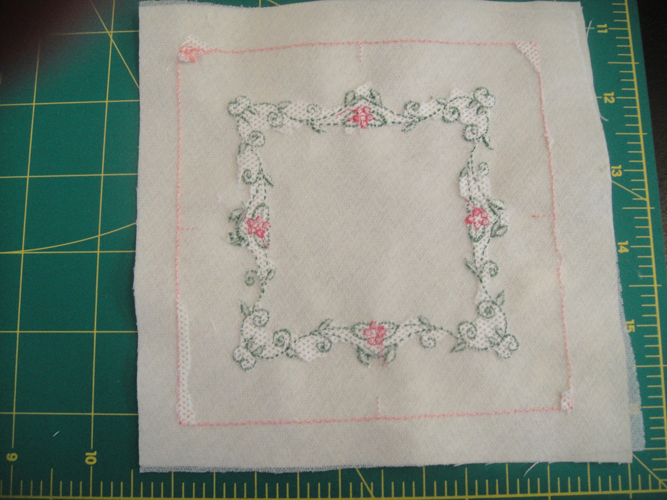
Remove the square from the hoop and tear away the majority of the stabilizer. Repeat Steps 1 through 5 to stitch the second square for the pin cushion.
(Click Image to Enlarge)
Step 6:
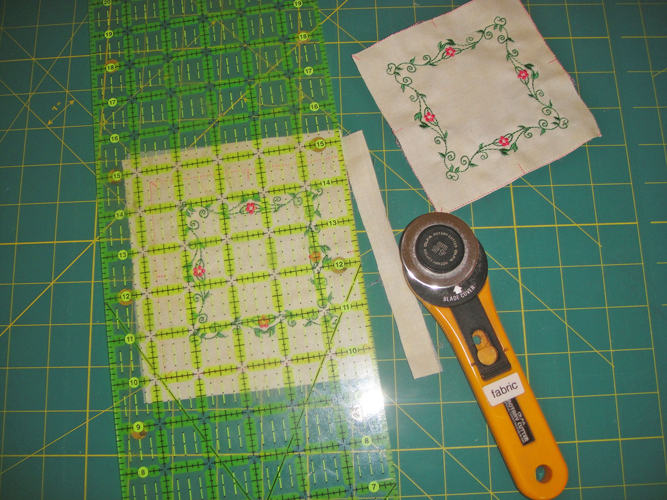
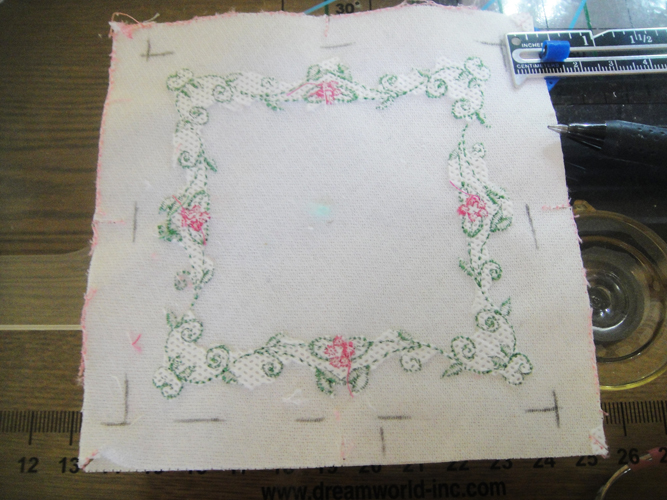
Trim both squares down to the original placement lines.
(Click Image to Enlarge)
Step 7:
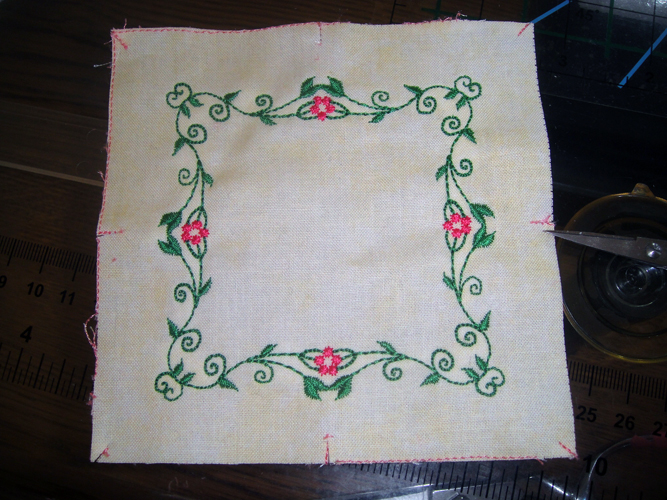
To make joining the two squares easier, clip all of the little marking lines around the square you will be stitching to the top of the project.
(Click Image to Enlarge)
Step 8:
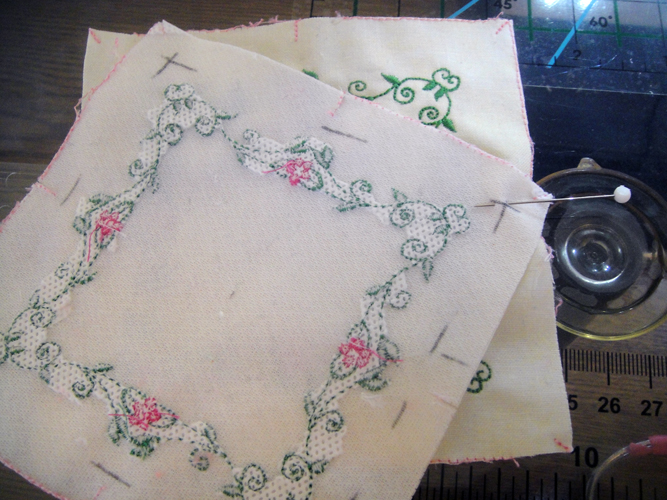
We will be using a 3/8th” seam allowance and will be pivoting a lot when joining these squares together. To make it easier to stay on track, actually mark the 3/8” seam allowance around the edges of the back of the square in which you have clipped the marking stitches.
(Click Image to Enlarge)
Step 9:
We will be using a 3/8th” seam allowance and will be pivoting a lot when joining these squares together. To make it easier to stay on track, actually mark the 3/8” seam allowance around the edges of the back of the square in which you have clipped the marking stitches.
(Click Image to Enlarge)
Step 10:
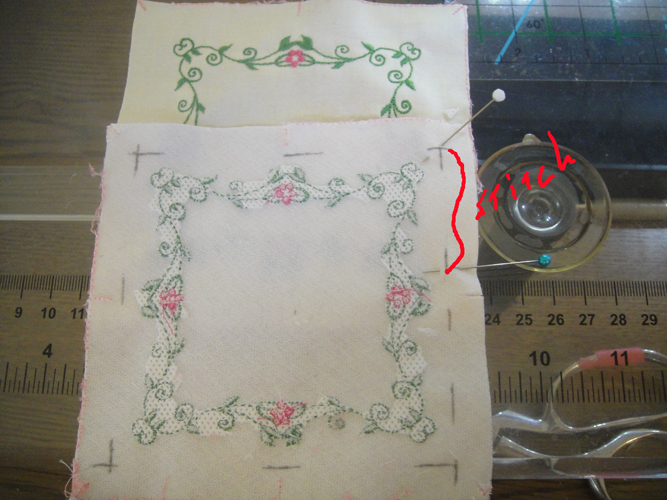
Pivot the top square so that it is aligned with the lower half of the square underneath it. Insert a pin 3/8th” from the bottom edge of the bottom square. Stitch the squares together between these two pins. Backstitch at the beginning of the stitching and stop stitching at the second pin with needle in the down position.
(Click Image to Enlarge)
Step 11:
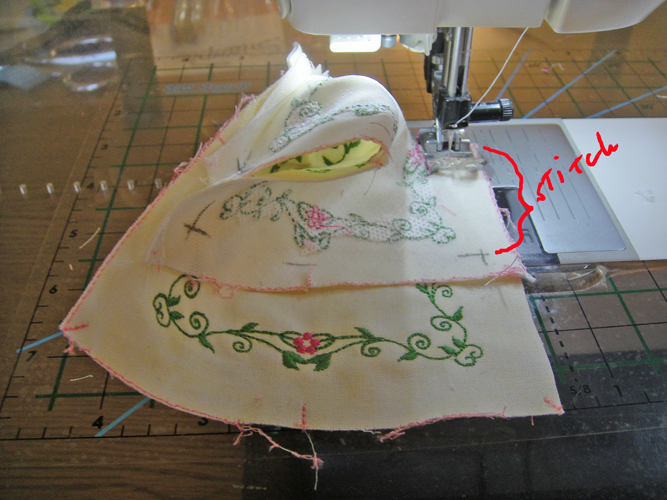
With the needle down, raise your presser foot to its highest position and pivot the top square and align the straight sides of the pincushion. Stitch down from your beginning position to the middle mark on the underneath square. Stop again with the needle down in the fabric and pivot the top square again.
(Click Image to Enlarge)
Step 12:
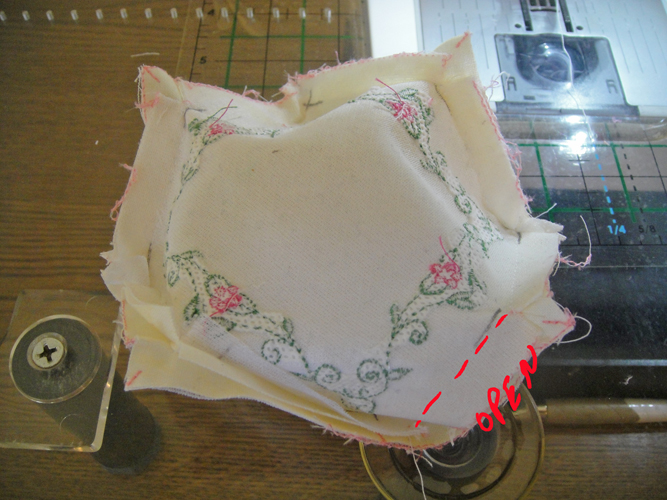
Work slowly around the pincushion pivoting around the corners and midways of the squares leaving the last section open for turning.
(Click Image to Enlarge)
Step 13:
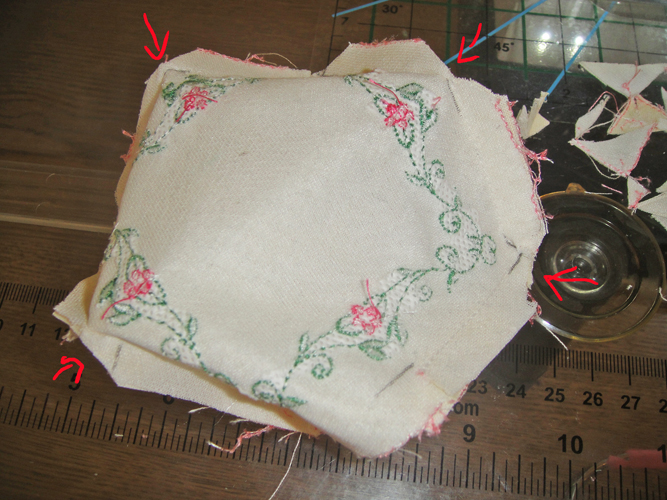
Clip off all of the corners.
(Click Image to Enlarge)
Step 14:
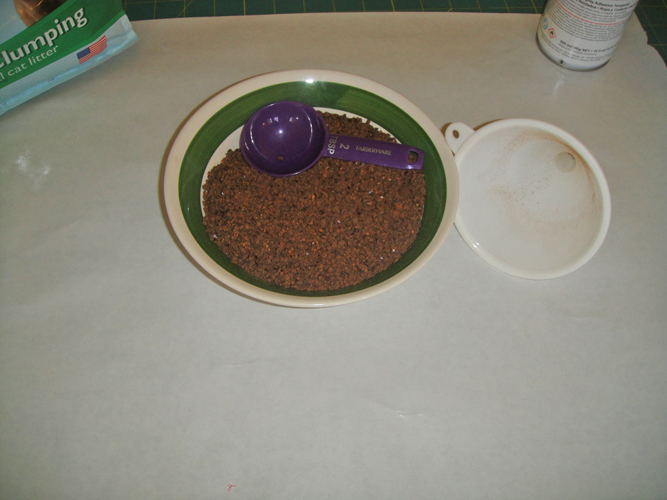
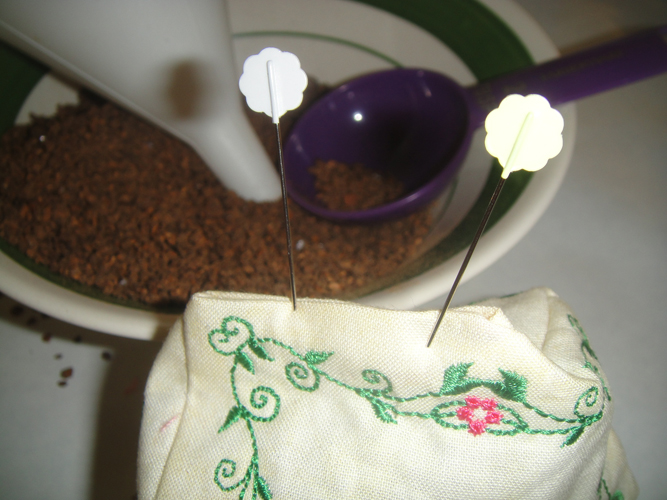
Gather your supplies for filling the pincushion. Place something such as a sheet of parchment or freezer paper on your work surface to keep it clean. Fill a cereal bowl with the crushed walnuts. Have a funnel to insert into the pincushion and a scoop or spoon for the crushed walnuts.
(Click Image to Enlarge)
Step 15:
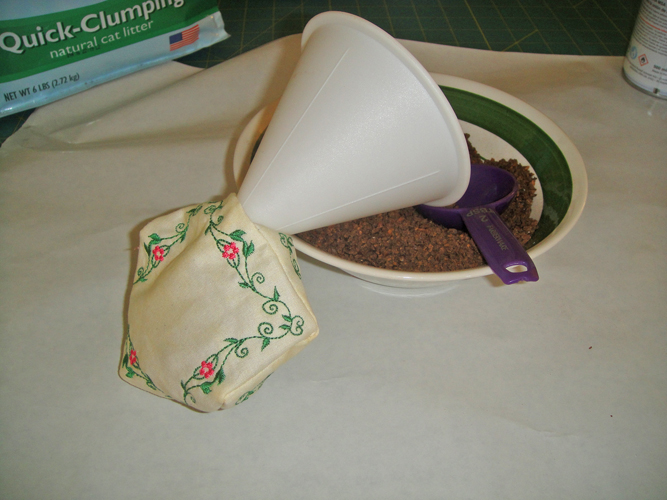
Turn the pincushion right side out pushing out the points with your fingers. Turn the opening seam allowances to the inside 3/8th”. Insert the funnel into the pincushion and start filling with the crushed walnuts. Though you naturally push down on the crushed walnuts while filling, stop filling when the walnuts reach the bottom of the turned in open edges.
(Click Image to Enlarge)
Step 16:
Pin the opening edges together and stitch with a ladder stitch. If you aren’t familiar with a ladder stitch there are many youtube.com videos to teach you this technique.
(Click Image to Enlarge)
Step 17:
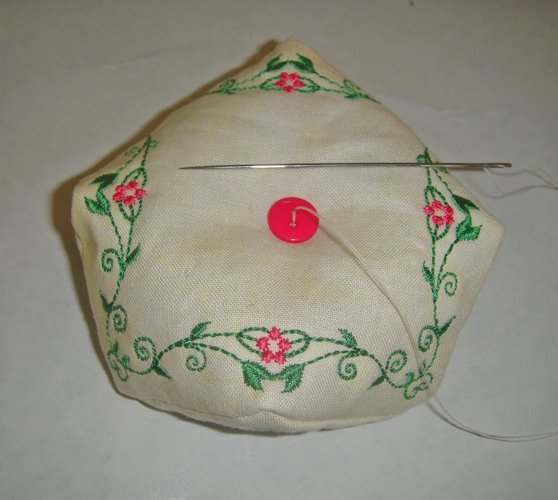
Thread a doll needle with a long strand of thread and knot the edges together at the bottom. Center and stitch the button through the whole pincushion. Bury your beginning knot inside the bottom of the pin cushion and use a quilter’s knot to complete the pincushion. Youtube.com videos are also available on these knotting techniques if you need them.
(Click Image to Enlarge)
Step 18:
Congratulations your first pincushion is complete. As you can see you can make them in all types of fabrics. The aqua pincushion is made of dupioni silk, the white one is linen, the red check is quilting cotton on top and denim for the bottom square, the pale yellow one is quilting cotton. Let yourself go crazy with your choice of fabrics.
Award winning Digitizer, Embroidery Educator, Author and a Consultant to the Industry, Pat Williams has 30 years of experience in the embroidery industry. Pat has won multiple awards for her digitizing expertise including the 2007 Impressions Awards Grand Championship, Best of Show as well as the 1st and 2nd Place Awards. Pat’s love of digitizing has afforded her the opportunity to write numerous articles for Impressions magazine in the United States and Images Magazine in Europe. In 2001 Pat was named “Embroidery Educator of the Year.” For many years Pat taught digitizing seminars at the ISS Shows in Long Beach, CA and for Compucon software. She now resides in Tucson, AZ.