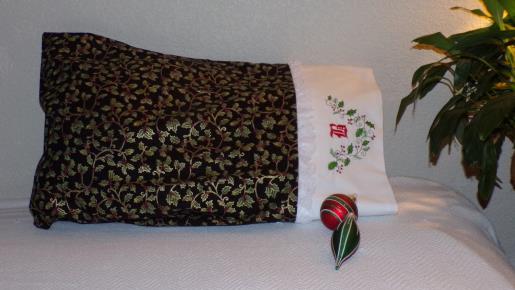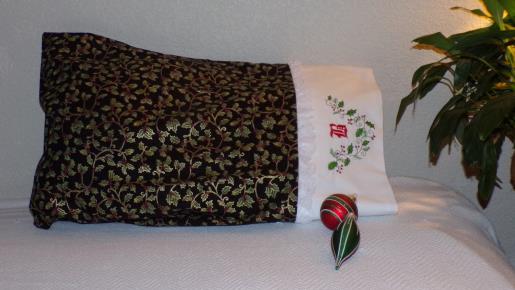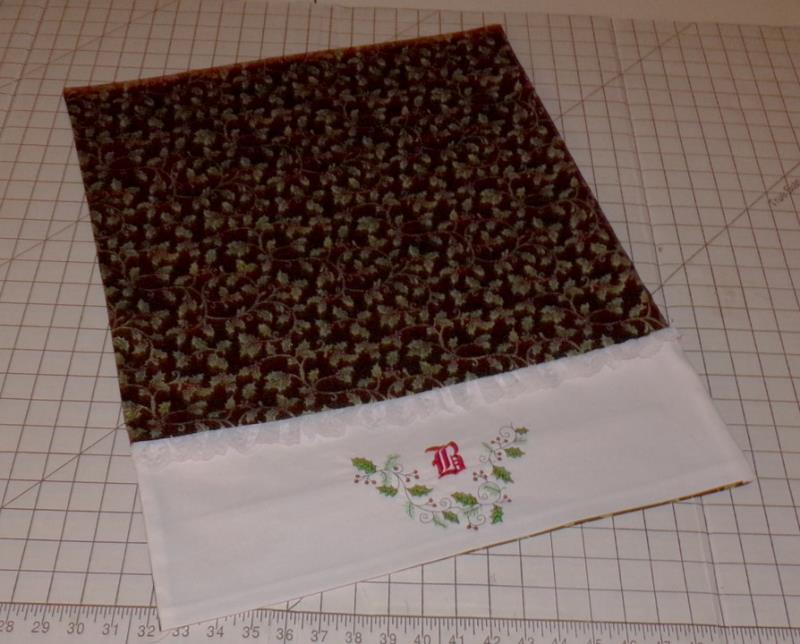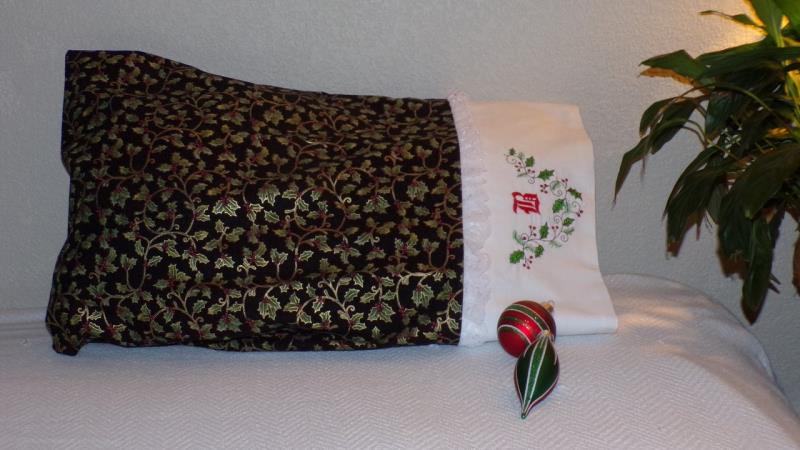


When decorating for the holidays, don’t forget to add a special touch to the bedroom using festive fabrics for a pillowcase with a monogrammed contrasting cuff.
General steps are given because every bed pillow is different, so measure the pillow and determine how much fabric is needed for the case and the cuff, and also the amount of trim needed. Multiply that by the number of pillowcases you’ll be making.
The monogram can be added to the design in software if you have it, or at the machine, if your machine is capable.
This project uses the “burrito” method of constructing the pillowcase. This is a common method of construction for pillowcases—use it, or your favorite method for constructing the pillowcases.
Step 1:
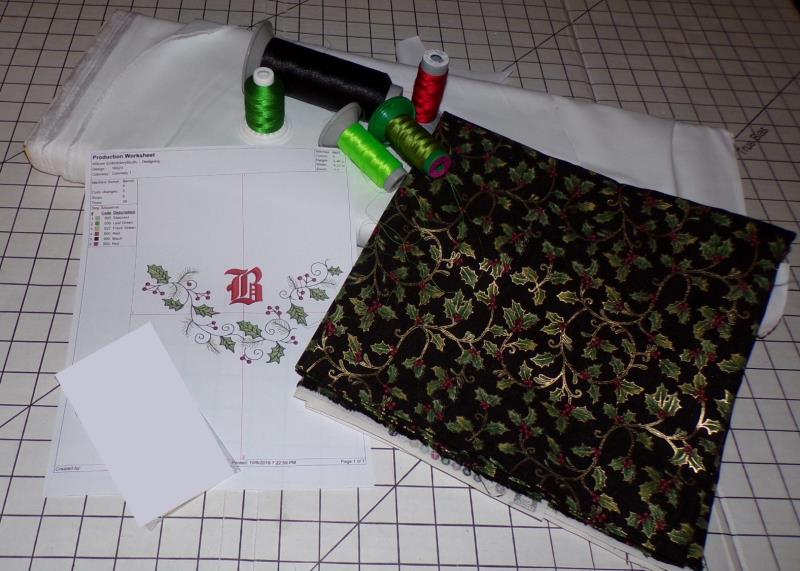
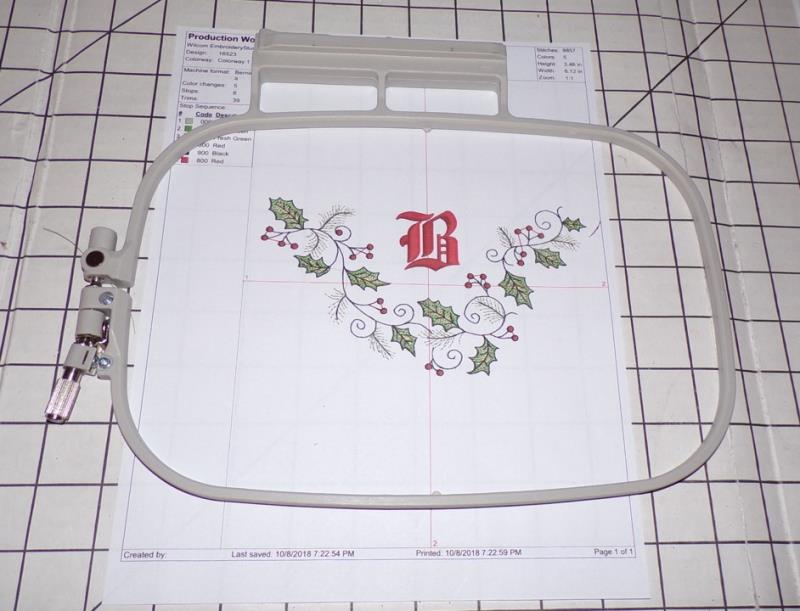
Gather the materials and read through the instructions before beginning. Print out a paper template of the design after preparing the design in the software.
(Click Image to Enlarge)
Step 2:
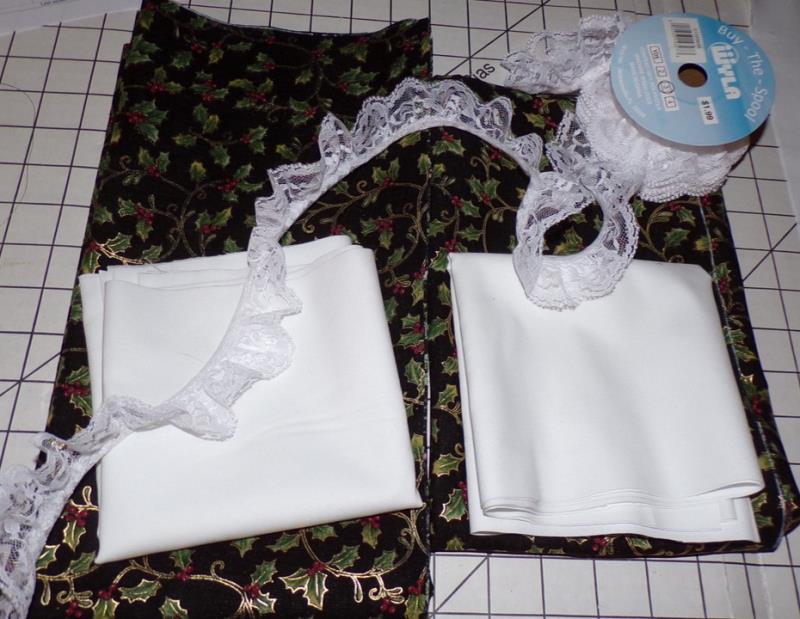
Cut the fabrics and trim for the number of pillowcases you’ll be making using the chart you find as a guide. You may also take measurements off a favorite pillowcase—just be sure to add seam allowances.
(Click Image to Enlarge)
Step 3:
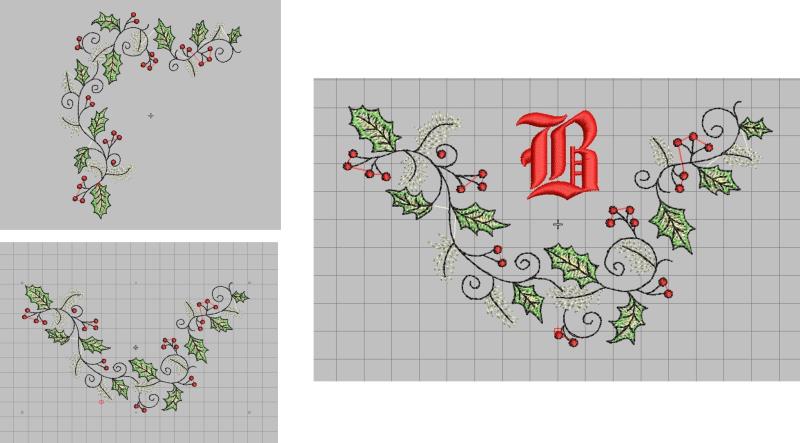
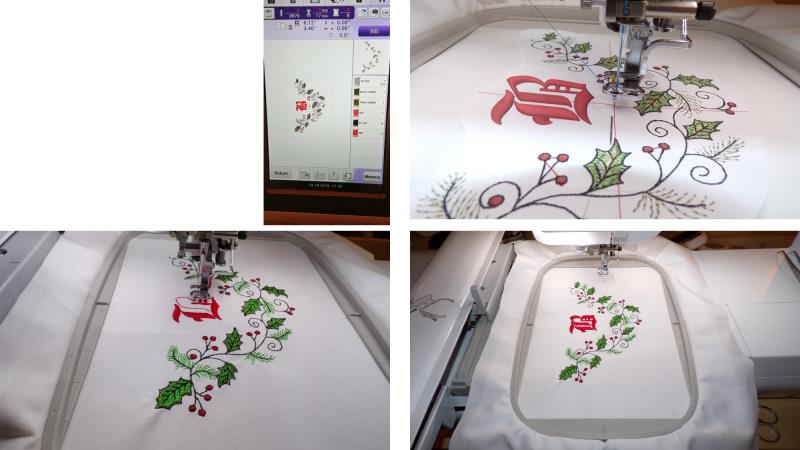
Prepare the design for stitching. Import the embroidery design, rotate it and add the monogram letter. Position the letter in the center of the design as shown and choose the thread color. Old English font was used for this pillowcase monogram.
(Click Image to Enlarge)
Step 4:
This is a large design so be sure you have a hoop large enough to accommodate the design. If you don’t, then choose a different design and position the monogram to fit the chosen design.
(Click Image to Enlarge)
Step 5:
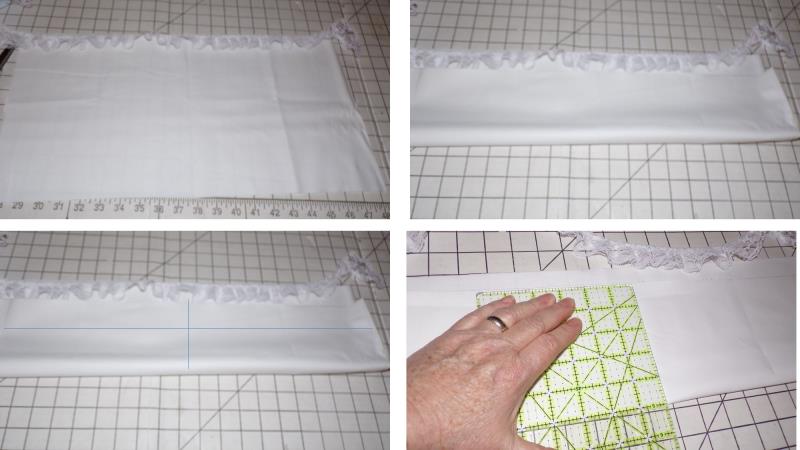
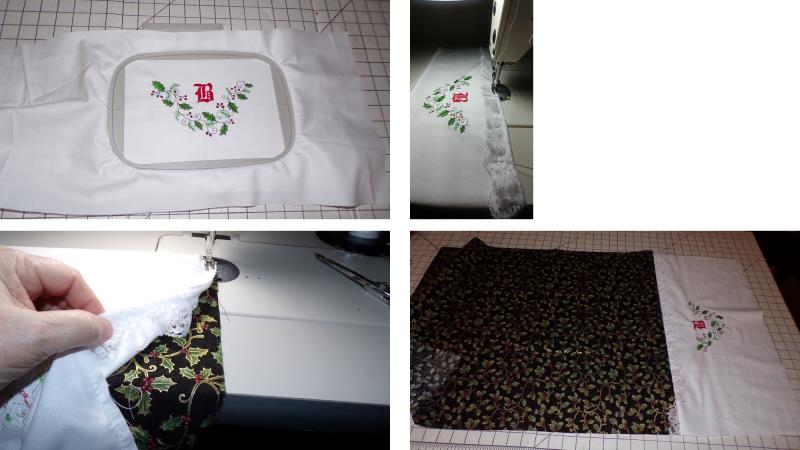
Prepare the cuff fabric for embroidery. Cut the fabric and lace. Fold the long cut edges of the cuff together. Determine the center of the cuff—measure from the fold to the bottom of the lace and place a mark. Also, find the center mark by measuring the length of the cuff and dividing in half; make a mark.
(Click Image to Enlarge)
Step 6:
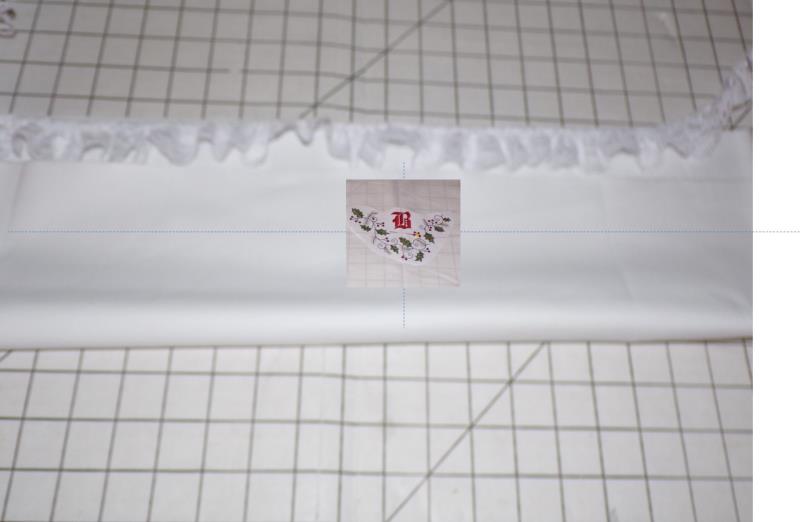
Cut out the template of the design and center it over the center mark on the cuff.
(Click Image to Enlarge)
Step 7:
Load the design on the machine, rotating it. Hoop the fabric with the stabilizer, centering the design in the hoop. Align the needle to the center mark on the fabric. Stitch the design following the color sequence.
(Click Image to Enlarge)
Step 8:
After the design has finished stitching, remove it from the hoop and trim the stabilizer; press the fabric. At the top of the cuff, baste on the lace. With right sides together, match the cut edge of the pillowcase short side to the cuff side with lace and stitch the pieces together. Press so the lace falls over the top of the cuff (you may need to edge stitch the lace in place through the seam. Lay the pillowcase front out flat.
(Click Image to Enlarge)
Step 9:
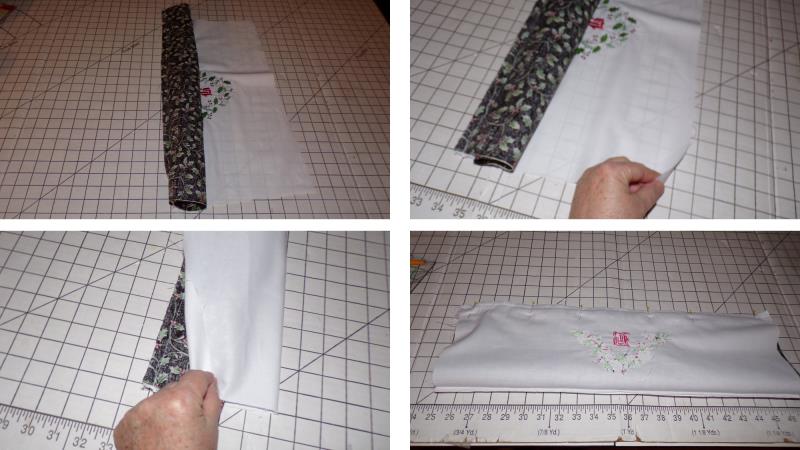
From the other short end, tightly roll up the pillowcase fabric until the seam shows. Now take the other side of the cuff and bring it up over the rolled-up fabric and pin it to the seam.
(Click Image to Enlarge)
Step 10:
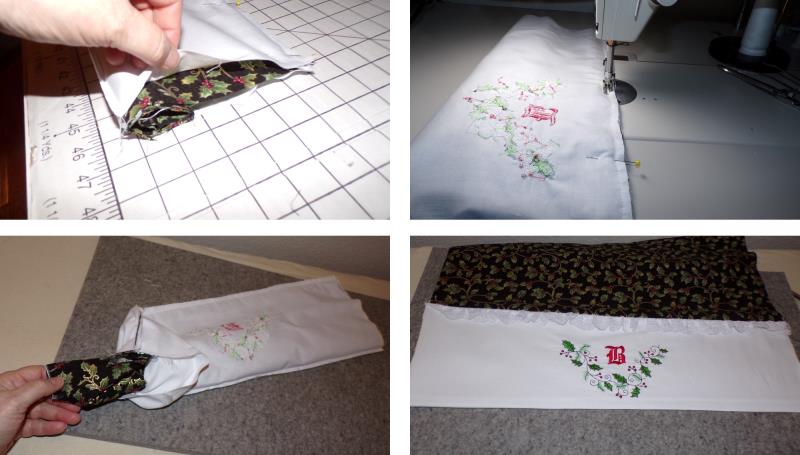
You’ll see the rolled-up fabric inside the cuff. Stitch the seam along the original stitching line. Press the seam and then pull the rolled-up fabric out through one end. The cuff automatically forms; press.
(Click Image to Enlarge)
Step 11:
Finish constructing the pillowcase using French seams to sew up the sides and bottom. Do a final pressing. Repeat for the remaining pillowcases.
(Click Image to Enlarge)
Step 12:
Congratulations on creating a beautiful and festive touch for your bedroom—and if you are expecting guests, make pillowcases for the guest bedroom using the initial for your guest and then let them take home the pillowcases as a parting gift.
Ramona Baird has been in the embroidery industry for over 23 years. She and her husband owned a commercial and retail embroidery store in Arizona for many years. She is an experienced digitizer having been mentored by award-winners Pat Williams and Lindee Goodall. Ramona is a contributor to “Creative Machine Embroidery” magazine having 5 covers to her credit. Ramona has worked for Wilcom America and served many years as Education Director for the American Sewing Guild. With a degree in fashion design, she is able to design and execute patterns which Pat Williams says are “out of the box” in creativity and application. Ramona likes to challenge the boundaries of embroidery and bring new and exciting designs, ideas, and projects to EmbroideryDesigns.com. She wants embroiderers of all levels to increase their skills and enjoyment in using their embroidery machine for gift-making and personal pleasure.