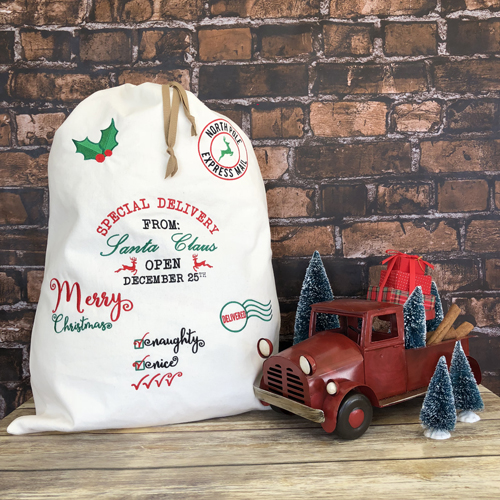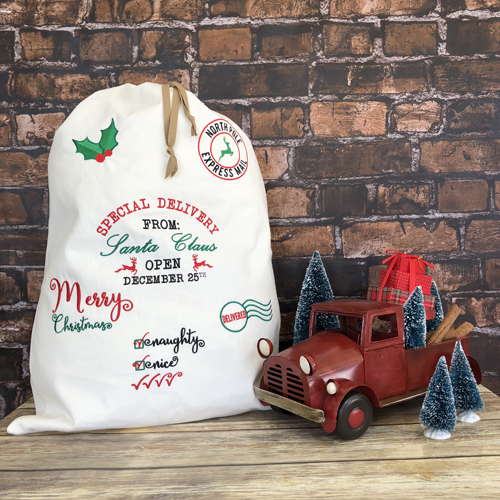


Wrap a large gift or a multitude of small gifts in this Santa Sack embroidered with your own layout of these Santa Sack designs. Recyclable and easy to make in whatever size you choose.
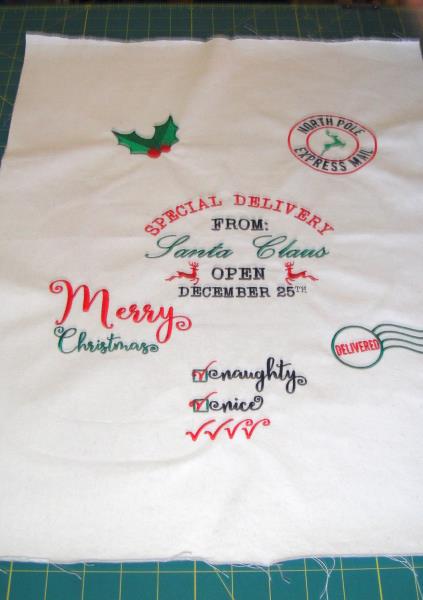
As we want this Santa Sack to last for years it is recommended that you pre-wash the twill fabric to avoid shrinkage after the embroidery is completed. The variety of embroidery designs are randomly placed on the front of the sack. You may follow the layout as pictured or design your own using a variety of Christmas designs and sayings. These instructions are written for a large sack that is approximately 24.5” tall and 17” wide. Feel free to make the bag whatever size you desire.
Step 1:
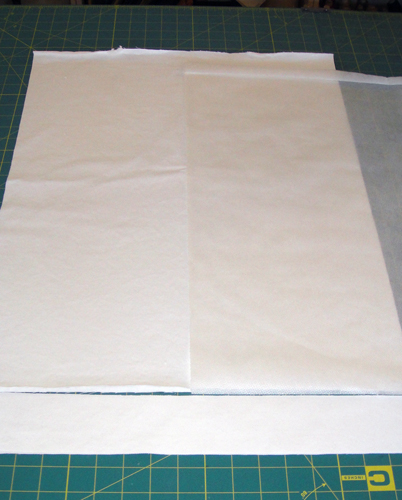
Pre-wash fabric and iron. a. Cut 2 panels of fabric 18” x 24” b. Cut 2 pieces of fabric 2.5” x 18” c. Cut 1 piece of fusible poly mesh stabilizer 18” x 24”
Step 2:
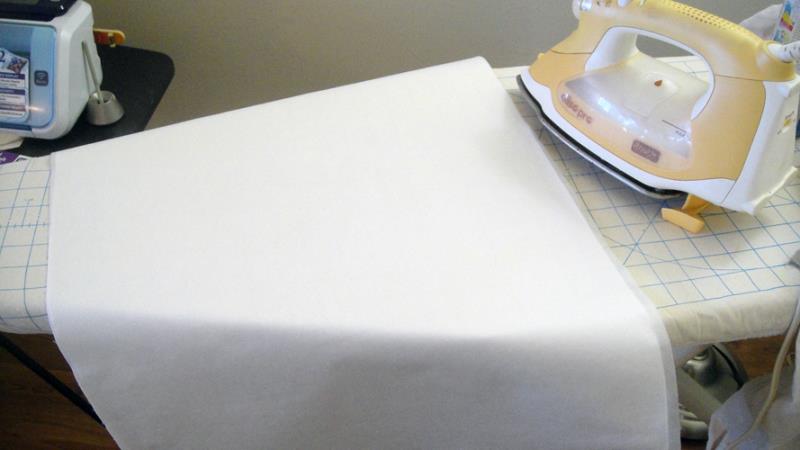
Following the manufacturer’s instructions fuse the stabilizer to the wrong side of the front of the sack. As this bag is unlined using the fusible interfacing behind the whole front of the bag allows us to not have to trim around each individual design
(Click Image to Enlarge)
Step 3:
(Click Image to Enlarge)
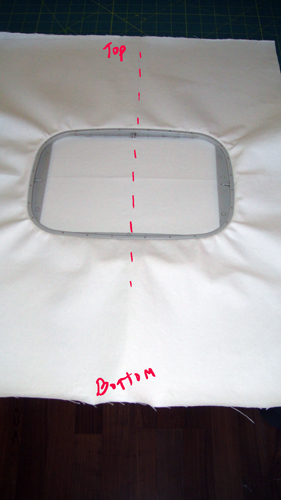
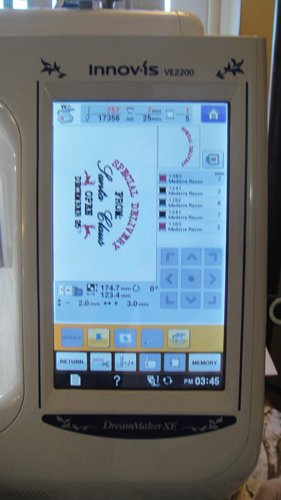
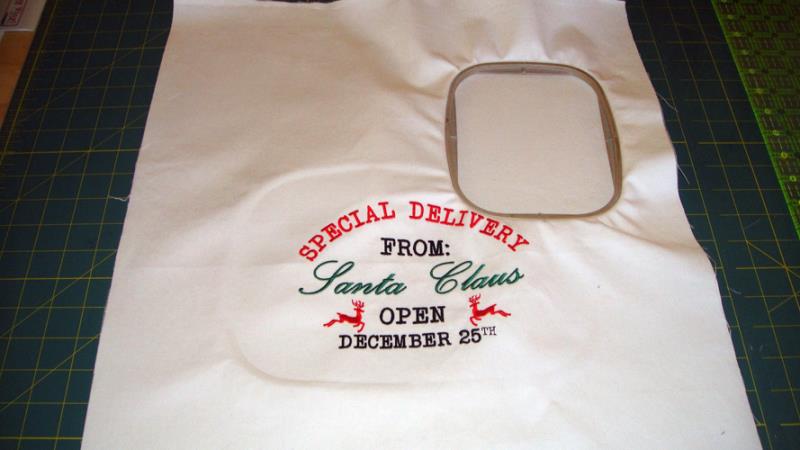
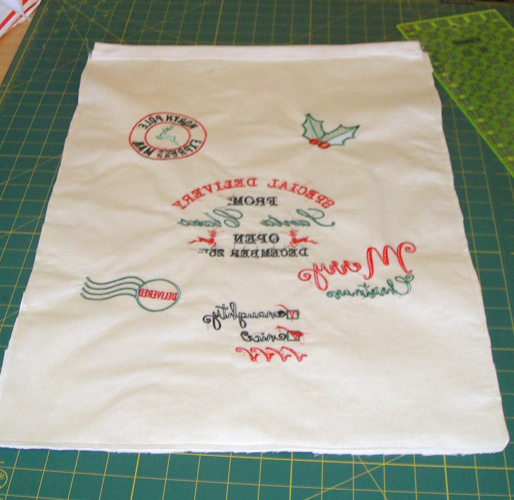
Fold the bag in half vertically and finger crease a guideline and then fold it in half horizontally and finger crease again so that you know where the center of the front exists. For this bag, the largest embroidery design STSK01 was placed just below the center of the bag front. This design runs vertically in a 5” x 7” hoop, so the hoop was rotated accordingly on the fabric. No additional stabilizer was used.
Step 4:
(Click Image to Enlarge)
Some design formats automatically rotate the designs, some do not. If your format does not, rotate the design at your sewing machine making sure that the top of the design will be towards the top of the sack.
Step 5:
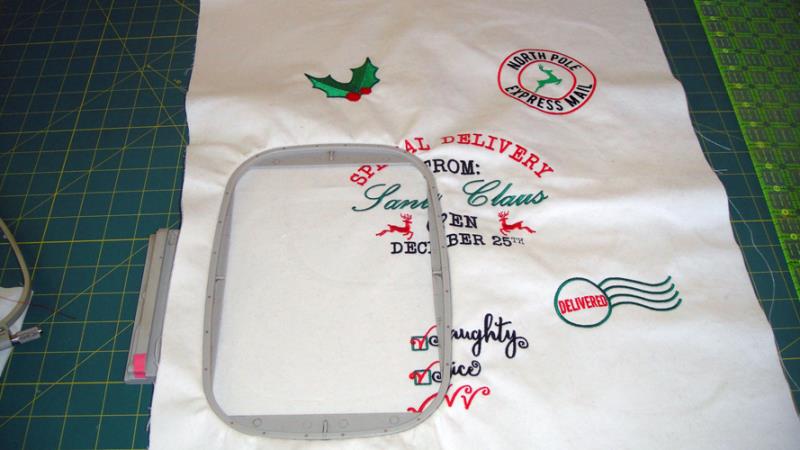
Follow the color chart to stitch the 1st design. Do not trim the stabilizer. Position and rehoop the fabric for placement of your 2nd design. To keep the designs somewhat straight on the bag using the lines on your cutting mat to assist in hooping. Place the bottom ring of the hoop so that the back of the hoop is on a straight line of the mat. Lay the fabric over the top of the hoop so that the side of the fabric is also following a straight line on the mat, then place your inner hoop into the bottom hoop.
(Click Image to Enlarge)
Step 6:
It is alright to hoop over previously embroidered designs when necessary, but to avoid crushing the previous embroidery, loosen the bottom hoop quite a bit. Position the fabric over the bottom hoop. Place the inner hoop inside the bottom hoop and then tighten the hoop screw.
(Click Image to Enlarge)
Step 7:
Design STSK03 has both the naughty and nice boxes checked. I left it that way on this bag as most children I know are both naughty and nice. However, if you want to have just the nice box checked – when you get to red color change forward through the design 310 stitches and then only the nice box check mark and the check marks under the design will sew.
(Click Image to Enlarge)
Step 8:
If you use design STSK07 on your Santa Sack and do not have keyboard lettering to set up a name for your child underneath you can use a Micron® pen to write in the desired name on the fabric. Do not use a Sharpie as it will bleed into the fabric.
Step 9:
After completing all of the embroidery press the front of the sack leaving all of the fusible stabilizer intact.
(Click Image to Enlarge)
Step 10:
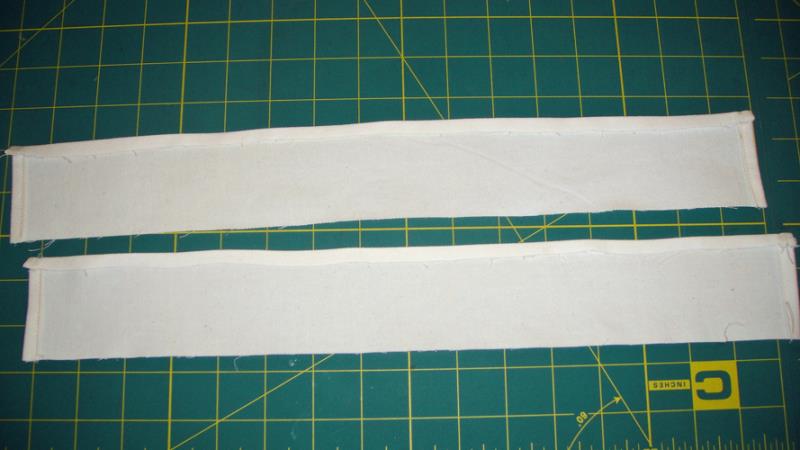
To assemble the casing take the two 2.5” by 18” strips of fabric. Turn each end in ¼” twice press and stitch down to finish the ends of the strips. Then press one lengthwise edge of each strip over ¼”.
(Click Image to Enlarge)
Step 11:
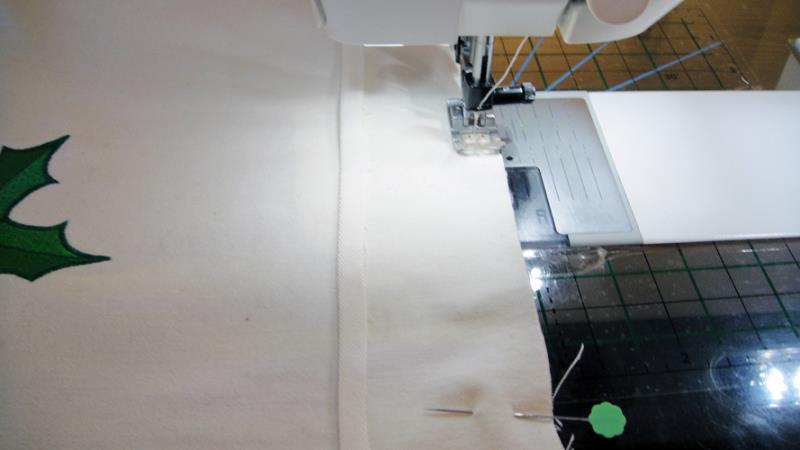
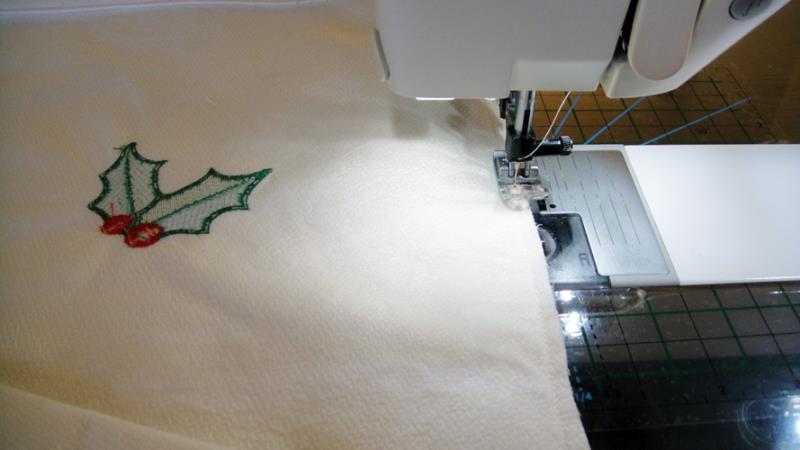
Center the un-pressed edge of the casing strip face down on the top of the sack front and stitch in place using the side of your presser foot as a guide. Stitch the second strip to the top of the back of the bag in the same manner. Press the seams up.
(Click Image to Enlarge)
Step 12:
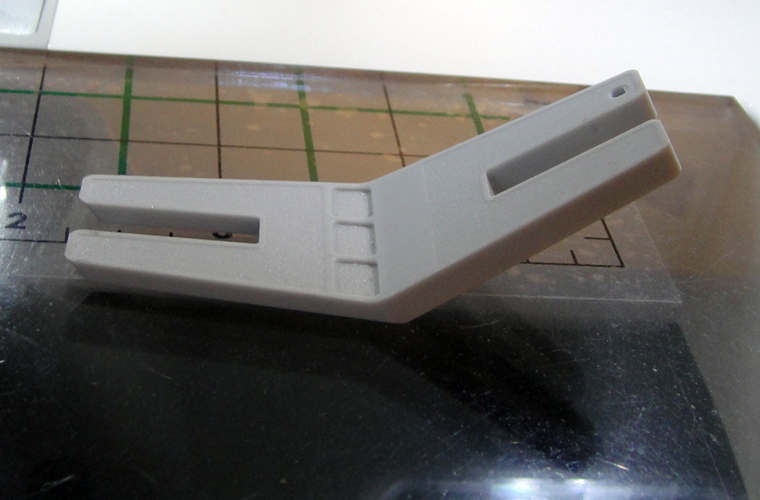
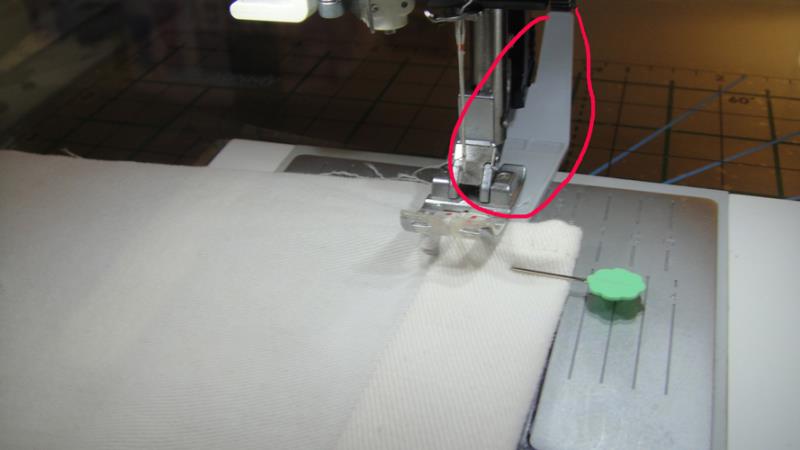
If you are not familiar with this it is called a Button Clearance Plate. A Jean A Majig is very similar. These are used to help you sew the next step in the project. They are placed under the presser foot to raise it to an appropriate height to make it easier to start sewing over the thickness of the folded casing. If you do not have one you can alternately fold a scrap of material about 4 times and place in underneath the back end of the presser foot to raise it to the appropriate height.
(Click Image to Enlarge)
Step 13:
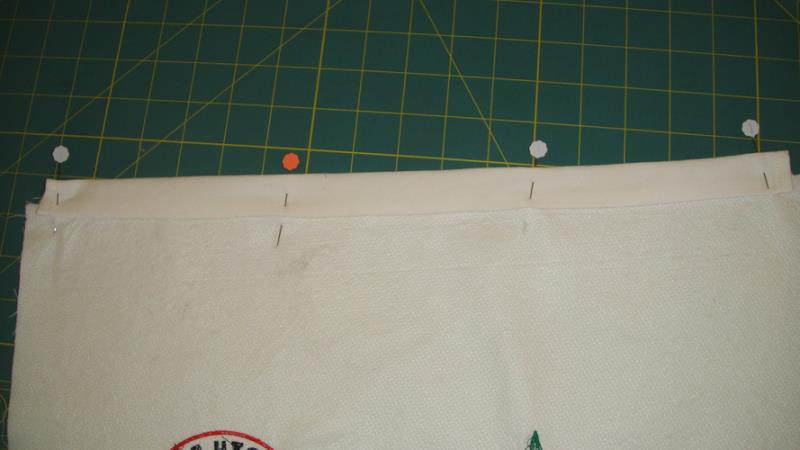
Fold the casing over the seam and pin in place. The casing is folded to the inside of the bag, but place the pins so that you can turn the bag over and top stitch it in place from the front of the bag.
(Click Image to Enlarge)
Step 14:
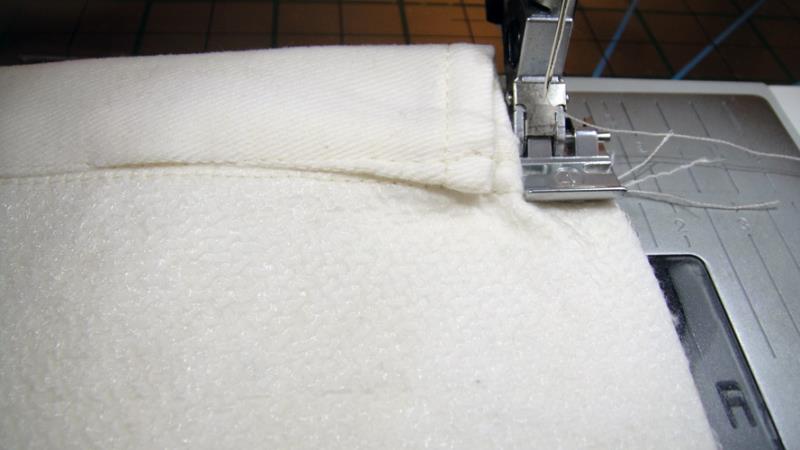
Using whichever tools you have from Step 12 to raise the presser foot top stitch the casing in place from the front of the bag. Repeat Steps 13 and 14 to stitch down the casing on the back of the bag.
(Click Image to Enlarge)
Step 15:
Align and pin the front and the backs right sides together. Using a zipper foot so you can get your needle right up next to the casing stitch around the whole bag pivoting at the corners with a ½” seam allowance.
(Click Image to Enlarge)
Step 16:
Trim the seam allowance to ¼” all around and trim diagonally across the bottom corners.
Step 17:
Change back to your regular presser foot and zigzag around the seams to prevent fraying.
(Click Image to Enlarge)
Step 18:
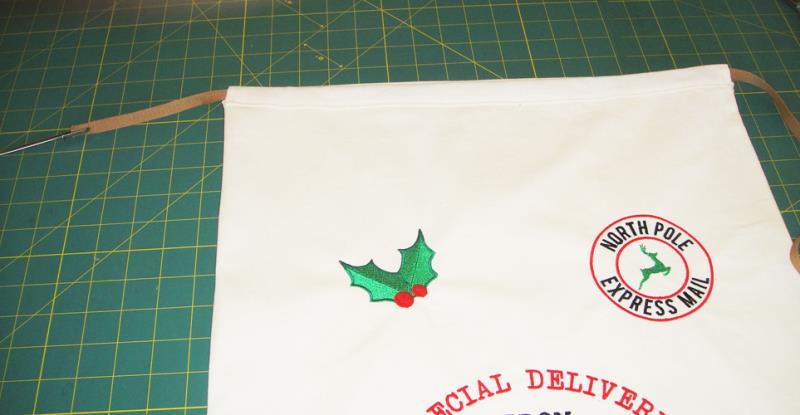
Cut the twill tape in half. Using a bodkin or safety pin attached to one end of a length of the twill feed it through the front casing from right to left and then feed it through the back casing.
(Click Image to Enlarge)
Step 19:
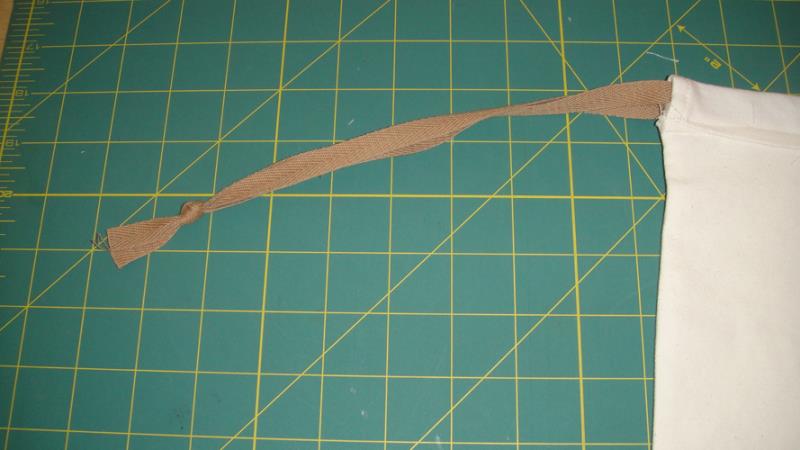
Knot the ends of the twill together.
(Click Image to Enlarge)
Step 20:
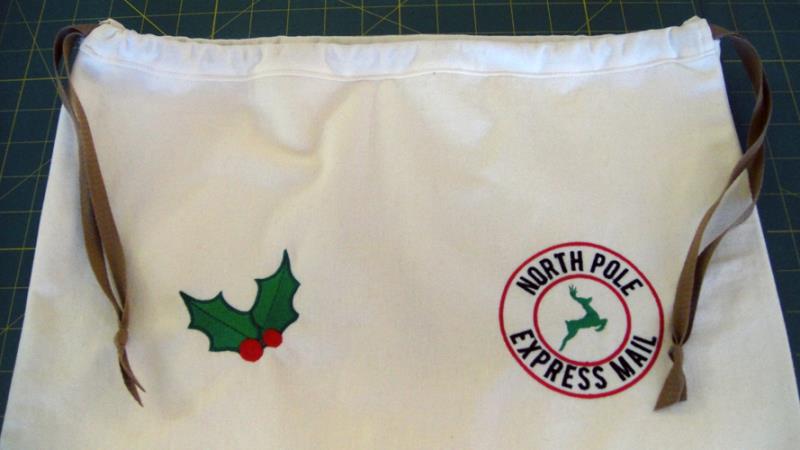
Feed the second half of the twill tape through the casings from left to right to make the other drawstring. Trim the ends of all the tapes on the diagonal.
(Click Image to Enlarge)
Step 21:
Fill the sack with presents and your Santa Sack is complete! Congratulations!
Award winning Digitizer, Embroidery Educator, Author and a Consultant to the Industry, Pat Williams has 30 years of experience in the embroidery industry. Pat has won multiple awards for her digitizing expertise including the 2007 Impressions Awards Grand Championship, Best of Show as well as the 1st and 2nd Place Awards. Pat’s love of digitizing has afforded her the opportunity to write numerous articles for Impressions magazine in the United States and Images Magazine in Europe. In 2001 Pat was named “Embroidery Educator of the Year.” For many years Pat taught digitizing seminars at the ISS Shows in Long Beach, CA and for Compucon software. She now resides in Tucson, AZ.