






{{superHeaderAds.title}}
Live Chat
Embroidery Designs
Welcome, Embroiderer
Login
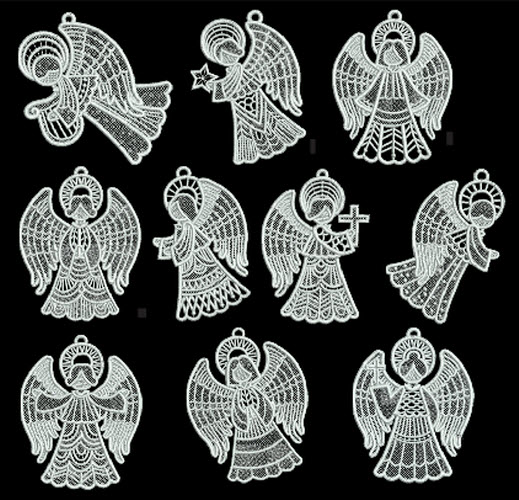
FSL Angels with Tips for Saving Stabilizer
{{mainImageAlt || (productInfo._source && productInfo._source.name) || ''}}

FSL Angels with Tips for Saving Stabilizer Embroidery Project

By   Pat Williams   on   August 13, 2025

PROJECT DETAILS

SKILL LEVEL
Beginner
TIME REQUIRED
01:00
Description

Nothing could be easier than stitching up these lovely FSL Angels. But, fibrous water soluble stabilizer is expensive. Read these instructions for tips on how to use ½ as much.

Project Preview Video

Materials
  • Fibrous Water Soluble Stabilizer such as Wet N Gone® (FWSS)
  • Polyester embroidery thread
  • 1/8” ribbon
  • 5” x 7” embroidery hoop
  • Woven cotton dish towel – no loops or nap

  • Designs used in this project
  • https://www.embroiderydesigns.com/productdetails/Pat-Williams/DesignPack/1/DPFSLANGPK
  • https://www.embroiderydesigns.com/productdetails/pat-williams/designs/1/FSLA11
  • https://www.embroiderydesigns.com/productdetails/pat-williams/designs/1/FSLA18
  • https://www.embroiderydesigns.com/productdetails/pat-williams/designs/1/FSLA12
  • https://www.embroiderydesigns.com/productdetails/pat-williams/designs/1/FSLA13
  • https://www.embroiderydesigns.com/productdetails/pat-williams/designs/1/FSLA15
  • https://www.embroiderydesigns.com/productdetails/pat-williams/designs/1/FSLA16
  • https://www.embroiderydesigns.com/productdetails/pat-williams/designs/1/FSLA19
  • https://www.embroiderydesigns.com/productdetails/pat-williams/designs/1/FSLA14
  • https://www.embroiderydesigns.com/productdetails/pat-williams/designs/1/FSLA17
  • https://www.embroiderydesigns.com/productdetails/pat-williams/designs/1/FSLA20

  • Final Product: What You Will Create

    Preface:
    Use polyester thread in these FSL (Free Standing Lace) designs as rayon is simply too soft for this type of work. You may use various colors of threads if desired. If using pastel colors you can get away with white bobbin thread. If stitching in dark colors the bobbin thread should match the thread, however the bobbin thread needs to 60 wt. The thread you use on the top of your machine is 40 wt. If you simply wind the bobbin with the same thread the fine lines in the lace will be thick and lumpy. Many thread manufactures, such as Madeira make 60 wt threads to match many of their colors.

    Use fibrous water soluble stabilizer such as Wet N Gone. Solvy is an embroidery topping and is not strong enough to hold the FSL. Always use two layers of fibrous water soluble stabilizer.

    The time above is just an estimate. Some of these designs run in 51 minutes some in 35 minutes it depends on the stitch count. The time to dry the lace will vary according to the temperature and humidity in your area. I usually estimate about 3 hours for lace to dry.

    This is how simple it is to stitch FSL.


    Step 1:
    (Click Image to Enlarge)
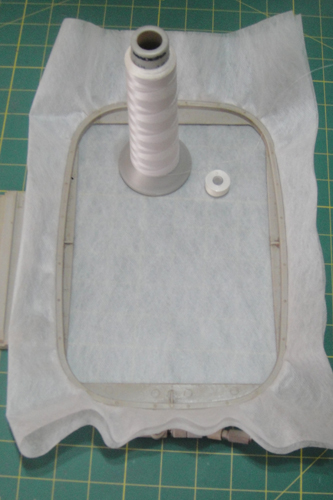
    Hoop two layers of FWSS in your embroidery hoop. Make sure it is taut in the hoop. Load White Polyester thread in the top of your machine and 60 wt bobbin thread in the bobbin.


    Step 2:
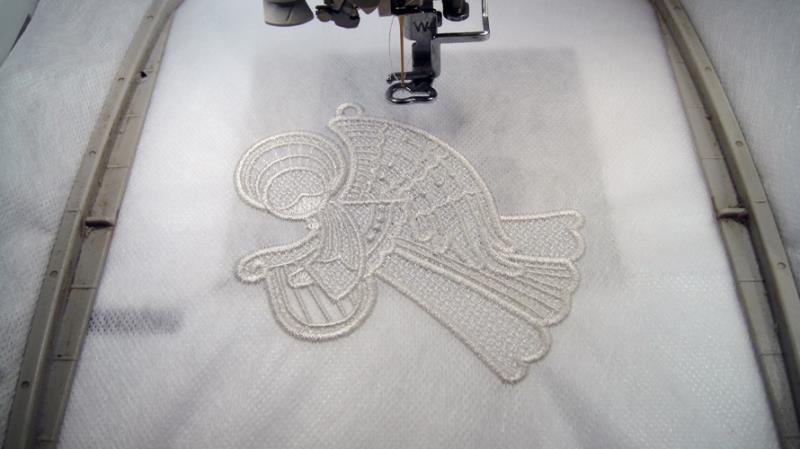
    Run the design.  

    (Click Image to Enlarge)


    Step 3:
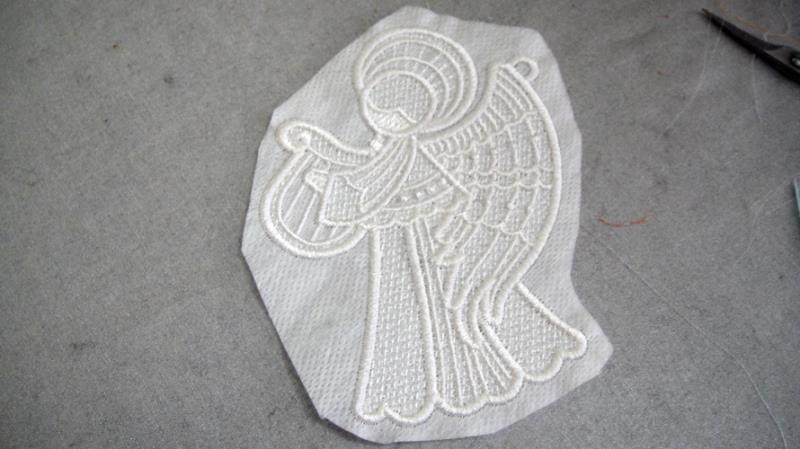
    Trim around the design leaving ¼” to 1/2” of stabilizer around the design.

    (Click Image to Enlarge)


    Step 4:
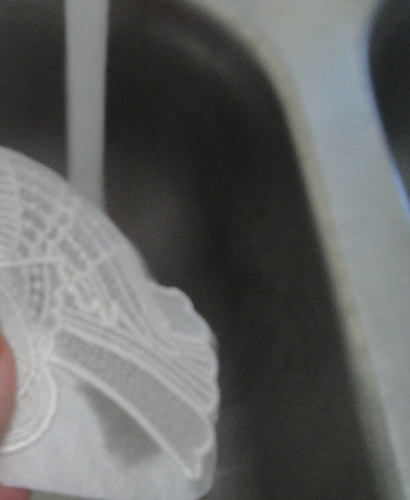
    Hold the design under running hot water to remove the stabilizer. Just rinse it long enough to remove the stabilizer from around the edges and holes in the work. You want to leave some stabilizer in the project to provide stiffness.


    Step 5:
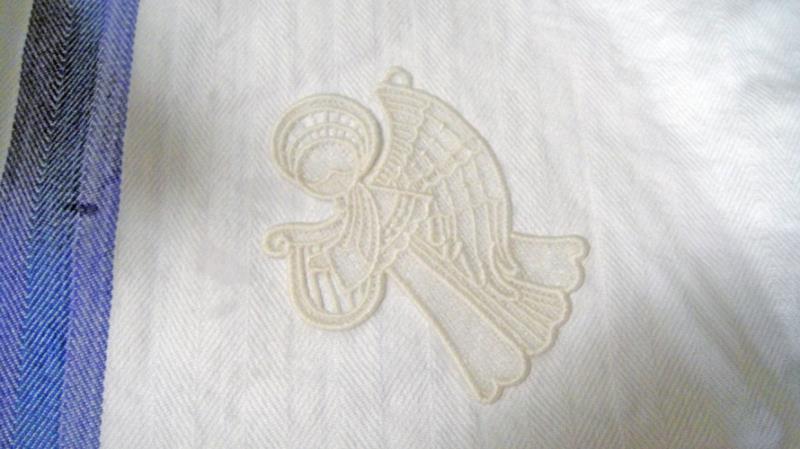
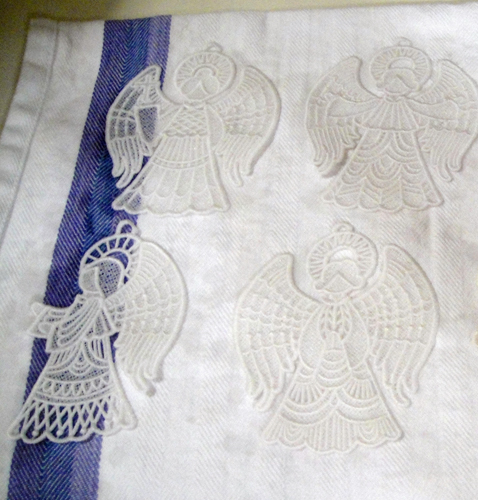
    Place the FSL on a woven cotton dish towel to dry. Leave the lace alone while it dries. Picking it up prematurely can distort the lace design.

    (Click Image to Enlarge)


    Step 6:
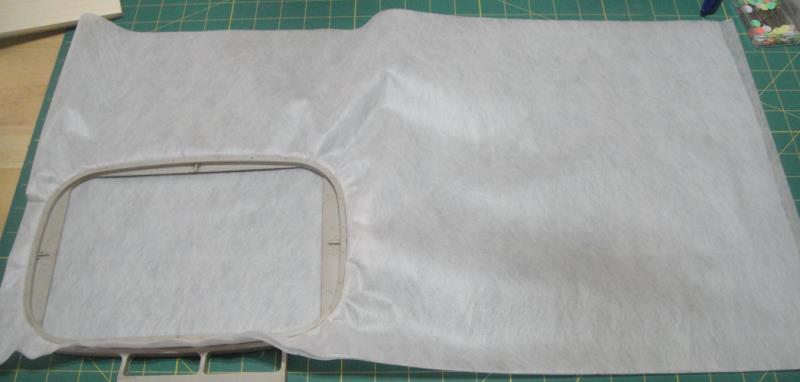
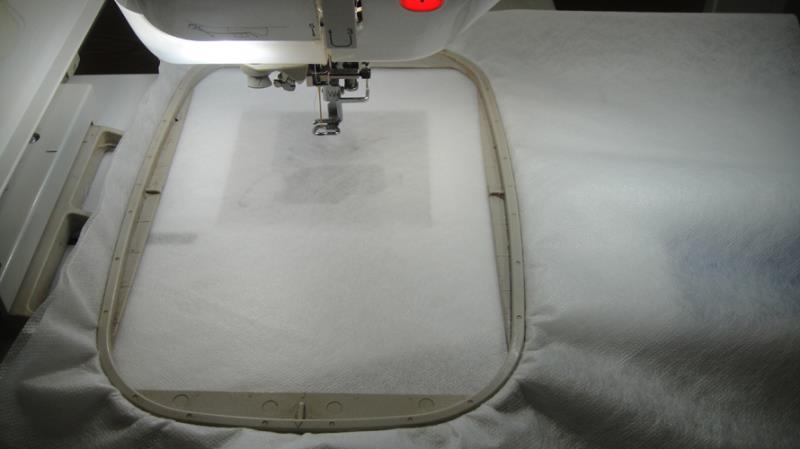
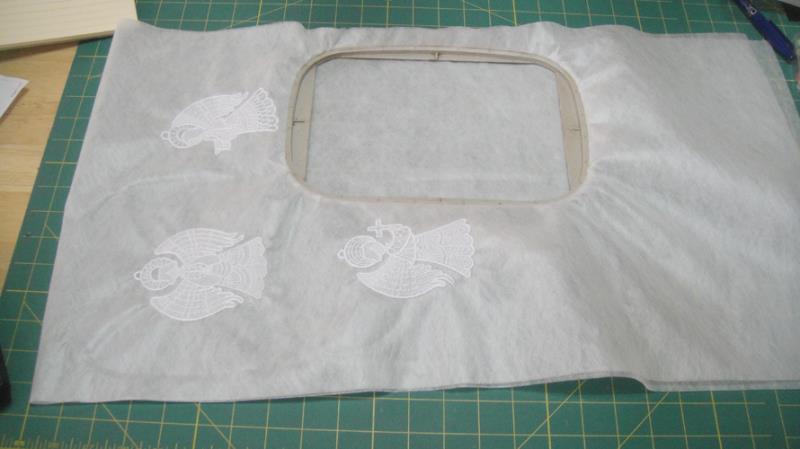
    We will always tell you to only run one FSL design in a hoop at a time. You might be tempted to hoop a larger hoop and run one angel at the top and one angel at the bottom of the hoop to reduce the amount of water soluble stabilizer. The stitching of the first angel will loosen the FWSS in the hoop. This can result in the second angel being out of registration and not holding together as she should. So instead of running two angels in a single hooping we suggest that you fold over a larger amount of stabilizer to make two layers. In this picture I folded over 26” of stabilizer for a total of 52” of stabilizer used. Place the hoop so that at least 1” is out the left side and at the top of the hoop.

    (Click Image to Enlarge)


    Step 7:
    (Click Image to Enlarge)
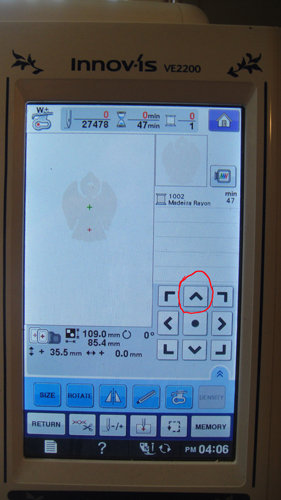
    Load the desired angel design in your embroidery machine and with the “Up” arrows move the design to the top of the hoop. 


    Step 8:
    The machine should stop or beep when you have reached the top height at which it will sew the design. Stitch the angel in the upmost position.

    (Click Image to Enlarge)


    Step 9:
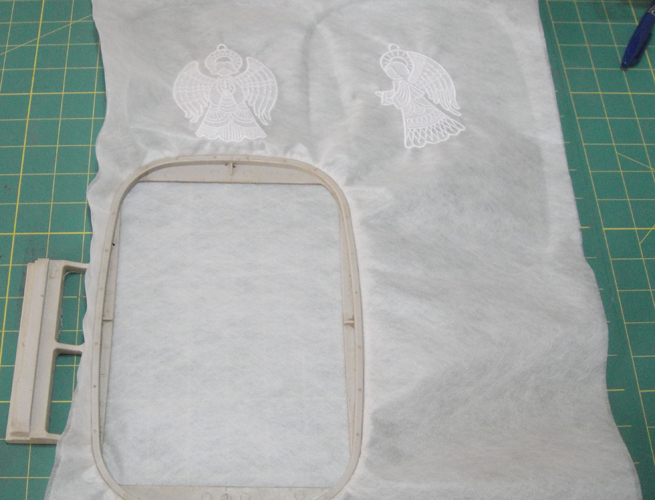
    Do not cut out the first angel. Move the hoop to the right side of the stabilizer. Load the design in your machine for the second angel. With the “Up” arrows on your machine move the second design to the top of the hoop and stitch it out. Do not cut these angles away from the stabilizer yet.

    (Click Image to Enlarge)


    Step 10:
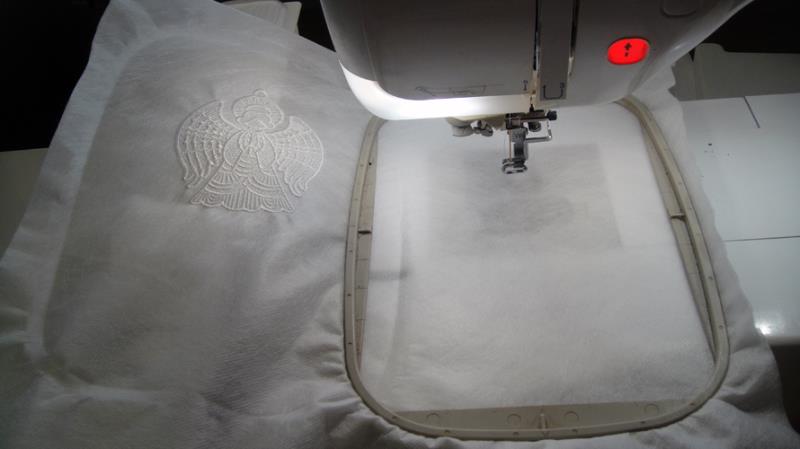
    Place the hoop about 1” below the 1st angel on the left side of the stabilizer.

    (Click Image to Enlarge)


    Step 11:
    Load the design for the 3rd angel and move the design up in the hoop as before. Stitch the angel.

    (Click Image to Enlarge)


    Step 12:
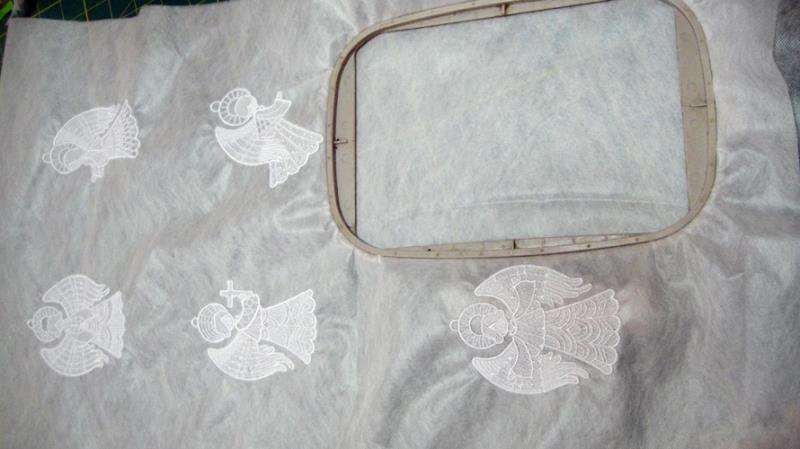
    Repeat Step 10 and 11 on the right side of the stabilizer for the 4th angel.

    (Click Image to Enlarge)


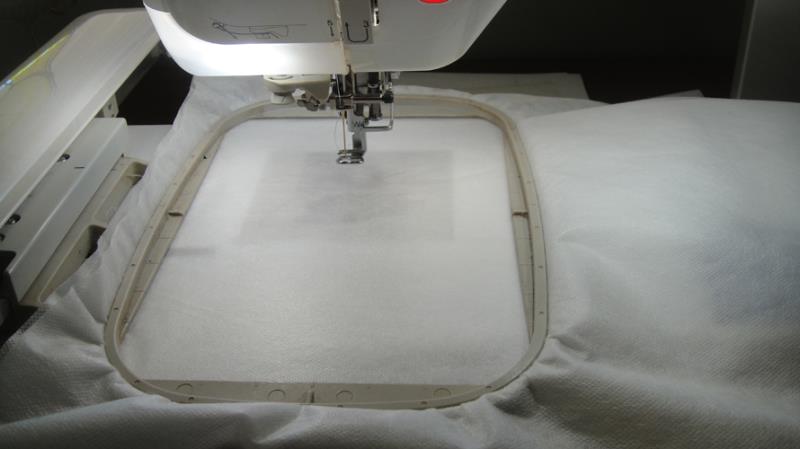
    Step 13:
    When you only have enough stabilizer at the bottom for the last hooping you know longer have to move the designs up in the hoop as there is nothing to be gained from it.

    (Click Image to Enlarge)


    Step 14:
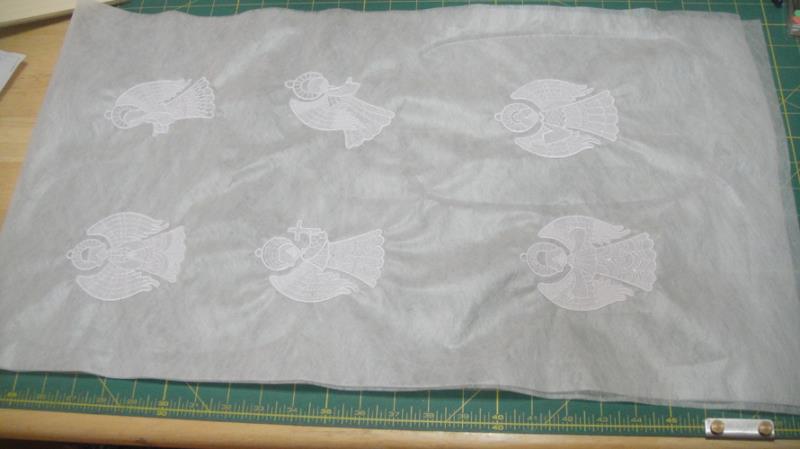
    You have just sewn 6 angels in less than 1 ½ yards of water soluble stabilizer. It takes approximately 20” of stabilizer to sew them one at a time. So, it would take 3 1/3 yards of stabilizer to sew 6 angels. By cutting longer strips of the stabilizer and using it as described above you will save over ½ of the cost of making these FSL designs. Furthermore you can save all your scraps cut away from around the angels. If you ever need to re-stiffen a FSL piece you can melt it in a shallow bowl with a little water and lay the limp lace in it for a minute to re-stiffen it.

    (Click Image to Enlarge)


    Step 15:
    Cut out all of the angels, rinse in hot water and lay on the smooth cotton towel to dry.


    Step 16:
    Cut 15” lengths of 1/8” ribbon and put through the loops on the angels heads. I usually use anything that is handy and round to tie the ends of the loops into bows as it keeps all my hanging ribbons about the same length. Tie the ribbon into a bow and trim the ends as desired. Pearls and rhinestones can also be glued or hot fixed to the angels in desired.

    (Click Image to Enlarge)


    Step 17:
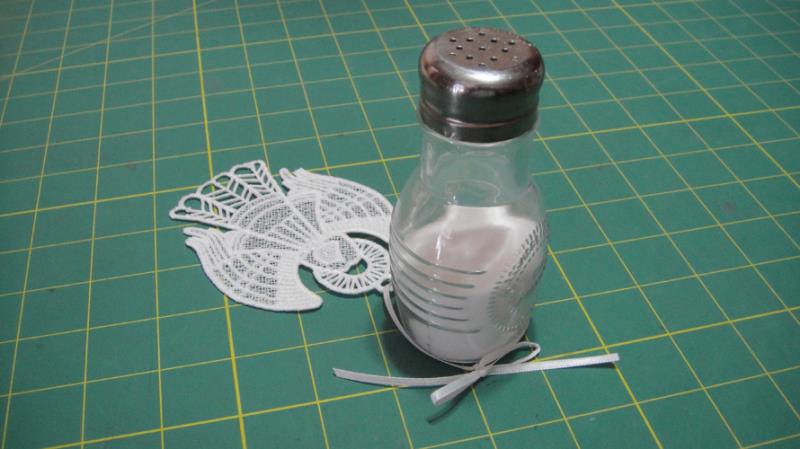
    Congratulations your FSL Angels are complete!

    (Click Image to Enlarge)


    For the love of embroidery…
    Pat Williams
    Meet the Author: Pat Williams
    Pat Williams
    Award winning Digitizer, Embroidery Educator, Author and a Consultant to the Industry, Pat Williams has 30 years of experience in the embroidery industry. Pat has won multiple awards for her digitizing expertise including the 2007 Impressions Awards Grand Championship, Best of Show as well as the 1st and 2nd Place Awards. Pat’s love of digitizing has afforded her the opportunity to write numerous articles for Impressions magazine in the United States and Images Magazine in Europe. In 2001 Pat was named “Embroidery Educator of the Year.” For many years Pat taught digitizing seminars at the ISS Shows in Long Beach, CA and for Compucon software. She now resides in Tucson, AZ.
    More From This Author
    Link is Broken, Please check the URL
    Exclusive Embroidery Offers!
    Copyright © {{ currentDate | date:'yyyy'}} - EmbroideryDesigns.com
    GET 50% OFF! ×