








{{superHeaderAds.title}}
Live Chat
Embroidery Designs
Welcome, Embroiderer
Login
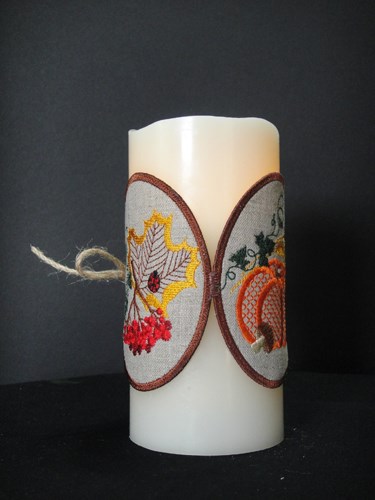
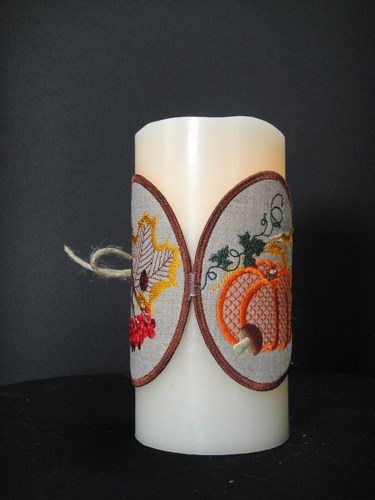
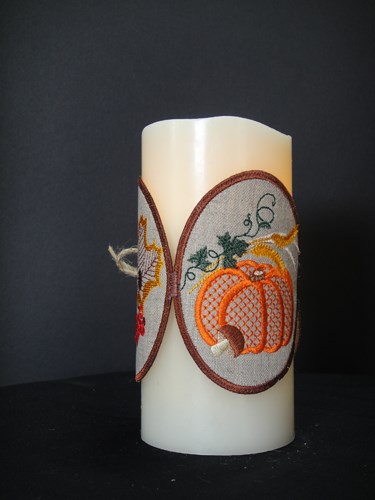
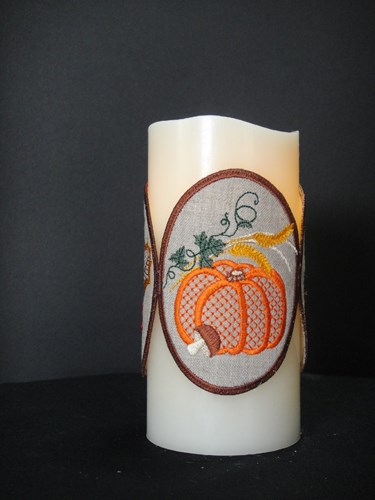
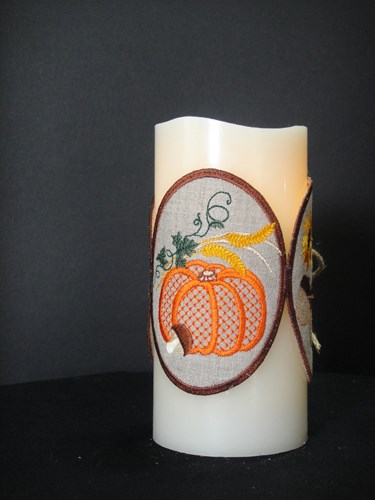
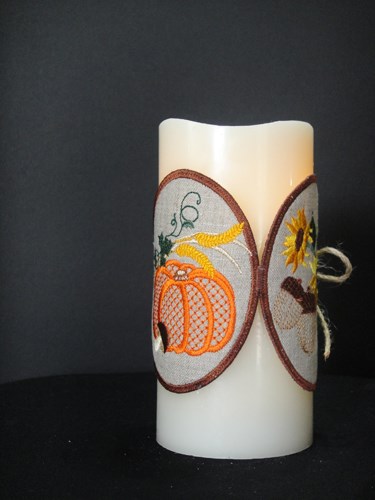
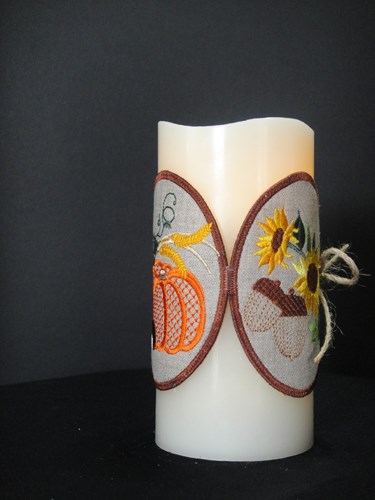
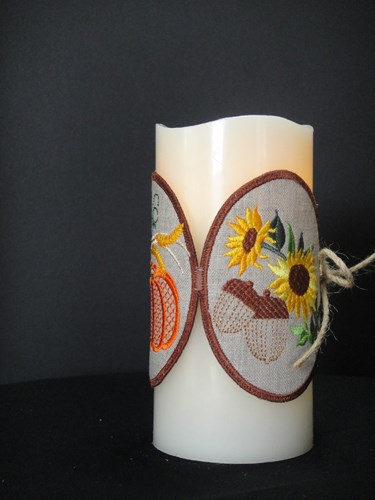
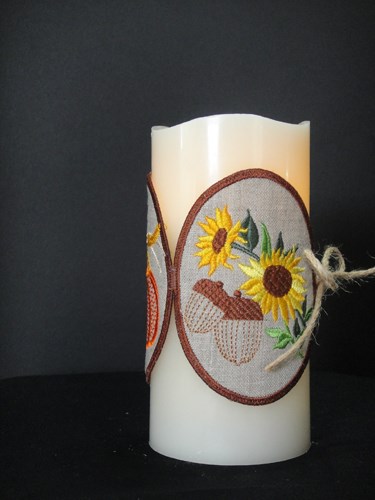
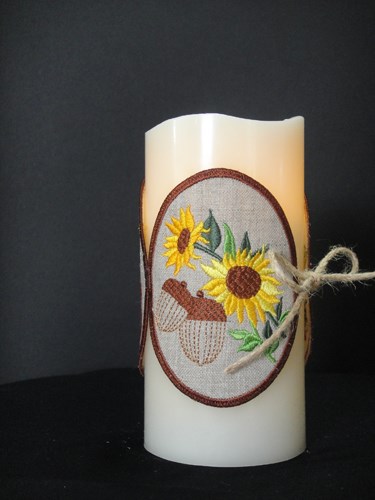
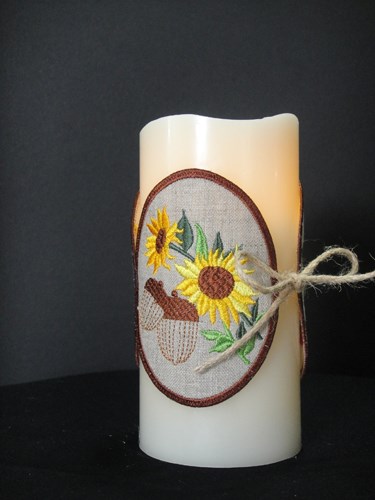
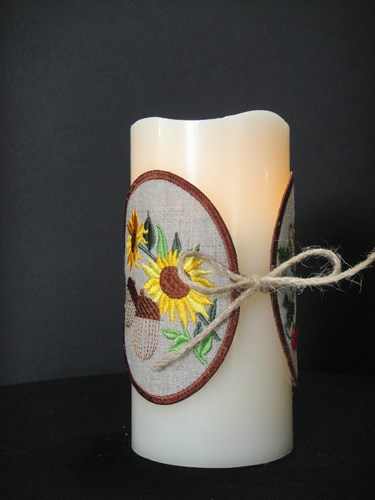
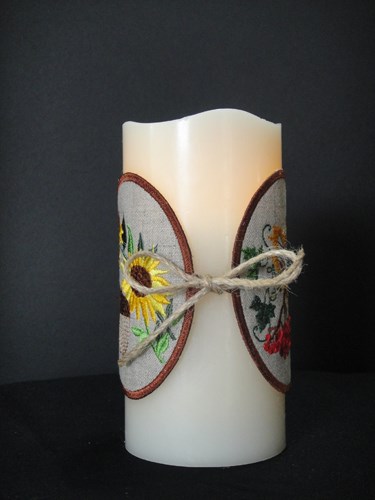
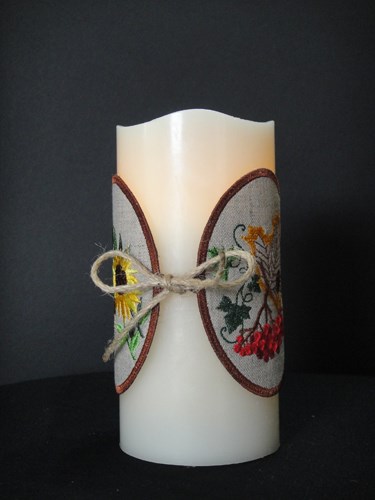
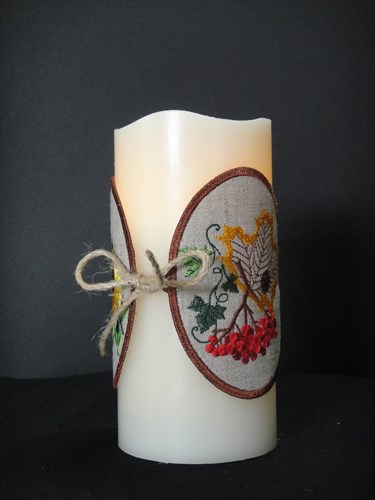
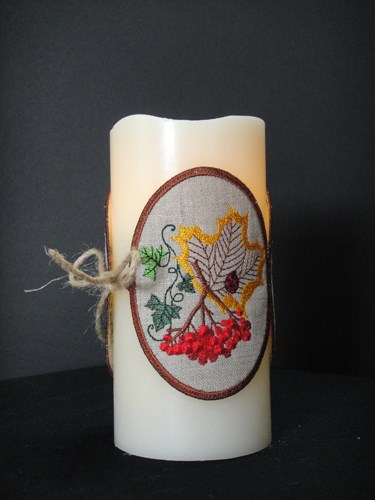
ITH Thanksgiving Linen Candle Cover
{{mainImageAlt || (productInfo._source && productInfo._source.name) || ''}}

ITH Thanksgiving Linen Candle Cover Embroidery Project

By   Pat Williams   on   October 19, 2015

PROJECT DETAILS

SKILL LEVEL
Some Experience
TIME REQUIRED
01:45
FINISHED SIZE
9.5 x 3.87 inches
Description

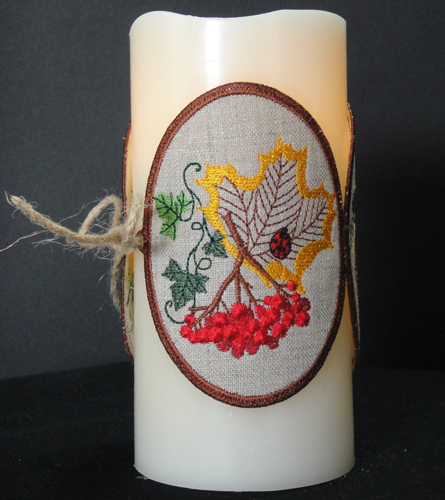
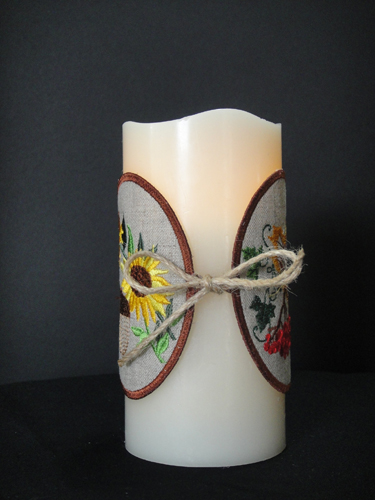
A beautiful linen candle cover that is quick to make to enhance your autumn and Thanksgiving table.

Project Preview Video

Materials
  • 5” x 15” rectangle of natural mid-weight linen
  • 5” x 15” rectangle of Pellon Craft Fuse 808 Interfacing ®
  • 1 5/8 yards of fibrous water soluble stabilizer such as Wet N Gone®
  • 14” of Jute String Trim (Hobby Lobby)
  • Spray Adhesive
  • Scotch Tape
  • 5” x 7” embroidery hoop
  • Sewing machine
  • Flameless Candle with a circumference of 9.25”
  • Magic Sizing or Spray Starch

  • Designs used in this project

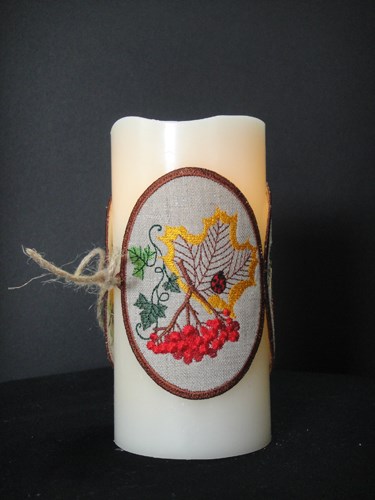
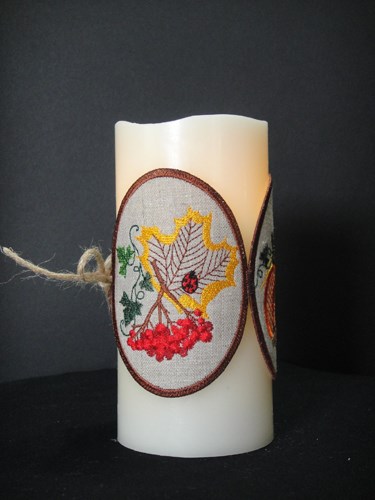
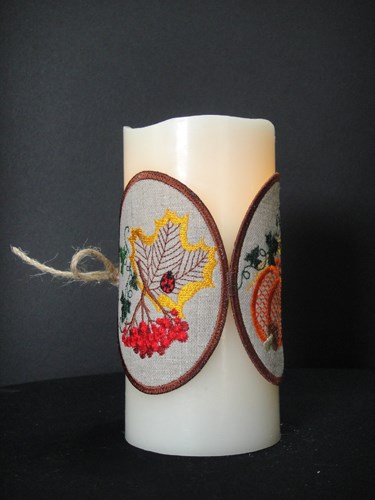
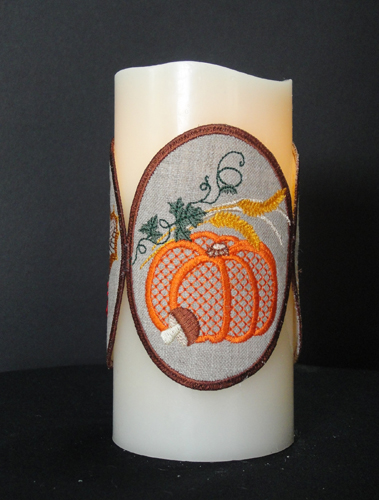
    Final Product: What You Will Create

    Preface:
    The base of linen and the craft interfacing give you the perfect surface to embroider the three designs that make up this candle cover. Each of the three sections is made in the same way; use the color charts for each individual section.


    Step 1:
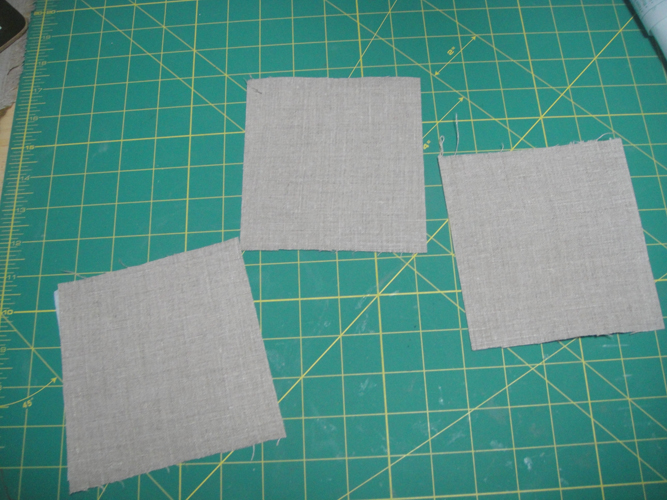
    Prewash and press your linen three or four times with Magic Sizing or spray starch to make it crisp; apply the craft fuse interfacing following the manufacturer’s instructions; cut the backed linen into three 5” x 5” sections.

    (Click Image to Enlarge)


    Step 2:
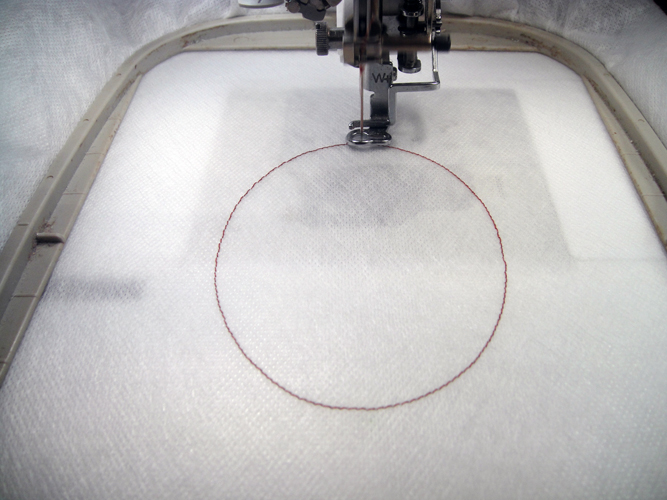
    Hoop two layers of fibrous water soluble stabilizer in your embroidery hoop; run Color Stop (CS) 1 in Chestnut, or whatever color you have chosen for your borders, as an outline to place the linen.

    (Click Image to Enlarge)


    Step 3:
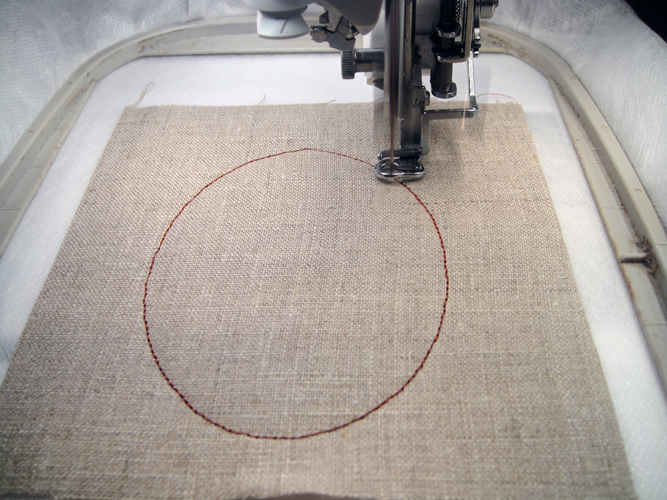
    Spray a little adhesive on a 5” x 5” of the prepared linen and place over the outline; run CS 2 in the same color as you have chosen for the borders.

    (Click Image to Enlarge)


    Step 4:
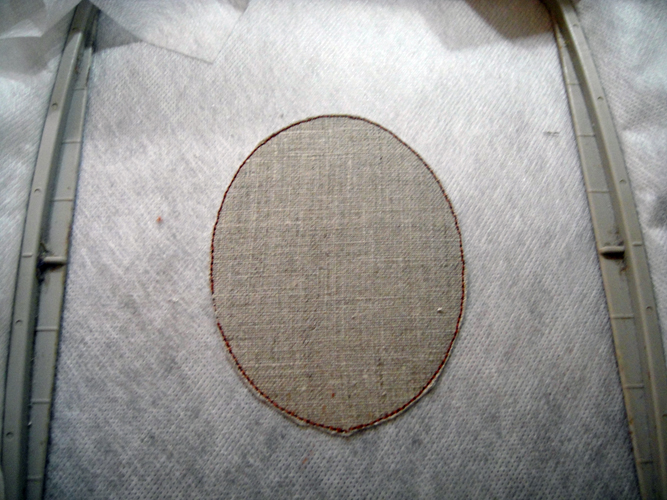
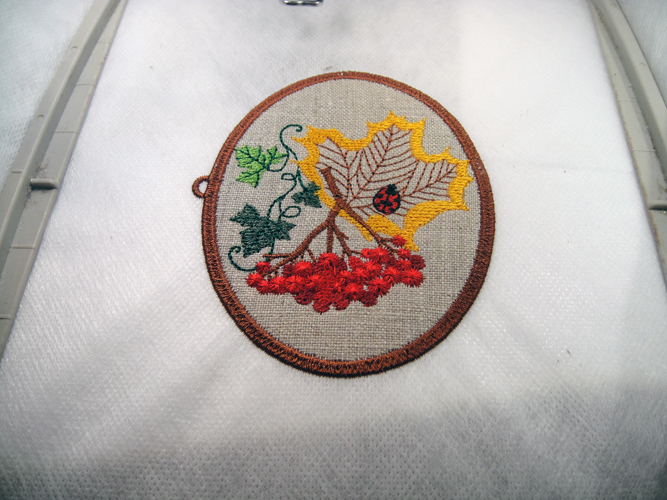
    Remove the hoop from the machine; do not unhoop; trim the excess material around the oval as closely as possible.

    (Click Image to Enlarge)


    Step 5:
    Follow the remainder of the color chart to complete the embroidery. Stitch the two remaining files in the same manner.

    (Click Image to Enlarge)


    Step 6:
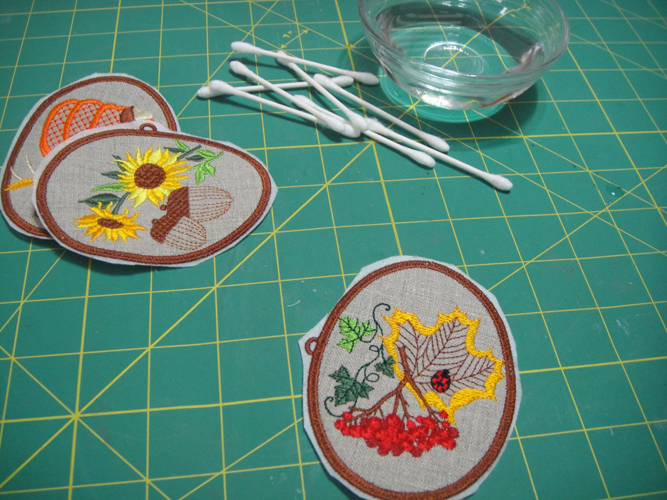
    Trim the excess fibrous water soluble stabilizer closely around the borders of all three sections of the ovals.

    (Click Image to Enlarge)


    Step 7:
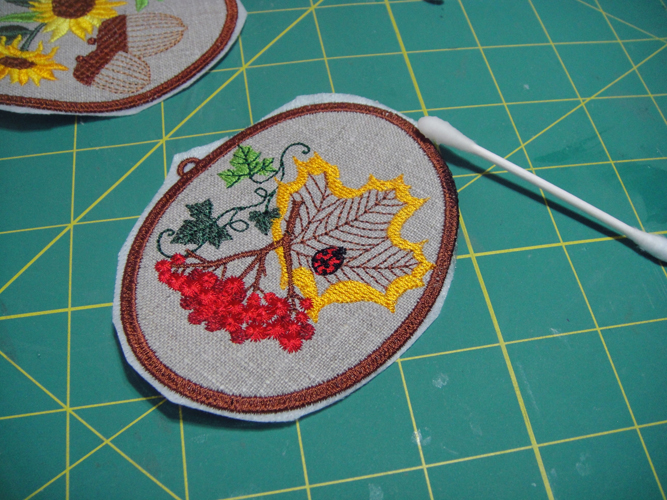
    With wet cotton swabs or a small piece of sponge gently rub away the excess stabilizer; do not get the border too wet or the water will run into the inner sections of the linen; if you do get the linen wet dry it with a hair dryer to avoid water rings; allow the borders to dry.

    (Click Image to Enlarge)


    Step 8:
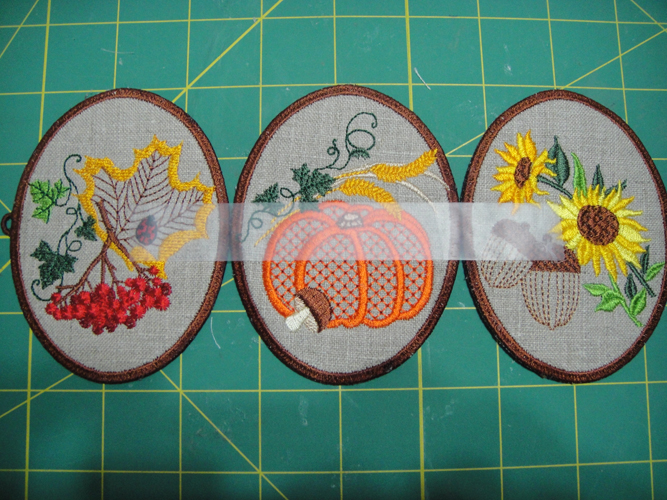
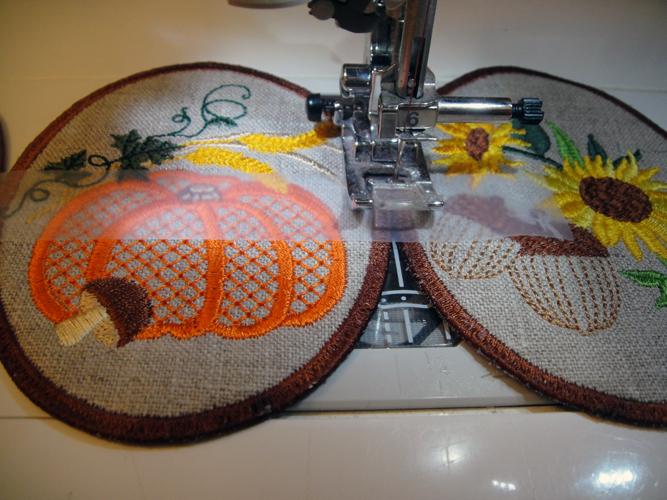
    This step is rather optional. Line up the bottoms of the ovals on the grid of your cutting mat (I promise these were lined up when I put the scotch tape across the centers, but were obviously not in the same position when I took the picture); the scotch tape is just to keep the ovals aligned while stitching them together; you can choose to butt them together at the sewing machine if you prefer.

    (Click Image to Enlarge)


    Step 9:
    (Click Image to Enlarge)
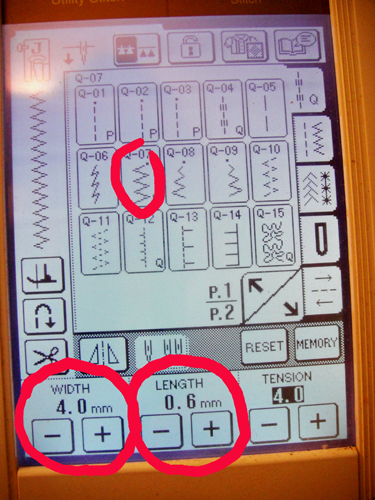
    Load the embroidery thread you used for the borders in the top of your sewing machine; select a zigzag stitch 4mm wide and set the stitch density to be relatively close together – on this machine that is a .6; your machine might just have pictures so do if a test sew if necessary; you want a column that is almost like a satin column but not quite that dense.


    Step 10:
    Zigzag the ovals together at their centers; remove the tape.

    (Click Image to Enlarge)


    Step 11:
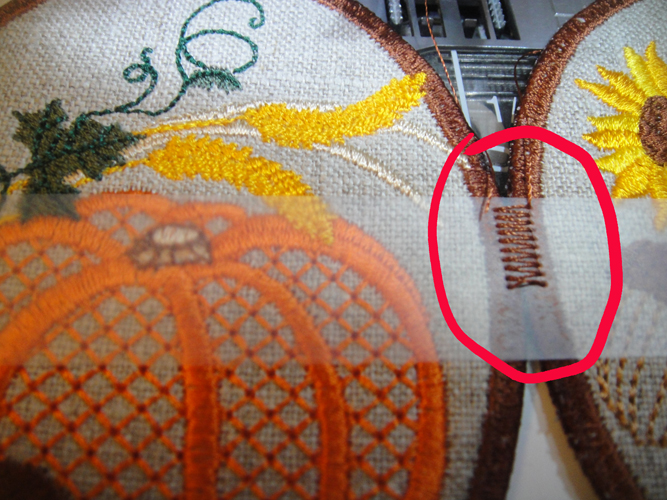
    Be sure you make a tie-down or reverse stitches at the beginning and end of your joining stitches; this picture is a close up of the joining stitches so that you can see how the spacing should be on the zigzags.

    (Click Image to Enlarge)


    Step 12:
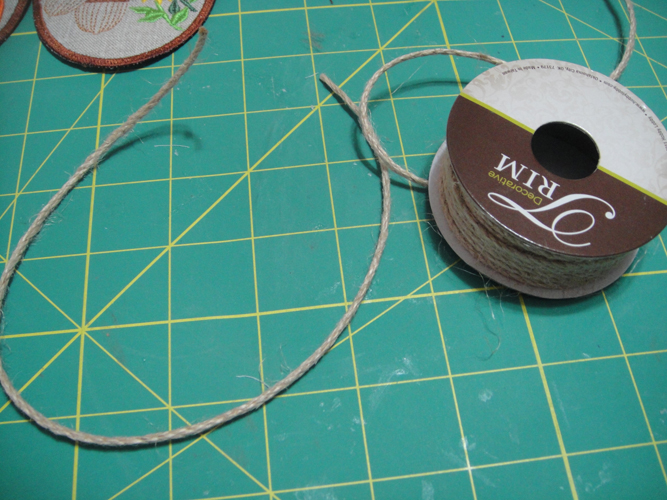
    Cut a 14” length of jute string trim or stiffened craft yarn and feed it through the underside of both end loops.

    (Click Image to Enlarge)


    Step 13:
    (Click Image to Enlarge)
    Tie the jute into a bow with a square knot (right over left – left over right.)


    Step 14:
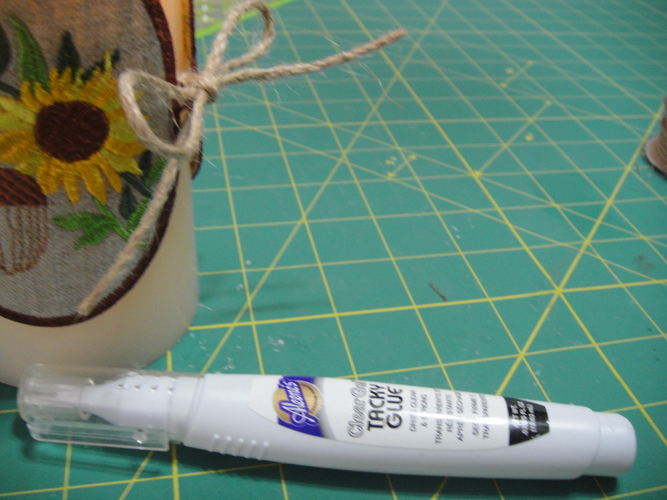
    Optional - you can dab a little glue on the ends of the jute to keep them from fraying if you choose.

    (Click Image to Enlarge)


    Step 15:
    (Click Image to Enlarge)
    Congratulations your Thanksgiving Candle Cover is complete! Make one up as a hostess gift too if you are invited out for the holiday.

    For the love of embroidery…
    Pat Williams
    Meet the Author: Pat Williams
    Pat Williams
    Award winning Digitizer, Embroidery Educator, Author and a Consultant to the Industry, Pat Williams has 30 years of experience in the embroidery industry. Pat has won multiple awards for her digitizing expertise including the 2007 Impressions Awards Grand Championship, Best of Show as well as the 1st and 2nd Place Awards. Pat’s love of digitizing has afforded her the opportunity to write numerous articles for Impressions magazine in the United States and Images Magazine in Europe. In 2001 Pat was named “Embroidery Educator of the Year.” For many years Pat taught digitizing seminars at the ISS Shows in Long Beach, CA and for Compucon software. She now resides in Tucson, AZ.
    More From This Author
    Link is Broken, Please check the URL
    Exclusive Embroidery Offers!
    Copyright © {{ currentDate | date:'yyyy'}} - EmbroideryDesigns.com
    GET 50% OFF! ×